Income Protection for Tradies in NZ: Why It Matters More Than You Think
If you are a builder, electrician, plumber, or any kind of tradie working in New Zealand, your body is your most valuable business asset. Every dollar you earn depends on your ability to show up on site, use your hands, and do physically demanding work.
Most tradies know that injuries happen. Falls from scaffolding, cuts from power tools, back strains from lifting. What many do not realise is that the biggest threat to their income is not a workplace accident at all. It is illness. And for illness, ACC pays nothing.
This guide explains why tradies are the highest-need group for income protection insurance in New Zealand, what actually drives the cost, and how to structure cover that is both comprehensive and affordable.
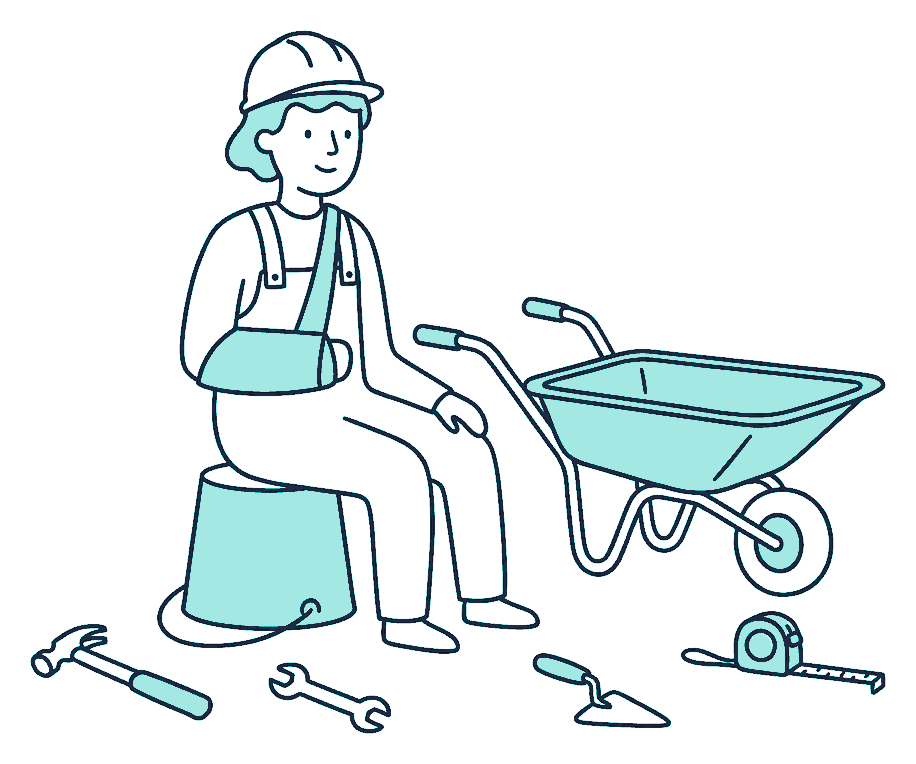
What Tradies Actually Earn (And What Is at Stake)
Qualified self-employed builders, plumbers and electricians commonly earn $90,000 to $130,000, and on $90,000 a tradie generates $2,700,000 of gross income across a 30-year career.
Many experienced tradies, particularly those who are self-employed or running small teams, earn well above this. Incomes of $90,000 to $130,000 are common for qualified builders, plumbers, and electricians with their own businesses.
Over a 30-year career, a tradie earning $90,000 per year will generate $2,700,000 in gross income. That is the asset you are insuring. Compared to the cost of a ute or a set of tools, your earning capacity dwarfs everything else you own.
The ACC Gap: Why "She'll Be Right" Does Not Apply
The ACC gap matters for New Zealand tradies because ACC (the Accident Compensation Corporation) covers injury, not illness. Funded through levies, ACC covers treatment costs and replaces up to 80% of the income you earned before your injury (ACC, *Calculating weekly compensation for self-employed*, retrieved 18 August 2026), whether the accident happens at work or at home, up to maximum liable earnings of $156,641 for the 2026/27 levy year (from 1 April 2026) (ACC, *Calculating your levies*, retrieved 18 August 2026).
That sounds comprehensive. But there is a significant gap that many tradies do not discover until it is too late.
What ACC Does Not Cover
- Illness and disease. If you are diagnosed with cancer, suffer a heart attack, or develop a degenerative condition, ACC does not apply. These are not "accidents."
- Gradual-onset conditions: narrower and harder, not automatically excluded. ACC can cover conditions that develop over time when they are caused by your work and its occupational-causation tests are met. Tendonitis from repeated heavy lifting or dust- and asbestos-related disease are the kind of examples ACC itself gives (ACC, *Injuries we cover*, retrieved 19 August 2026). But establishing that your work caused the condition is a real hurdle, non-work degeneration is not covered, and many claims in this category are declined. Income protection does not carry that causation test.
- Income above the cap. If you earn more than the maximum liable earnings of $156,641 for 2026/27, ACC only replaces 80% of income up to that threshold. Anything above is unprotected.
- Extended recovery beyond ACC's assessment. ACC may reassess your entitlement and reduce or stop payments if they determine you can do some form of work, even if you cannot return to your trade.
Why This Matters More for Tradies
For someone working a desk job, an illness that prevents them from doing heavy physical work might not end their career. They might be able to work from home, take a modified role, or return part-time.
For a tradie, a back injury or a cancer diagnosis that requires months of treatment can mean zero income. You cannot frame a house from a hospital bed. You cannot wire a switchboard while undergoing chemotherapy.

This is the core reason tradies are the highest-need group for income protection insurance. The physical nature of the work means more conditions can stop you from earning, and ACC only covers the accident portion.
How Income Protection Insurance Works for Tradies
Income protection works for New Zealand tradies by paying a monthly benefit of typically up to 75% of pre-tax income when illness or injury stops you working. Its main job is the gap ACC leaves entirely: illness. For accidents, be careful with your expectations: conventional income protection policies offset ACC payments rather than paying on top of them. If ACC is already paying you around 80% of your pre-injury earnings, a policy capped at 75% may pay little or nothing for that claim, depending on its wording. On a $100,000 income the maximum benefit is up to $6,250 a month, after a 4, 8 or 13 week wait.
Not All Cover Is Structured the Same Way
The offset question is where product structure matters, and it is worth asking an adviser to walk you through the differences before you buy:
- Conventional income protection generally offsets your ACC entitlement. Its value for a tradie is the illness gap, income above ACC's cap, and cover that continues if ACC reassesses you off weekly compensation.
- Loss-of-earnings cover is structured around your actual lost earnings and interacts with ACC differently depending on the policy.
- Mortgage-repayment cover insures your repayments rather than your income, and some versions do not offset ACC, meaning it can pay alongside ACC after an accident. Check the specific wording.
- Specific-injury cover pays a set amount for a defined injury (a fracture, for example) regardless of ACC, which is why some tradies hold it alongside income protection.
Key Features to Understand
Benefit amount: Most insurers cover up to 75% of your gross pre-tax income. On a $100,000 income, that means up to $75,000 per year ($6,250 per month) while you are unable to work.
Waiting period: This is the number of weeks between when you stop working and when the insurer starts paying. Common options are 4 weeks, 8 weeks, or 13 weeks. A longer waiting period means lower premiums.
Benefit period: How long the insurer will pay if you remain unable to work. Options range from 2 years to age 65 or even age 70. A longer benefit period means higher premiums but far better protection.
Own occupation vs any occupation: This is crucial for tradies. "Own occupation" cover pays out if you cannot perform your specific trade (for example, a plumber who cannot do plumbing). "Any occupation" cover only pays if you cannot do any job at all, which is a much harder threshold to meet. Always aim for own occupation or "specified occupation" cover.
Occupation Classes and Premium Impact
Occupation class puts New Zealand tradies in the manual or heavy manual categories, which carry the highest income protection premiums of any occupation group. Manual trades such as electricians, plumbers and painters price well above the sedentary base rate, and heavy manual roles like builders, roofers and scaffolders sit higher again, reflecting claims frequency and duration. The exact loading differs by insurer and is only knowable from a personalised quote.
Typical occupation class structure:
| Class | Examples | Relative Premium |
|---|---|---|
| Professional / Sedentary | Accountant, lawyer, office manager | Lowest (base rate) |
| Light manual | Retail worker, teacher, chef | Moderate |
| Manual | Electrician, plumber, painter | High |
| Heavy manual | Builder, roofer, scaffolder | Highest |
This means a builder pays materially more than an accountant for the same level of income protection. That is a reflection of risk, not a penalty. Tradies are more likely to claim, and claims tend to last longer due to the physical demands of returning to trade work.
What Actually Drives Your Premium as a Tradie
The price of income protection for a New Zealand tradie is set by your occupation duties, your age, your health and smoking status, the benefit amount, the waiting period and the benefit period. Comparing structure first and price second gets you a better outcome, because the structural levers (waiting period and benefit period) are the ones you control.
Benefit Period: The Biggest Single Lever
| Benefit Period | Effect on Premium | What You Are Buying |
|---|---|---|
| 2 years | Baseline (lowest) | Covers shorter claims; leaves you exposed if a condition ends your trade career |
| 5 years | Moderately higher | Covers long recoveries without paying for permanent-disability protection |
| To age 65 | Materially higher | Full protection against a condition that ends your trade career |
| To age 70 | Highest, and not offered by every insurer | Extended cover for tradies planning to work past 65 |
How Waiting Period Affects Premium (5-Year Benefit, Same Profile)
| Waiting Period | Effect on Premium |
|---|---|
| 4 weeks | Baseline (highest of the three) |
| 8 weeks | Noticeably lower |
| 13 weeks | Lowest |
Extending the waiting period is one of the most effective ways to bring costs down. The exact saving depends on your insurer and profile, and an adviser can quote the difference for you. If you have 8 weeks of savings or work-in-progress payments to cover the gap, a longer wait is usually worth pricing.
Self-Employed Tradies: Higher Costs, Greater Need
Being self-employed does not, by itself, add a premium surcharge: occupation duties, age, health, smoking status, benefit amount, waiting period and benefit period are the direct pricing factors. What changes when you are self-employed is the shape of the need: there is no employer sick leave to bridge a waiting period, your income takes more work to evidence at application and claim time, and an agreed-value structure is often worth the extra cost for variable earnings.
Whatever the number turns out to be, it needs to be weighed against the alternative: zero income for months or years if you cannot work. An adviser can put comparable quotes from each major insurer in front of you at no cost.
Common Claim Causes for Tradies
Tradies in New Zealand claim for two distinct groups of causes, and the split differs by product. In the one published NZ dataset, Partners Life's Income Cover claims assessed between 1 April 2024 and 31 March 2025, accident and injury was the largest single cause at 42%, followed by cancer at 15%, heart conditions at 11% and mental health disorders at 10% (This is Partners Life 2025 claims brochure, retrieved 19 August 2026). Claims results differ by insurer, product and reporting period. On the same insurer's lump-sum products, cancer dominates instead.
Injury-related claims (covered by ACC and income protection):
- Back and spinal injuries from lifting, bending, and working in awkward positions
- Fractures from falls, particularly for roofers, scaffolders, and painters
- Hand and arm injuries from power tools
- Knee injuries from prolonged kneeling (tilers, plumbers, carpet layers)
Illness-related claims (not covered by ACC, only income protection):
- Cancer (15% of Partners Life's Income Cover claims in the year to 31 March 2025, and the dominant cause on lump-sum products)
- Heart disease and stroke
- Mental health conditions, including stress and depression
- Musculoskeletal degeneration (chronic back conditions, arthritis)
- Respiratory conditions from long-term dust or chemical exposure
The illness category is the one that catches tradies off guard. Many assume their biggest risk is a fall from a ladder. In reality, the conditions that cause the longest periods off work are often medical, not accidental.
Strategies to Make Income Protection Affordable

Five strategies make income protection more affordable for New Zealand tradies: extending the waiting period, choosing a 5-year benefit period instead of cover to age 65, weighing level against stepped premiums over your intended holding period, using multi-policy discounts, and structuring the cover with an adviser. How much each saves depends on your profile: the only accurate numbers are quoted ones.
1. Extend Your Waiting Period
As shown above, moving from a 4-week to an 8-week or 13-week waiting period reduces the premium meaningfully. The trade-off is that you need enough savings or other support to cover the waiting period.
Practical tip: Set aside a dedicated emergency fund equal to 8 to 13 weeks of essential expenses. This gives you the confidence to choose a longer waiting period and save on premiums every year going forward.
2. Choose a 5-Year Benefit Period Instead of "To Age 65"
A 5-year benefit period covers most claims that end in a return to work, at a substantially lower premium than cover to age 65. The "to age 65" option is what protects you against the worst case (a condition that permanently ends your trade career) and that protection is exactly what the extra premium buys. This is a genuine trade-off to make deliberately with an adviser, not a default.
If budget is tight, a 5-year benefit period with an 8-week wait gives you solid protection at a manageable cost.
3. Consider Stepped vs Level Premiums
Stepped premiums start lower and increase each year as you age. They are cheaper initially but more expensive over time.
Level premiums start higher but remove or greatly reduce the age-related annual increase. One warning: "level" does not mean the dollar amount can never change. Insurer-wide repricing across a product line, CPI indexation of your cover amount, and benefit changes can all still move a level premium. Over a long holding period level premiums often cost less in total, but the guarantee is narrower than the name suggests.
For tradies in their 20s or early 30s, level premiums can be a smart long-term choice. For those closer to 50, stepped premiums may make more sense given the shorter remaining term.
4. Bundle With Other Cover
Some insurers offer multi-policy discounts when you combine income protection with life insurance or trauma cover. Ask your adviser about bundling options.
5. Use an Adviser
QuoteHub usually does not charge clients directly for insurance advice and may receive commission from insurers. Our disclosure statement explains our remuneration and provider panel. That is our model, not a universal rule: the FMA advises consumers to check any adviser's fees, commissions, conflicts of interest and the range of providers they consider. A licensed adviser can compare policies across the providers on their panel to find the best combination of features and price for your situation.
ACC and Income Protection: How They Work Together
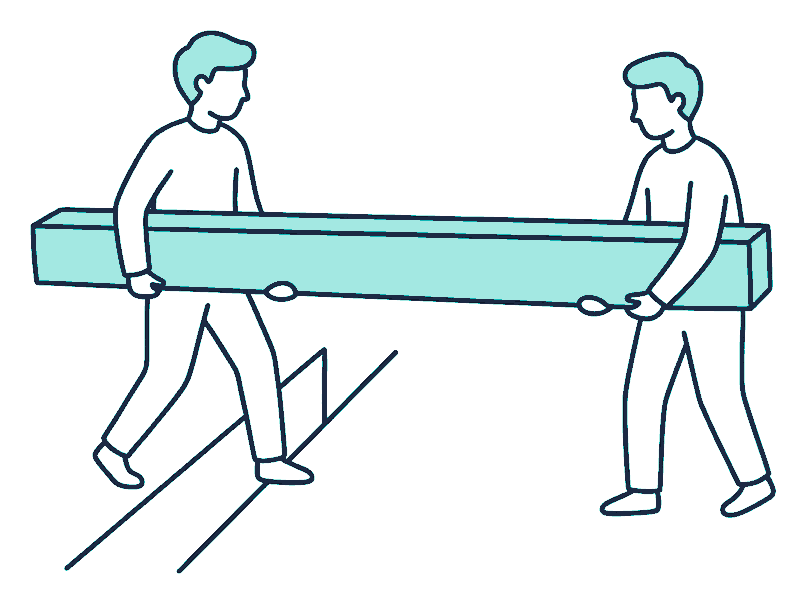
ACC and income protection cover different territory in New Zealand, and the boundary matters. For a workplace or non-work accident, ACC pays 80% of income to its cap, and a conventional income protection policy offsets that payment, so it typically pays little or nothing while ACC pays in full. Where income protection earns its premium is everywhere ACC does not reach: illness, income above ACC's cap, claims where ACC reassesses you off compensation, and most gradual-onset and mental health conditions.
| Scenario | ACC Covers? | Income Protection Covers? |
|---|---|---|
| Workplace accident | Yes (80% of income to cap) | Usually little or nothing: conventional policies offset ACC; cover above ACC's cap or non-offsetting products (e.g. some mortgage-repayment cover) can still pay |
| Non-work accident (e.g. weekend sport) | Yes | Usually offset against ACC in the same way |
| Illness (cancer, heart disease, etc.) | No | Yes, full benefit |
| Work-related gradual-onset condition | Possible: ACC can cover gradual process conditions caused by your work when its causation tests are met (ACC, *Injuries we cover*, retrieved 19 August 2026) | Yes, if medically verified, and without ACC's occupational-causation hurdle |
| Mental health condition | Limited: ACC can cover mental injury caused by a covered physical injury, certain traumatic events experienced at work, and sexual abuse or assault through its Sensitive Claims Service (ACC) | Yes, subject to policy terms |
Income protection is designed to coordinate with ACC. If ACC is paying, your income protection benefit is reduced so you do not receive more than your maximum entitlement. If ACC is not paying (illness), income protection pays the full benefit.
The Other Cover Tradies Should Know About
Income protection is one tool in a set, and for a self-employed tradie several of the others deserve a look in the same conversation:
- Mortgage-repayment cover insures your repayments rather than your income, and some versions do not offset ACC, so they can pay alongside weekly compensation after an accident.
- Loss-of-earnings cover is structured around actual lost earnings and can suit variable trade income.
- Specific-injury benefits pay a fixed amount for defined injuries (fractures are the classic case) regardless of what ACC does: fast money while everything else is being assessed.
- Business-expenses cover keeps the fixed costs of the business (vehicle finance, insurance, yard rent, an apprentice's wages) paid while you cannot work. Your income protection covers the household; this covers the business.
- Key-person cover matters where the business genuinely depends on one tradie: it pays the business, not the household, so work can be finished or wound down properly.
- ACC CoverPlus Extra lets self-employed people agree their level of ACC cover in advance instead of having it assessed from past filed earnings. For tradies with lumpy or growing income, this can matter as much as any private policy.
One structural point for the self-employed: insurers assess your insurable income from what you actually take out of the business, typically drawings and taxable profit, not turnover. A tradie with $400,000 of turnover and $70,000 of taxable income is insured on something near the latter. Get your accountant and your adviser talking to each other before you set a benefit amount.
What to Look for in a Policy
Five policy features matter most when a New Zealand tradie compares income protection. An own occupation definition pays when you cannot do your specific trade. Agreed value locks your benefit at application, which suits variable self-employed income. A partial disability benefit supports a graduated return, guaranteed insurability allows future increases without new underwriting, and waiver of premium applies while on claim.
- Own occupation definition. Make sure the policy pays if you cannot do your specific trade, not just "any occupation."
- Agreed value. If your income fluctuates (common for self-employed tradies), agreed value locks in your benefit amount at application, regardless of what you earn at claim time.
- Partial disability benefit. This pays a reduced benefit if you can return to work part-time or in a lighter capacity. Essential for a gradual return to trade work.
- Guaranteed insurability. Allows you to increase cover in the future without further medical underwriting, useful as your income grows.
- Waiver of premium on claim. Your premiums are waived while you are receiving a benefit, so you do not pay while you are off work.
Frequently Asked Questions
Do I really need income protection if I have ACC?
Yes. ACC covers injuries, with limited extensions: it can cover some work-caused gradual conditions and some mental injuries (those caused by a covered physical injury, certain traumatic events at work, and sexual abuse or assault through its Sensitive Claims Service). What it does not cover is illness. Cancer, heart disease and most chronic conditions can keep you off work for months or years with no ACC support, and that is the gap income protection exists to fill.
How much does income protection cost for a builder?

Builders sit in the heavy manual occupation class, which carries the highest income protection rates, so a builder pays substantially more than an office worker for identical cover. Beyond occupation class, your age, your income, the benefit period and the waiting period set the price. A 2-year benefit with a 13-week wait is the cheapest common combination. A longer waiting period always costs less than a shorter one, all else equal; extending cover to age 65 is materially more expensive. Because these levers interact, the only accurate figure is a personalised quote from an adviser.
Can I get income protection if I am self-employed?
Absolutely. Self-employed tradies are among the most common applicants for income protection. You will need to provide financial records (tax returns or accountant statements) to verify your income. Agreed value cover is particularly useful for self-employed tradies with variable income.
What is the best waiting period for a tradie?
It depends on your financial buffer. If you have 8 weeks of expenses saved, an 8-week waiting period offers a good balance between premium savings and protection. If cash flow is very tight and you have no savings, a 4-week wait provides faster cover. Avoid going beyond 13 weeks unless you have very strong reserves.
Will my premiums go up if I make a claim?
No. Income protection premiums in New Zealand are not affected by your claims history. Your premiums are based on your age, occupation, health, and policy structure at the time of application. Making a claim does not trigger a premium increase.
Is income protection tax-deductible for tradies?
If you are self-employed, income protection premiums are generally tax-deductible as a business expense. However, the benefit payments you receive while on claim are treated as taxable income. If your employer pays your premiums, the same principle applies. Confirm the details with your accountant.
What happens if I change trades or retire?
If you change to a lower-risk occupation, you may be able to have your premium reduced. If you move to a higher-risk trade, the insurer may adjust your terms. When you retire or stop working, income protection is no longer necessary as there is no income to protect. Most policies have a set end date (such as age 65 or 70).
Getting Started
The most common reason tradies do not have income protection is not the cost. It is that they have not got around to it. The process is straightforward:
- Talk to a licensed financial adviser (QuoteHub does not usually charge clients directly: see our disclosure statement).
- Provide your income details and occupation.
- Complete a health questionnaire.
- The adviser compares options across major NZ insurers and recommends a policy.
- Cover is typically in place within 1 to 3 weeks.
The best time to get income protection is when you are young and healthy. Premiums are lower, and you are less likely to have pre-existing conditions that complicate underwriting.
References
Stats NZ, Labour Market Statistics: Earnings, June 2025 quarter.
Fidelity Life, Premium Rate Changes Effective 1 April 2025.
MAS, Income Protection Rate Adjustments, June 2024.
ACC, What We Cover, 2025.
Financial Markets Authority, Financial Advice Provider Register, 2025.
Various NZ insurer Product Disclosure Statements (AIA, Asteron, Chubb, Fidelity Life, nib, Partners Life), 2025/2026.
Disclaimer: This article is for informational purposes only and does not constitute financial advice. Financial advice is provided by Craig Smith Business Services Limited, trading as Smiths Insurance & KiwiSaver, a licensed Financial Advice Provider (FSP712931). Insurance needs vary based on your personal circumstances, occupation, and health. Always seek personalised advice from a licensed adviser before making insurance decisions.
Read the full insurance guides
Compare your cover with a licensed NZ adviser · free, no obligation.
Explore related pages: Life Insurance, Income Protection, Health Insurance, Trauma Insurance, How Were Paid.