Insurance for Women in NZ: Why Cover Matters at Every Life Stage
Women in New Zealand are statistically more likely to be underinsured than men. Despite making up roughly half the workforce, women hold less life insurance cover on average, are less likely to have income protection, and are more likely to experience career breaks that leave gaps in their financial safety net.
The reasons are not mysterious. The gender pay gap, career breaks for caregiving, part-time work patterns, and the outdated assumption that the primary earner is the one who "needs" insurance all contribute to a situation where women carry more risk and less protection.
This guide covers everything women in New Zealand should consider when it comes to insurance, from how gender affects premiums to why getting the right cover before a career break is one of the most important financial decisions you can make.
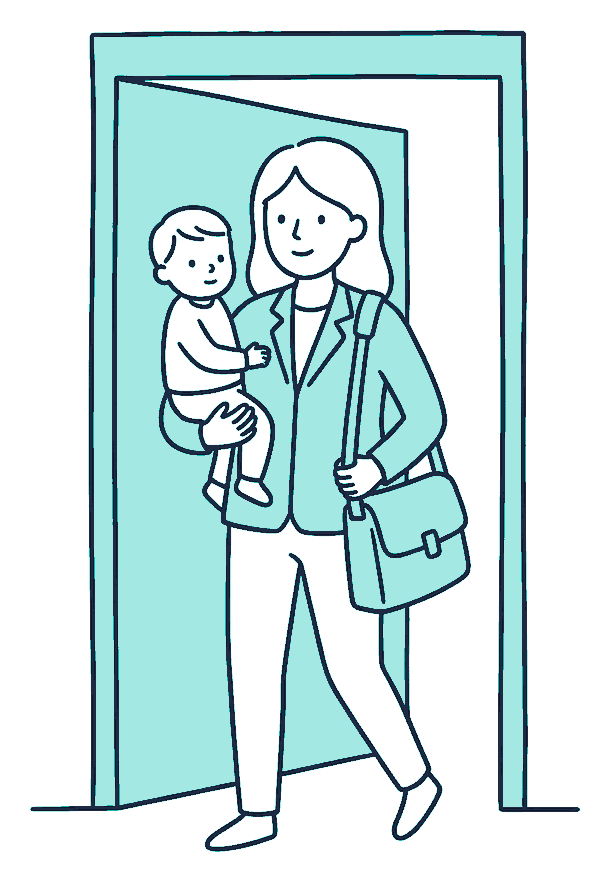
The Insurance Gender Gap in New Zealand
New Zealand women are underinsured relative to their financial responsibilities. A persistent gender pay gap, a higher rate of part-time and reduced-hours work, and a longer life expectancy all pull in the same direction. Life expectancy at birth is 83.5 years for females and 80.1 years for males, based on death rates in 2022–2024 (Stats NZ, *National and subnational period life tables: 2022–2024*, retrieved 18 August 2026).
- Women earn less than men on average across the New Zealand workforce, which means lower KiwiSaver balances, less savings, and a greater reliance on insurance if something goes wrong.
- Women are more likely to work part-time or on reduced hours, which affects both income protection eligibility and the benefit amount an insurer will agree to.
- Women live longer on average: life expectancy at birth is 83.5 years for females against 80.1 years for males (Stats NZ period life tables, 2022–2024, retrieved 18 August 2026). That sounds positive, but it has significant implications for retirement savings, long-term health costs, and the likelihood of needing care in later life.
- Women are more likely to be widowed or live alone in retirement, making their own financial protection even more critical.
The insurance gap is not about women being less financially savvy. It is about life patterns, caregiving responsibilities, and a system that has historically centred cover around the "breadwinner" model. Understanding these patterns is the first step to closing the gap.
How Gender Affects Insurance Premiums in New Zealand
Gender is one of several factors New Zealand insurers use when pricing cover, and its effect differs by product. Women typically pay 10% to 25% less for life insurance because of longer life expectancy, may pay more for income protection with some insurers, and see mixed trauma pricing. Occupation, health and smoking status matter more.
Life Insurance: Women Typically Pay Less
Women generally pay lower life insurance premiums than men. This is because women have a longer average life expectancy, which means the statistical risk of a claim being made within the policy term is lower. The difference is not enormous, but it can be 10% to 25% less depending on the insurer and age bracket.
How the gender gap behaves across ages, for $500,000 of life cover (non-smoker):
| Age | Women | Men |
|---|---|---|
| 30 | Lowest premium point for either gender | Slightly higher than women at the same age |
| 40 | Noticeably higher than at 30 | Higher again than women at 40 |
| 50 | Highest of the three ages, and rising each year | Highest overall; the gap in dollar terms is now widest |
The percentage gap between women and men stays reasonably steady across ages, but because the underlying premium climbs with age, the same percentage translates into a larger dollar difference the later you leave it. Actual premiums depend on the insurer, health history, smoking status, and policy structure, so a personalised quote is the only way to see your own figure.
Income Protection: Women May Pay More
Income protection premiums for women can be higher than for men in some cases, particularly for certain occupations and age brackets. Insurers factor in that women are statistically more likely to make claims for certain conditions, including mental health, musculoskeletal issues, and pregnancy-related complications.
However, this varies significantly between insurers. Some insurers use unisex rates for income protection, while others differentiate by gender. This is one area where comparing multiple insurers matters a great deal.
Trauma (Critical Illness) Insurance: A Mixed Picture
Trauma insurance premiums reflect the different health risks men and women face. Women have higher rates of breast cancer and certain autoimmune conditions, while men have higher rates of heart disease and some other cancers. The net effect on premiums varies by age and insurer.
The key takeaway is that gender is only one factor among many. Your occupation, health history, BMI, family medical history, and smoking status all have a larger impact on premiums than gender alone.
Career Breaks and Insurance: The Critical Window
Career breaks are the single biggest risk to a woman's insurance position in New Zealand, whether the break is parental leave, a shift to part-time hours, or leaving work to care for children or elderly parents. Securing agreed value income protection before hours reduce is critical, because indemnity cover pays on actual earnings at claim time.
What Happens to Income Protection During a Career Break
Income protection is designed to replace your income if you cannot work due to illness or injury. If you stop working or reduce your hours, your cover may need to be adjusted, and your ability to increase cover later may be limited.
The critical concept here is agreed value versus indemnity policies.
- Agreed value locks in your benefit amount at the time you take out the policy, regardless of what you are earning at the time of a claim. If you take out an agreed value policy while earning $80,000 and then reduce to part-time or stop working, you can still claim based on the original agreed amount.
- Indemnity pays based on your actual earnings at the time of (or leading up to) a claim. If you are earning less or nothing when you need to claim, your benefit will reflect that reduced income.
For women planning a career break, securing an agreed value income protection policy before reducing hours or leaving work is one of the most important steps you can take. Once you are no longer working full-time, it becomes much harder to get agreed value cover at a meaningful level.
If you already have income protection, check whether your policy is agreed value or indemnity. If it is indemnity, talk to an licensed financial adviser about switching before any career break.
Life Insurance and Trauma Cover During Career Breaks
Life insurance and trauma cover are not tied to your income, so they continue regardless of whether you are working. However, many women let these policies lapse during career breaks to save money. This is risky for two reasons:
- If your health changes during the break, you may not be able to get cover back at the same terms (or at all).
- You will be older when you reapply, which means higher premiums.
If affordability is an issue during a career break, talk to your adviser about reducing cover temporarily rather than cancelling it entirely. Most insurers allow you to reduce your sum insured and increase it again later (subject to underwriting).
Why Stay-at-Home Mums Need Insurance

Stay-at-home parents in New Zealand need insurance because replacing their unpaid work costs real money, with full-time childcare running $300 to $500 per week per child. A life insurance sum insured of $200,000 to $500,000 funds childcare and household help for several years, and trauma cover of $100,000 to $250,000 covers care alongside treatment.
The economic value of unpaid domestic labour in New Zealand is substantial. If a stay-at-home parent becomes seriously ill, is diagnosed with a critical illness, or passes away, the family faces immediate and significant costs:
- Full-time childcare: $300 to $500 per week per child
- Before and after school care: $100 to $200 per week per child
- Household management, cooking, cleaning, transport, and logistics: difficult to quantify but very real
- The working parent may need to reduce hours or take leave
Life insurance for a stay-at-home parent should be sufficient to fund childcare and household help for several years. A common recommendation is $200,000 to $500,000, depending on the number and ages of children.
Trauma cover is arguably even more important for a stay-at-home parent. If the stay-at-home parent is diagnosed with cancer or suffers a serious illness, the family needs a lump sum to fund both their care and replacement childcare. A trauma payout of $100,000 to $250,000 provides meaningful breathing room.
Breast Cancer and Trauma Cover
Breast cancer is the most common cancer among New Zealand women, with approximately 3,500 new diagnoses each year and one in nine women diagnosed during their lifetime. All major NZ insurers cover it under trauma insurance, though early-stage disease such as DCIS typically triggers a partial payout of 10% to 25% of the sum insured.
Trauma insurance (also called critical illness cover) pays a lump sum on diagnosis of a covered condition. Breast cancer is covered by all major NZ insurers, but the details matter:
- Early-stage breast cancer (such as DCIS or carcinoma in situ) typically triggers a partial payout, often 10% to 25% of the sum insured, depending on the insurer and policy wording.
- Invasive breast cancer (stages I and above) typically triggers the full trauma payout.
- Some insurers have specific definitions around tumour size, staging, and treatment requirements.
If you have a family history of breast cancer, getting trauma cover in place early is important. Pre-existing conditions and family history can affect both the availability and cost of cover, but most women with a family history can still obtain cover, sometimes with a loading (premium increase) or exclusion.
The Public Health Agency recommends that women aged 45 to 69 have mammograms every two years through BreastScreen Aotearoa. Regular screening improves early detection, which improves both health outcomes and insurance claim outcomes.
Income Protection for Women: Getting It Right
Income protection is the cover most commonly missing from women's insurance portfolios in New Zealand, often because ACC is assumed to fill the gap when ACC covers accidents only, not illness, mental health conditions or pregnancy complications. Getting it right means agreed value cover, an own occupation definition, and a waiting period of 4, 8 or 13 weeks that suits your savings.
Key considerations for women:
Get agreed value cover while you are earning full-time. This is worth repeating. Agreed value income protection is the single most important insurance product for women who plan to have children or take a career break. Lock it in while your income is at its highest.
Check the definition of disability. Policies define disability differently. "Own occupation" means you are covered if you cannot perform your specific job. "Any occupation" means you are only covered if you cannot perform any job you are reasonably suited to. Own occupation definitions are significantly more favourable.
Understand the waiting period. The waiting period (also called the stand-down period) is the time between becoming unable to work and when benefits start paying. Common options are 4 weeks, 8 weeks, or 13 weeks. A longer waiting period reduces premiums but means you need savings to bridge the gap.

- Benefit period matters. Choose a benefit period that aligns with your financial exposure. A benefit period to age 65 provides the most comprehensive protection, while a 2-year or 5-year benefit period is more affordable but leaves you exposed if your illness or injury lasts longer.
If you are not sure where to start with income protection, our free insurance check can help you understand what level of cover makes sense for your situation.
Maternity and Insurance
Pregnancy changes what cover you can get and when. New Zealand insurers will generally issue life and trauma cover during pregnancy, sometimes with a pregnancy exclusion removed after a healthy delivery, but most will not start a new income protection policy while you are pregnant. Existing income protection continues, with normal pregnancy and childbirth excluded.
Applying for cover while pregnant
You can apply for life insurance and trauma cover while pregnant, but most insurers will defer certain decisions until after the birth. Some insurers will issue cover with a pregnancy exclusion that is removed after a healthy delivery.
Income protection applications during pregnancy are more complicated. Most insurers will not start a new income protection policy during pregnancy, or will issue it with significant exclusions. This is one of the strongest arguments for getting income protection in place before becoming pregnant.
Existing policies during pregnancy
If you already have income protection and become pregnant, your existing cover continues. However, claims related to normal pregnancy and childbirth are typically excluded. Complications such as pre-eclampsia, gestational diabetes requiring hospitalisation, or emergency caesarean recovery may be covered, depending on the insurer and policy wording.
Trauma cover continues as normal during pregnancy. If you are diagnosed with a covered condition (such as cancer) during pregnancy, the claim process proceeds as it would at any other time.
After the birth
Once the baby is born and you have recovered, any pregnancy-related exclusions on new policies are typically removed. This is a good time to review your overall cover with your adviser, particularly if your circumstances have changed (new dependant, reduced income, increased debt).
Divorce, Separation, and Insurance
Separation leaves women particularly exposed on insurance in New Zealand, because cover held by an ex-partner can lapse or be cancelled without your knowledge, a beneficiary nomination in your favour can be changed, and sole-parent responsibilities usually increase what you need. Review beneficiaries, check policy ownership, and arrange your own cover promptly.
- If the ex-partner held the policies, cover may lapse or be cancelled without your knowledge.
- If you were the named beneficiary on your ex-partner's life insurance, that nomination may be changed.
- If you are now a sole parent, your insurance needs have likely increased, not decreased.
Key steps after separation:
- Review beneficiary nominations on all policies. Update them to reflect your current wishes.
- Assess your new financial position. As a sole earner or primary caregiver, calculate what your dependants would need if something happened to you.
- Get your own policies if you were previously covered under a partner's arrangements. Do not delay this. Your health and age today will never be better for insurance purposes than they are right now.
- Check whether your existing policies are owned by you or your ex-partner. Policy ownership determines who controls the cover.
For a detailed guide on managing insurance through separation, see our article on insurance and divorce in NZ.
Women-Specific Health Considerations

Several health conditions disproportionately affect women and shape their insurance options in New Zealand. Autoimmune conditions such as lupus, rheumatoid arthritis and multiple sclerosis affect future applications, mental health history can bring exclusions or loadings on income protection, endometriosis affects an estimated 120,000 New Zealand women, and osteoporosis becomes a risk after menopause.
- Autoimmune conditions (such as lupus, rheumatoid arthritis, and multiple sclerosis) are more common in women. If diagnosed, these conditions will affect future applications for life, trauma, and income protection cover.
- Mental health conditions, including anxiety and depression, are diagnosed at higher rates in women. A history of mental health treatment can result in exclusions or loadings on income protection policies.
- Endometriosis affects an estimated 120,000 women in New Zealand. While it does not typically affect life insurance, it can result in exclusions on income protection policies.
- Osteoporosis becomes a significant risk factor for women post-menopause. It is less likely to affect insurance applications for younger women but is worth noting for those seeking cover later in life.
The pattern across all of these conditions is the same: getting cover in place while you are healthy gives you the broadest protection. Waiting until a diagnosis means exclusions, loadings, or declined applications.
Life Insurance Through the Stages: A Guide for Women
Insurance priorities for women shift by decade in New Zealand. Cover is cheapest and easiest to obtain in your 20s, when $100,000 to $200,000 of life cover and income protection to age 65 is a strong start. The 30s and 40s add mortgage and family needs, while trauma and health cover matter more from the 50s.
In Your 20s
This is the cheapest time to get cover, and many women skip it because they feel healthy and have few dependants. However, there are good reasons to consider cover in your 20s:
- Premiums are at their lowest. Locking in a level premium policy now saves money over a lifetime.
- You are most likely to be healthy and able to get cover without exclusions.
- If you have a student loan or any debts, life insurance ensures they do not become a burden on your family.
- Income protection protects your most valuable asset: your ability to earn.
Even a basic life insurance policy of $100,000 to $200,000 and an income protection policy to age 65 puts you in a strong position.
In Your 30s and 40s: The Family Years
This is when insurance becomes most critical and most complex. Mortgages, children, career breaks, and the juggle of work and caregiving all converge.
Priorities in this stage:
- Life insurance sufficient to clear the mortgage and fund the family for 10 to 15 years.
- Income protection on agreed value if you are planning or taking a career break.
- Trauma cover to provide a lump sum if diagnosed with a serious illness. Breast cancer risk begins to increase from the late 30s onward.
- Health insurance if you want access to private healthcare, shorter wait times, and specialist choice. Consider adding your children to your policy.
Use our life insurance calculator to get a sense of what level of cover suits your family's needs.
In Your 50s and Beyond
As children become independent and mortgages reduce, some women scale back their insurance. This can make sense, but it is worth reviewing carefully before cancelling cover.
- Life insurance may still be needed if you have ongoing financial dependants, remaining mortgage debt, or want to leave a legacy.
- Trauma cover becomes increasingly important as the risk of cancer, heart disease, and stroke rises with age.
- Income protection remains valuable if you are still working and reliant on your income. Consider how many working years you have left and what the financial impact of a long illness would be.
- Health insurance becomes more valuable as public hospital wait times increase for non-urgent procedures. If you have held health insurance for many years, think carefully before cancelling it, as re-entry at an older age will be significantly more expensive.
Women in their 50s and 60s should also consider the implications of living longer. With a life expectancy at birth of 83.5 years for females and many women living well into their 90s, retirement savings need to stretch further. Insurance can play a role in protecting those savings from being depleted by a health crisis.
Women Living Longer: What It Means for Insurance and Retirement
Living longer creates financial challenges alongside the benefits. A New Zealand woman retiring at 65 may need savings to last 20 to 30 years, aged residential care costs between $1,000 and $2,500 per week depending on the level of care, and widowhood often means managing on a single income or NZ Super alone.
- Retirement savings need to last longer. A woman retiring at 65 may need her savings to last 20 to 30 years. A serious illness in retirement can rapidly deplete those savings.
- Women are more likely to need aged care. The cost of residential aged care in New Zealand ranges from $1,000 to $2,500 per week, depending on the level of care required.
- Women are more likely to be widowed. This means managing finances alone, potentially on a single income or NZ Super only.
While insurance cannot solve all of these challenges, having adequate cover during your working years means you are less likely to dip into savings or KiwiSaver to cover a health crisis. Trauma cover in particular can protect retirement savings by providing a lump sum to fund treatment and recovery without touching your long-term investments.
How to Get Started
Getting your insurance sorted does not need to be complicated. Here is a simple starting point:
- Take stock of what you have. Gather any existing policy documents and check what cover you currently hold, what the benefit amounts are, and whether policies are agreed value or indemnity.
- Identify the gaps. Compare your current cover against your actual financial obligations: mortgage, dependants, income, debts, and future plans.
- Talk to a licensed financial adviser. An adviser can compare options across multiple insurers, structure your cover tax-efficiently, and ensure you are not paying for overlap or missing critical gaps.
You can request a free, no-obligation insurance check through QuoteHub. We will match you with a licensed adviser who can review your current position and recommend a plan that fits your life stage and budget.
Frequently Asked Questions
Do women pay less for life insurance in New Zealand?
Generally, yes. Women typically pay 10% to 25% less for life insurance than men of the same age, due to longer average life expectancy. However, premiums also depend on health history, occupation, smoking status, and the insurer, so the gap varies.
Can I get income protection while on parental leave?
It is very difficult to take out a new income protection policy while on parental leave or not working, as insurers need evidence of current income. This is why it is critical to get income protection in place while you are still working full-time, ideally on an agreed value basis.
Is pregnancy covered by income protection insurance?

Normal pregnancy and childbirth are excluded from income protection claims. However, serious pregnancy complications that prevent you from working may be covered, depending on the insurer and policy wording. Conditions such as severe pre-eclampsia or complications requiring extended hospitalisation are assessed on a case-by-case basis.
Should stay-at-home mums have life insurance?
Yes. While a stay-at-home parent is not earning, they are providing services that would cost the family tens of thousands of dollars per year to replace. Life insurance on a stay-at-home parent ensures the family can fund childcare and household help if the worst happens.
What insurance should I get before having a baby?
The ideal pre-baby insurance checklist includes: life insurance on both parents, income protection (agreed value) while you are still earning full-time, trauma cover, and health insurance if you want private maternity care or cover for your child. Get everything in place before becoming pregnant for the smoothest underwriting process.
Does a history of anxiety or depression affect my insurance?
It can. A history of mental health treatment may result in a mental health exclusion on income protection, or a loading (premium increase) on some policies. The impact varies significantly between insurers, which is why comparing options through an adviser is particularly important for women with a mental health history.
Final Thought
Insurance is not a one-size-fits-all product, and it is certainly not one-size-fits-both-genders. Women face specific financial risks, from career breaks and the pay gap to longer life expectancy and higher rates of certain health conditions. The good news is that the tools to manage those risks are available and, in many cases, more affordable than women expect.
The best time to get cover in place is before you need it. Whether you are in your 20s and just starting out, navigating the family years, or approaching retirement, getting the right insurance structure in place now protects the life you are building.
Get a free insurance check with QuoteHub and find out exactly where you stand.
Financial advice is provided by Craig Smith Business Services Limited, trading as Smiths Insurance & KiwiSaver, a licensed Financial Advice Provider (FSP712931). QuoteHub is a trading name. The information in this article is general in nature and does not constitute personalised financial advice. We recommend speaking with a licensed financial adviser before making insurance decisions.
References
- Stats NZ, National and subnational period life tables: 2022–2024
- Financial Markets Authority (FMA), Insurance guidance
- ACC New Zealand
- Sorted.org.nz, Insurance guides
- Insurance & Financial Services Ombudsman (IFSO)
- MoneyHub NZ, Insurance resources
- Diabetes New Zealand
- Cancer Society of New Zealand
- Heart Foundation NZ
Read the full insurance guides
Compare your cover with a licensed NZ adviser · free, no obligation.
Explore related pages: Life Insurance, Income Protection, Health Insurance, Trauma Insurance, Calculators.