Life Insurance in Your 30s: The Decade That Changes Everything
Your 20s were about building foundations. Your 30s are when the weight of those foundations starts to matter. Mortgages, children, career progression, and growing financial obligations mean that the consequences of an unexpected death or serious illness are no longer theoretical. They are measured in hundreds of thousands of dollars and in the wellbeing of people who depend on you.
Yet this is also the decade where many New Zealanders are stretched thin. Between rising housing costs, childcare fees, and the general expense of building a life, insurance can feel like one more cost to push down the list. That thinking is understandable, but it is also the most financially dangerous mistake you can make in your 30s.
This guide covers how much life insurance you actually need, what it costs between 30 and 39, how it fits alongside income protection and trauma cover, and the specific decisions that will save you money over the long term.
Why Your 30s Are the Pivotal Decade for Insurance
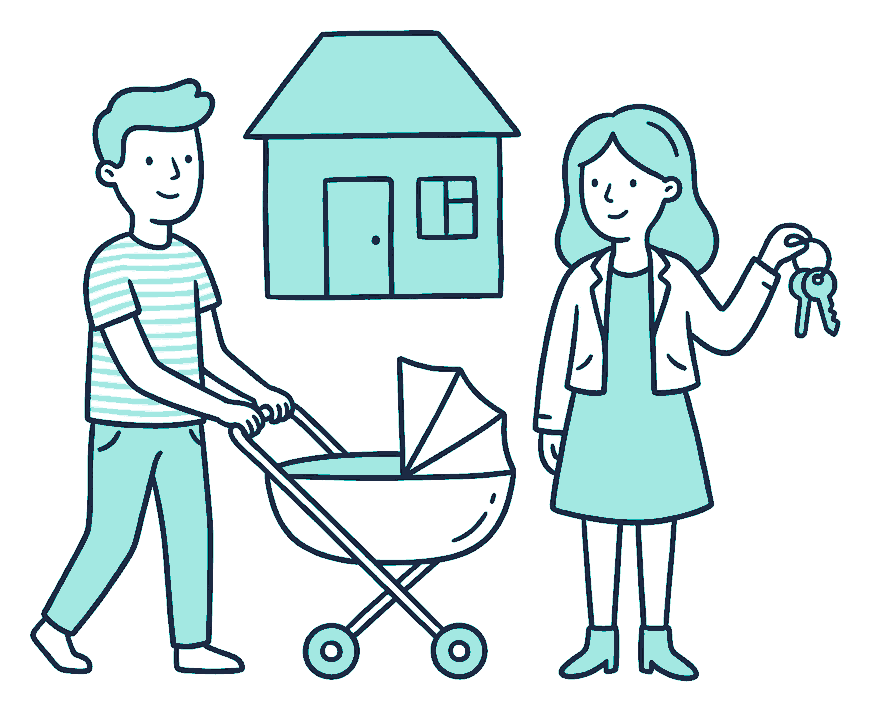
Insurance becomes urgent in your 30s because mortgage debt, children and income growth converge. Median house prices in New Zealand sit above $800,000 in most main centres, many 30-somethings carry mortgages of $500,000 to $750,000 or more, and raising one child to age 18 costs an estimated $250,000 to $350,000.
Mortgage debt. The median house price in New Zealand sits above $800,000 in most main centres, and many 30-somethings are carrying mortgages of $500,000 to $750,000 or more. If one income earner dies, the surviving partner needs to either keep making repayments or sell the family home at a time of grief.
Children. Raising a child in New Zealand costs an estimated $250,000 to $350,000 from birth to age 18. If you have two or three children, the financial commitment is enormous and extends for decades.
Career growth. Your 30s are often when your income starts to climb. That is good news for your lifestyle, but it also means the gap between what your family spends and what they could survive on without your income is widening.
Partner dependency. Whether one of you stays home with children, works part-time, or you both earn, most couples in their 30s have structured their finances around two incomes (or one income and one caregiver). Remove either person from the equation and the household faces an immediate financial crisis.
The reality is straightforward: at no other point in your life are so many people so financially dependent on your continued health and survival. Insurance is the mechanism that protects them if things go wrong.
How Much Life Insurance Do You Need in Your 30s?
Most New Zealanders in their 30s end up with life cover between $500,000 and $2,000,000 each, depending on mortgage, income and number of children. Licensed financial advisers build the figure by adding the outstanding mortgage, other debts, income replacement until the youngest child is independent, childcare and education costs and funeral expenses, then subtracting existing assets.
| Component | How to Calculate | Example |
|---|---|---|
| Outstanding mortgage | Full remaining balance | $600,000 |
| Other debts | Car loans, personal loans, student loan balance | $30,000 |
| Income replacement | Annual income x number of years until youngest child is independent | $90,000 x 15 years = $1,350,000 |
| Childcare and education costs | Estimated future costs per child | $100,000 |
| Funeral and immediate expenses | Standard estimate | $15,000 |
| Less existing assets and savings | KiwiSaver, savings, existing cover through work | -$150,000 |
| Total recommended cover | $1,945,000 |
That number looks large, and for many families in their 30s, it is. The key point is that the lump sum needs to replace your financial contribution to the household for the years your dependants would need it. A shortfall means your family eventually runs out of money.
In practice, most 30-something couples in New Zealand end up with life cover in the range of $500,000 to $2,000,000 each, depending on their mortgage, income, and number of children. A licensed adviser can model the exact figure based on your specific circumstances.
For a more detailed breakdown of life insurance calculations, see our guide on how much life insurance new parents need.
What Does Life Insurance Cost at 30 to 39?
Your 30s are still a relatively affordable time to buy life insurance, and the price is set by a short list of factors: your age at application, the sum insured, whether you smoke, your health history, your occupation, and whether you choose stepped or level premiums. Premiums increase with every year of age, so locking in cover early in the decade is noticeably cheaper than waiting until 38 or 39.
How the premium moves across the decade (non-smoker, stepped premiums):
| Age | $500,000 Cover | $1,000,000 Cover | $1,500,000 Cover |
|---|---|---|---|
| 30 | Lowest entry point in the decade | Low | Low to moderate |
| 33 | Slightly above the age-30 rate | Low to moderate | Moderate |
| 36 | Noticeably higher | Moderate | Moderate to high |
| 39 | Highest in the decade | Moderate to high | Highest of this grid |
These are relative positions rather than quotes. Your actual premium depends on the insurer, your health, your occupation, whether you smoke, and the policy structure you choose. The point is clear: a 30-year-old pays roughly half what a 39-year-old pays for the same cover.
Want to see what life insurance would cost for your situation? Get a free insurance check with QuoteHub and a licensed adviser will compare options across all major NZ insurers for you.
The Full Insurance Package for 30-Somethings
A comprehensive insurance plan in your 30s combines four covers: life insurance for a tax-free lump sum on death or terminal illness, income protection replacing up to 75% of pre-tax income when illness or injury stops you working, trauma insurance paying a lump sum on diagnosis, and health insurance for private treatment as New Zealand public wait times grow.
Life Insurance
Pays a tax-free lump sum if you die or are diagnosed with a terminal illness. This is the foundation of any insurance plan when you have dependants or a mortgage.
Income Protection
Replaces up to 75% of your pre-tax income if you cannot work due to illness or injury. This is separate from ACC, which only covers accidents. If you are diagnosed with cancer, have a mental health crisis, or develop a chronic condition that stops you working, income protection keeps money coming in.
For a household with a mortgage and children, income protection is arguably as important as life insurance. A serious illness that leaves you alive but unable to work can be just as financially devastating as a death.
How income protection premiums move across the decade (non-smoker, 4-week stand-down, to age 65):
| Age | $4,000/month Benefit | $6,000/month Benefit |
|---|---|---|
| 30 | Lowest | Low |
| 35 | Moderate | Moderate to high |
| 39 | Highest in the decade | Highest of this grid |
A shorter stand-down and a benefit period running to 65 both push the premium up, while a higher occupation class pushes it up further again. Those structural choices move the price more than a year or two of age does.
Trauma Insurance
Pays a tax-free lump sum upon diagnosis of a specified serious illness, such as cancer, heart attack, or stroke. Unlike income protection, trauma cover pays out regardless of whether you can still work. Many people use the payout to cover treatment costs, take time off, modify their home, or simply reduce financial pressure while they recover.
A common starting point for trauma cover in your 30s is $100,000 to $200,000. Premiums are still reasonable at this age.
Health Insurance
Covers private medical treatment, giving you faster access to specialists, diagnostic imaging, and surgery. With public hospital wait times in New Zealand continuing to grow, health insurance provides certainty about when and where you receive treatment.
If you are considering health insurance, it is worth noting that most insurers impose stand-down periods and pre-existing condition exclusions. Getting cover in your early 30s, before health issues arise, gives you the broadest coverage.
For a full overview of how these cover types work together at different ages, read our insurance by age guide.
Mortgage Protection vs Standalone Life Insurance
Mortgage protection insurance is a life policy whose sum insured decreases in line with your mortgage balance and pays only enough to clear the loan, while standalone life insurance pays a fixed lump sum your family can use for any purpose. For most New Zealand families in their 30s, standalone cover is the better choice.
Mortgage protection insurance is a life insurance policy where the sum insured decreases over time in line with your mortgage balance. If you die, it pays out enough to clear the remaining mortgage, but nothing more.
Standalone life insurance pays a fixed lump sum regardless of your mortgage balance. If you die, your family receives the full sum insured, which they can use to pay off the mortgage and cover living expenses, education costs, and anything else they need.
| Feature | Mortgage Protection | Standalone Life Insurance |
|---|---|---|
| Sum insured | Decreases over time | Fixed (or adjustable) |
| Payout use | Mortgage only | Any purpose |
| Flexibility | Limited | High |
| Cost | Lower (because cover decreases) | Higher (because cover stays level) |
| Portability | Tied to mortgage | Stays with you |
For most families in their 30s, standalone life insurance is the better choice. It provides more flexibility and ensures your family has enough to cover all their financial needs, not just the mortgage. The small additional cost is well worth it.
Single Income vs Dual Income Families
Dual income households in New Zealand need life insurance and income protection on both partners, since losing the lower earner still creates a shortfall once childcare is counted. Single income households need cover on the earning partner and on the stay-at-home parent, where childcare of $15,000 to $30,000 per year per child justifies $200,000 to $500,000 of life cover.
Dual income families
Both partners need their own life insurance and income protection. If one partner earns significantly more than the other, the higher earner typically needs more cover, but both need meaningful protection. Do not assume the lower earner does not need insurance. Losing their income still creates a significant shortfall, especially once childcare costs are factored in.
Single income families
The earning partner obviously needs substantial cover. But the non-earning partner also needs life insurance. If the stay-at-home parent dies, the surviving partner faces childcare costs of $15,000 to $30,000 per year per child, on top of their existing expenses. A life insurance policy of $200,000 to $500,000 on the non-earning parent is a sensible minimum.
Income protection does not apply to the non-earning partner (there is no income to protect), but trauma cover is still relevant. A serious illness affecting the stay-at-home parent would likely force the earning partner to reduce their hours or pay for additional help.
For more on insuring both parents, see our insurance for new parents guide.

The Level Premium Advantage in Your 30s
Level premiums suit your 30s because the time horizon is long enough for the crossover to arrive well before cover ends. Stepped premiums typically overtake level premiums within 8 to 12 years, so a 32-year-old New Zealander would see stepped costs exceed level costs by age 40 to 44, while a level rate keeps budgeting predictable alongside a mortgage.
Stepped premiums start low and increase each year as you age. They are cheaper in the early years but become increasingly expensive over time.
Level premiums are calculated based on your age at the time you take out the policy. They start higher than stepped premiums but remain relatively stable for the life of the policy (with adjustments for insurer rate reviews).
Here is why your 30s are the ideal time to lock in level premiums:
- Long time horizon. If you are 32 and plan to hold your policy for 25 to 30 years, level premiums will almost certainly cost less over the total life of the policy.
- Predictable budgeting. With a mortgage and children, knowing your insurance costs will not double over the next 15 years helps with long-term financial planning.
- The crossover point. Stepped premiums typically overtake level premiums within 8 to 12 years. If you are 32 now, by 40 to 44 your stepped premiums will likely exceed what your level premiums would have been.
By your late 30s, the case for level premiums is even stronger because your stepped premiums are already starting to climb.
Your adviser can model both scenarios for your specific age and cover amount so you can see the exact crossover point and total cost over time.
Common Mistakes 30-Somethings Make
Six mistakes recur among New Zealanders in their 30s: delaying cover until life settles down, relying only on employer group cover that ends with the job, underinsuring so a $1,200,000 need is met with $300,000 of cover, forgetting the non-earning partner, failing to review cover every two to three years, and ignoring income protection.
Delaying until "things settle down"
Your 30s are busy and expensive. It is tempting to wait until after the house purchase, after the second child, after the next pay rise. But every year of delay means higher premiums, and any health change during that time could result in exclusions or even a decline. The best time to get cover is before you need it.
Only insuring through work
Some employers offer group life insurance or income protection as a workplace benefit. This is a nice bonus, but it is not a substitute for personal cover. Group cover typically ends when you leave the job, may not cover your full needs, and does not give you control over the policy terms.
Underinsuring to save on premiums
Taking $300,000 of life cover when you need $1,200,000 is not a compromise. It is a gamble that leaves your family exposed to a shortfall of $900,000. It is better to structure your cover correctly and adjust the policy features (stand-down periods, benefit periods, premium type) to manage the cost.
Forgetting to insure the non-earning partner
As outlined above, the stay-at-home parent provides services worth tens of thousands of dollars per year. If they die or become seriously ill, those costs fall on the surviving partner.
Not reviewing cover as circumstances change
Your insurance needs at 31 with no children and a $400,000 mortgage are different from your needs at 37 with two children and a $700,000 mortgage. Review your cover every two to three years or whenever a major life event occurs.
Ignoring income protection
Life insurance gets most of the attention, but statistically you are far more likely to suffer a serious illness or injury during your working years than you are to die. Income protection covers the more probable risk.
Ready to get the right cover in place? Start a free insurance check with QuoteHub. We will connect you with a licensed financial adviser who compares policies from all major NZ insurers and recommends cover that fits your situation and budget. No cost, no obligation.
Frequently Asked Questions
How much life insurance does a 30-year-old need in NZ?

It depends on your mortgage, income, number of dependants, and existing assets. A common range for 30-somethings with a mortgage and children is $500,000 to $2,000,000 per partner. The income replacement formula outlined above will give you a more precise figure for your situation.
Is life insurance cheaper at 30 than at 40?
Yes, significantly. A healthy 30-year-old non-smoker will typically pay 40% to 50% less than a 40-year-old for the same level of cover. Premiums increase with every year of age, so earlier is always cheaper.
Do I need life insurance if I have no dependants?
If nobody depends on your income and you have no significant debts that would burden others, life insurance is a lower priority. However, locking in cover while you are young and healthy means you will have it in place at a lower cost when your circumstances change. Income protection and trauma cover may still be worthwhile regardless of dependants.
Should I get mortgage protection or standalone life insurance?
For most people, standalone life insurance is the better option. It provides a fixed payout that your family can use for any purpose, not just the mortgage. Mortgage protection reduces over time as your mortgage balance decreases, which means you get less cover for each year you hold the policy.
What is the difference between stepped and level premiums?
Stepped premiums start lower and increase each year based on your age. Level premiums are fixed at the rate for your age when you take out the policy. Over a 20 to 30 year period, level premiums almost always cost less in total. Your 30s are the ideal time to lock in level premiums because you have a long time horizon ahead of you.
Can I get life insurance if I have a pre-existing condition?
Yes, in most cases. The terms will depend on the condition, its severity, and how well it is managed. Some conditions may result in an exclusion or a premium loading, but outright declines are less common than people expect. A licensed adviser can approach multiple insurers to find the best terms. For more detail, see our guide on life insurance with pre-existing conditions.
How often should I review my life insurance in my 30s?
At least every two to three years, or whenever a major life event occurs. This includes buying a house, having a child, changing jobs, receiving a significant pay rise, or taking on new debt. Your cover should reflect your current financial situation, not the one you had when you first took out the policy.
References
- Financial Markets Authority (FMA), Insurance guidance
- Sorted.org.nz, Life insurance guide
- Insurance Council of New Zealand (ICNZ)
- Insurance & Financial Services Ombudsman (IFSO)
- MoneyHub NZ, Life insurance
- Cancer Society of New Zealand
- Heart Foundation NZ
- Mental Health Foundation NZ
- Stats NZ. (2025). Housing and property data, including median house prices. stats.govt.nz
- Financial Markets Authority. (2025). Choosing personal insurance in New Zealand. fma.govt.nz
- AIA New Zealand. (2025). Life insurance and income protection product guides. aia.co.nz
- Partners Life. (2025). Stepped vs level premium comparison data. partnerslife.co.nz
- Inland Revenue. (2025). KiwiSaver and tax treatment of insurance payouts. ird.govt.nz
- Ministry of Business, Innovation and Employment. (2025). Financial service provider obligations and FSP register. mbie.govt.nz
Disclaimer: This article is for informational purposes only and does not constitute personalised financial advice. Insurance needs vary depending on individual circumstances. We recommend speaking with a licensed financial adviser before making any decisions. Financial advice is provided by Craig Smith Business Services Limited, trading as Smiths Insurance & KiwiSaver, a licensed Financial Advice Provider (FSP712931). QuoteHub is a trading name. Henry Smith is a Financial Adviser (FSP1010699). Information is current as at March 2026 but may change. Always refer to the relevant insurer's policy wording for full terms and conditions.
Read the full insurance guides
Compare your cover with a licensed NZ adviser · free, no obligation.
Explore related pages: Life Insurance, Income Protection, Health Insurance, Trauma Insurance, What You Get.