Natural Disaster Insurance NZ: What EQC Covers and What You Need Privately
Natural disaster cover for a New Zealand home runs in two layers: the Natural Hazards Commission, still commonly called EQC, covers residential building damage up to $300,000 plus GST, effectively $345,000 per dwelling, and a private home insurance policy covers everything above that. EQC applies automatically only while private home insurance is current, and since 2024 contents are covered by the private policy alone.
In short
- EQC residential building cover is capped at $300,000 plus GST, effectively $345,000 per dwelling, and it lapses the moment private home insurance lapses.
- EQC covers storm and flood damage to residential land only, so flood damage to the house itself is met entirely by the private home policy.
- EQC contents cover was removed in 2024, leaving a private contents policy as the only protection for belongings against every natural hazard.
The Canterbury earthquake sequence cost private insurers more than $21 billion, with EQC paying a further $10 billion, taking the insured cost past $31 billion against estimated total economic losses of more than $40 billion (ICNZ, Canterbury earthquakes, retrieved 18 August 2026). New Zealand carries that hazard exposure permanently, with constant earthquake activity, an active volcanic zone running through the centre of the North Island, and a climate increasingly prone to severe flooding. Cyclone Gabrielle in 2023 caused widespread insured damage across the North Island.
If you own property in New Zealand, natural disaster insurance is not optional. It is essential. But the system can be confusing, because coverage comes from two sources: the government-backed Natural Hazards Commission (Toka Tu Ake, formerly EQC) and your private insurer.
This guide explains how those two layers work together, where the gaps are, and why natural disaster risk should also prompt you to think about your personal insurance, particularly life insurance and income protection.
New Zealand's Natural Disaster Risk Profile
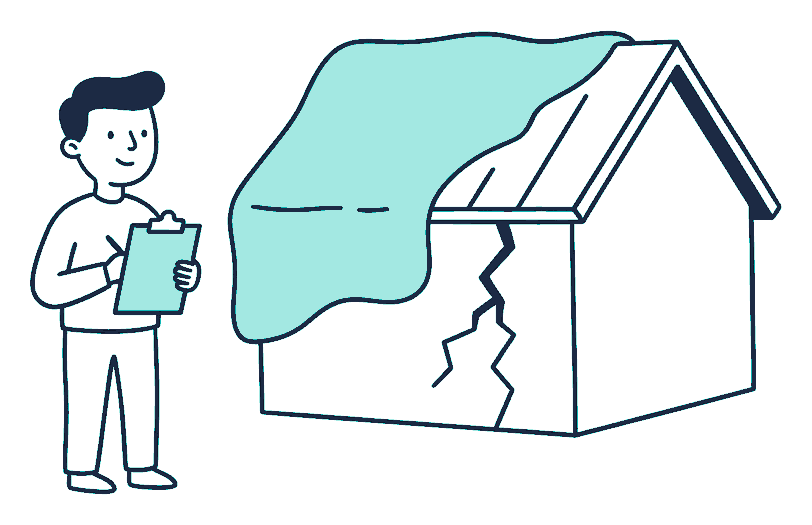
New Zealand's natural disaster risk profile spans earthquakes, flooding, volcanic activity, tsunami and landslides. The country records more than 15,000 earthquakes each year and roughly 150 strong enough to be felt, the Alpine Fault carries a 75% probability of a magnitude 8+ event within 50 years according to GNS Science, and flooding is the most frequent hazard nationally.
Earthquakes
New Zealand experiences roughly 150 earthquakes strong enough to be felt each year. The Alpine Fault on the South Island's West Coast has a 75% probability of producing a magnitude 8+ earthquake within the next 50 years, according to GNS Science. Wellington sits on multiple active fault lines. Christchurch is still rebuilding from the 2010-2011 sequence.
Flooding
Flooding is the most frequent and widespread natural hazard in New Zealand. Climate change is increasing the intensity of rainfall events, and development on flood-prone land means more properties are at risk. The 2023 Auckland Anniversary Weekend floods and Cyclone Gabrielle demonstrated the scale of damage that severe weather events can cause.
Volcanic activity
The Taupo Volcanic Zone includes active volcanoes such as Ruapehu, Tongariro, and White Island (Whakaari). Auckland itself sits on a volcanic field with 53 known vents. While a major eruption is considered low probability, the consequences would be severe.
Tsunami
New Zealand's extensive coastline and position on the Pacific Ring of Fire mean tsunami risk is real. Both locally generated tsunamis (from nearby earthquakes) and distant-source tsunamis (from earthquakes in South America or the Pacific) are credible threats to coastal communities.
Landslides
Heavy rainfall and earthquakes both trigger landslides, particularly in hilly terrain. Many residential properties, especially in Wellington, are built on slopes that are susceptible to land movement.
How Natural Hazards Commission (EQC / Toka Tu Ake) Cover Works
The Natural Hazards Commission, still commonly called EQC, provides the first layer of natural disaster cover for residential property in New Zealand, and it is included automatically with any private home insurance policy. Building cover is capped at $300,000 plus GST, effectively $345,000 per dwelling, and claims are lodged with your private insurer rather than with EQC directly.
Automatic cover
EQC cover is not something you buy separately. It is automatically included when you hold a private home insurance policy on a residential property. If you have home insurance, you have EQC cover. If you do not have home insurance, you do not have EQC cover.
This is a critical point for anyone who lets their home insurance lapse. You lose both your private cover and your EQC cover at the same time.
What EQC covers
EQC provides cover for damage to residential buildings and residential land caused by the following natural hazards:
- Earthquake (including earthquake-related fire, tsunami, and landslip)
- Natural landslip
- Volcanic eruption (including volcanic-related fire and tsunami)
- Hydrothermal activity
- Tsunami
- Storm and flood damage to residential land (land only, not buildings)
For buildings, EQC covers earthquake, volcanic eruption, hydrothermal activity, and tsunami damage. For land, the cover extends to include storm and flood damage as well.
EQC caps
EQC cover for residential buildings is capped at $300,000 plus GST (effectively $345,000). This cap applies per dwelling. If your home costs more than $345,000 to repair or rebuild after a natural disaster, the excess is covered by your private insurer, assuming you have adequate cover in place.
For residential land, the cap is the current market value of the land.
For personal property (contents), EQC no longer provides separate contents cover. This was removed in 2024. Contents cover for natural disaster damage is now provided entirely by your private insurer, if you hold a contents insurance policy.
How claims work
When natural disaster damage occurs, you lodge your claim with your private insurer, not directly with EQC. Your insurer manages the claim and coordinates with EQC for the portion that falls within EQC's cover. This "single insurer" model was introduced after lessons learned from the Canterbury earthquakes, where the split claims process caused significant delays and confusion.
What EQC Does Not Cover (and Where Private Insurance Fills the Gap)
EQC does not cover storm or flood damage to buildings, contents, commercial property, gradual damage, or building damage above the $345,000 cap. Flood damage to a New Zealand house is met entirely by your private home insurance, and since EQC contents cover was removed in 2024 your belongings are protected only by a private contents policy.
Building damage above the cap

If your home has a replacement value of $700,000 and sustains $500,000 in earthquake damage, EQC covers the first $345,000. Your private insurer covers the remaining $155,000. Without adequate private cover, you would need to find that $155,000 yourself.
Storm and flood damage to buildings
This is a gap many homeowners do not realise exists. EQC does not cover storm or flood damage to buildings. It only covers storm and flood damage to residential land. If your home floods, the building damage is covered entirely by your private home insurance policy.
Given that flooding is the most common natural hazard in New Zealand, this is a significant gap. Your private home insurance is your only protection against flood damage to your house.
Contents
Since the removal of EQC contents cover, all natural disaster damage to your belongings is covered by your private contents insurance. If you do not have contents insurance, your furniture, appliances, clothing, and personal items are uninsured against every natural hazard.
Commercial property
EQC only covers residential property. If you own a commercial building, a rental property classified as commercial, or a mixed-use property, the building portion used commercially is not covered by EQC.
Gradual damage
Neither EQC nor most private insurers cover gradual damage. If your home has been slowly sinking or cracking over time due to ground settlement (not triggered by a specific earthquake event), this is typically not covered.
Key Lessons from Canterbury and Kaikoura
The Canterbury earthquake sequence of 2010-2011 and the Kaikoura earthquake of 2016 exposed five weaknesses in New Zealand's natural disaster insurance, being widespread underinsurance as rebuild costs rose, a dual-claim process that left some claims unresolved for more than a decade, inadequate cash settlements, complex land damage from liquefaction, and cover becoming harder and dearer to obtain.
Underinsurance was widespread
Many Canterbury homeowners discovered their sum insured was too low to cover the actual cost of rebuilding. Construction costs rose sharply after the earthquakes due to demand, and homeowners with inadequate sums insured faced shortfalls.
The claims process was painfully slow
The original dual-claim system, where homeowners had to deal with both EQC and their private insurer, led to years of delays. Some Canterbury claims took more than a decade to resolve. The move to the single-insurer model was a direct response to this.
Cash settlements were often inadequate
Some homeowners accepted cash settlements based on initial damage assessments, only to discover later that the actual damage was more extensive. The lesson: get independent assessments before accepting a settlement.
Land damage was complex
Lateral spreading, liquefaction, and land subsidence created categories of damage that were difficult to assess and repair. Many homeowners found that while their house was repairable, the land it sat on was not stable enough to remain residential.
Insurance became harder to get
After Canterbury, insurers reassessed their exposure to New Zealand earthquake risk. Premiums rose significantly, particularly in Canterbury and Wellington. Some properties became difficult to insure at all.
Climate Change and Increasing Flood Risk
Flood risk in New Zealand is growing rapidly, with NIWA projecting more frequent and more intense extreme rainfall as the climate warms and sea level rise compounding coastal exposure. Insurers are pricing individual properties using detailed flood modelling, and some properties in Hawke's Bay affected by Cyclone Gabrielle are being bought out by the government.
The National Institute of Water and Atmospheric Research (NIWA) projects that extreme rainfall events will become more frequent and more intense as the climate warms. Sea level rise will compound coastal flood risk. And historical development patterns mean many New Zealand homes are built on land that is increasingly flood-prone.
Several things are changing as a result:
- Retreat and managed retreat are becoming part of the conversation. Some properties in Hawke's Bay and other areas affected by Cyclone Gabrielle are being bought out by the government because they are considered too risky to remain residential.
- Flood risk pricing is becoming more granular. Insurers are increasingly using detailed flood modelling to price individual properties, rather than broad regional assessments. Properties identified as high flood risk may face significantly higher premiums or restrictions on cover.
- Local councils are updating district plans to restrict development on flood-prone land, but existing properties remain exposed.
If you are buying a property, checking its flood risk is now as important as checking for earthquake risk. Your insurer will be doing the same assessment.
What Renters Need to Know
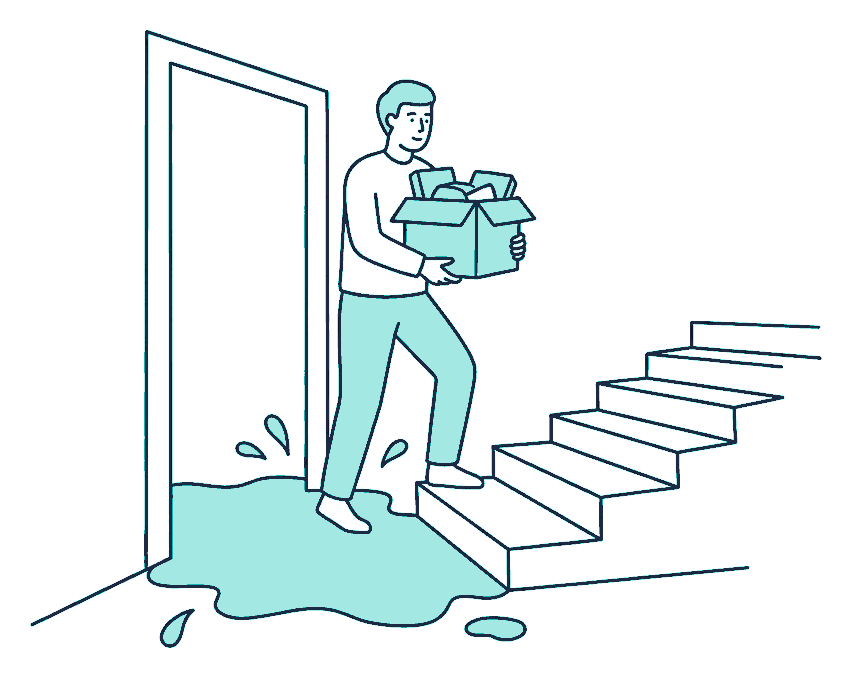
Renters in New Zealand do not need home insurance and do not receive EQC building cover, because the building is the landlord's responsibility. Contents insurance is the renter's responsibility, since a landlord's policy does not cover your belongings, and some contents policies include temporary accommodation cover if a natural disaster leaves the rental uninhabitable.
Contents insurance is your responsibility
Your landlord's insurance covers the building. Your belongings inside it are not covered by your landlord's policy. If an earthquake, flood, or fire destroys your possessions, you need your own contents insurance to replace them.
A standard contents policy typically covers natural disaster damage, but check the details. Some policies have sub-limits for specific types of events or exclude certain categories of items.
Temporary accommodation
If your rental becomes uninhabitable after a natural disaster, your landlord is not obligated to find or fund alternative accommodation for you. Some contents insurance policies include temporary accommodation cover as a benefit. This is worth checking for.
Your income is still at risk
Natural disasters do not just damage property. They disrupt businesses, close workplaces, and can leave you without income for weeks or months. Canterbury saw widespread job losses and business closures following the earthquakes. Cyclone Gabrielle devastated the Hawke's Bay economy.
Whether you rent or own, your ability to earn an income is your most valuable asset, and it is vulnerable to natural disasters.
The Personal Insurance Connection: Protecting Your Income and Your Family
Natural disasters in New Zealand threaten income and life as well as property, which is why life, income protection, and health insurance sit alongside home cover. Income protection replaces a portion of your income, typically 75%, when illness or injury stops you working, and the Christchurch earthquake of 22 February 2011 killed 185 people, leaving families reliant on life cover.
Income protection insurance
If a natural disaster damages your workplace, closes your employer's business, or leaves you injured and unable to work, income protection insurance replaces a portion of your income (typically 75%) while you recover or find new employment. ACC covers injuries, but it does not cover income loss from business disruption or redundancy. Income protection fills that gap.
After the Canterbury earthquakes, thousands of workers lost their jobs as businesses closed temporarily or permanently. Those with income protection insurance had a financial buffer. Those without it faced immediate financial pressure on top of the stress of living through a disaster.
Life insurance
Natural disasters can and do cause fatalities. The Christchurch earthquake on 22 February 2011 killed 185 people. If you have dependants, a mortgage, or debts that would burden your family, life insurance ensures they are not left with financial hardship on top of grief.
Trauma and total permanent disability (TPD) cover
Serious injuries from earthquakes, floods, and other disasters can result in permanent disability or long-term health conditions. Trauma insurance provides a lump sum on diagnosis of specified serious conditions. TPD cover pays out if you can never work again. Both provide financial support that goes beyond what ACC offers.
How to Check Your Natural Disaster Cover
Checking your natural disaster cover in New Zealand starts with confirming your home insurance is current, because EQC cover lapses with it. Review whether your sum insured reflects today's rebuild costs, understand the separate and often higher excess that applies to earthquake claims, confirm your contents policy since EQC no longer covers contents, and check for flood exclusions.
Confirm your home insurance is current. If it lapses, you lose EQC cover too.
Check your sum insured. Is it enough to rebuild your home at today's construction costs? Use rebuild cost calculators and factor in demolition, site clearance, and temporary accommodation.
Understand your excess. Some policies have separate (higher) excesses for natural disaster claims, particularly earthquake. Know what you would pay out of pocket.
Review your contents cover. EQC no longer covers contents. Your private contents policy is your only protection.

Check for flood exclusions. Some properties in high-risk areas may have flood exclusions or restrictions on their policies. Know what your policy does and does not cover.
Consider your personal insurance. Do you have income protection to cover lost earnings? Life insurance to protect your family? These are separate from your property insurance but equally important.
Ready to check whether your life, income protection, or health insurance is up to scratch? Get a free insurance review with QuoteHub and speak with a licensed adviser.
Frequently Asked Questions
Is EQC cover automatic in New Zealand?
Yes, but only if you hold a current private home insurance policy on a residential property. EQC cover is automatically included as part of your home insurance. You do not need to apply for it separately, and you cannot buy it as a standalone product. If your home insurance lapses, your EQC cover lapses with it.
What is the EQC cap for residential buildings?
The EQC cap for residential buildings is $300,000 plus GST, which is effectively $345,000. Any natural disaster damage to your home that exceeds this amount is covered by your private home insurer, up to your policy limit. It is important to ensure your private cover is adequate to handle the difference.
Does EQC cover flood damage to my house?
No. EQC covers storm and flood damage to residential land only. Flood damage to your actual building is covered entirely by your private home insurance policy. This is one of the most significant gaps in the EQC system and a key reason why private home insurance is essential.
Do I need natural disaster insurance if I rent?
You do not need home insurance as a renter (your landlord covers the building), but you should seriously consider contents insurance to protect your belongings. Your landlord's policy does not cover your personal possessions. You should also consider income protection insurance, as natural disasters can disrupt your employment and income.
How does natural disaster risk affect personal insurance like life cover?
Natural disasters are a reminder that unexpected events can have severe financial consequences. While home insurance protects your property, life insurance protects your family's financial future, and income protection keeps money coming in if you cannot work. These are separate products from home insurance and are the types of cover QuoteHub helps New Zealanders compare.
Will climate change affect my insurance premiums?
It already is. Insurers are using increasingly sophisticated flood and climate risk modelling to price individual properties. Properties in areas identified as high risk for flooding, coastal erosion, or other climate-related hazards are seeing higher premiums or, in some cases, restrictions on cover. This trend is expected to continue as climate risks increase.
The Bottom Line
Natural disaster insurance in New Zealand is a two-layer system. EQC provides a base level of cover for residential property, but it has significant caps and gaps. Private insurance fills those gaps for your property, and personal insurance products like life and income protection cover the risks to you and your family that no property policy addresses.
New Zealand's natural hazard profile is not going to improve. Earthquake risk is constant, and flood risk is increasing. The best time to check that your cover is adequate is before you need it.
Want to make sure your personal insurance is sorted? Compare life and income protection insurance with QuoteHub and get matched with a licensed adviser at no cost.
Disclaimer: This article is for informational purposes only and does not constitute financial advice. QuoteHub connects New Zealanders with licensed financial advisers. Financial advice is provided by Craig Smith Business Services Limited, trading as Smiths Insurance & KiwiSaver, a licensed Financial Advice Provider (FSP712931). QuoteHub is a trading name. For advice tailored to your situation, please speak with a qualified adviser. QuoteHub does not provide home or contents insurance advice. For property insurance, contact a general insurer or broker directly.
References
- Financial Markets Authority (FMA), Insurance guidance
- ACC New Zealand
- Sorted.org.nz, Insurance guides
- Insurance & Financial Services Ombudsman (IFSO)
- MoneyHub NZ, Insurance resources
- ACC New Zealand, What we cover
- EQC, Toka Tu Ake
- Insurance Council of New Zealand, Canterbury earthquakes
Read the full insurance guides
Compare your cover with a licensed NZ adviser · free, no obligation.
Explore related pages: Life Insurance, Income Protection, Health Insurance, Trauma Insurance, Free Will.