Self-Employed Insurance Checklist NZ: Everything You Need Covered
When you work for yourself in New Zealand, there is no HR department sorting your cover, no employer group scheme, and no paid sick leave sitting in the background. If something goes wrong, the gap between "working and earning" and "not working and earning nothing" can appear overnight.
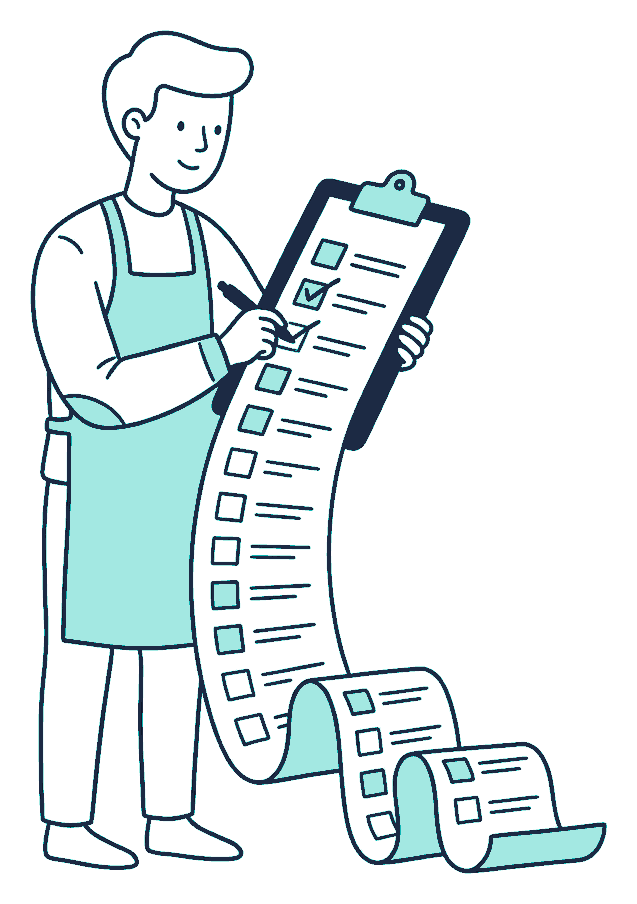
This is not a deep-dive explainer (we have a full self-employed insurance guide for that). This is the practical checklist. Seven insurance products, ranked by priority, with what to look for and the action step for each one.
Print it. Save it. Work through it from top to bottom.
How to Use This Checklist
Each item is ranked by priority for a typical self-employed New Zealander. Your situation may shift the order slightly (for example, if you have no dependants, life insurance drops down the list), but the ranking holds for most sole traders, contractors, and small business owners.
For each item you will find:
- Why it matters for the self-employed specifically
- What to look for in a policy
- What drives the cost so you know which levers you control
- Action step to move forward
Priority 1: Income Protection Insurance
Income protection is the top insurance priority for self-employed New Zealanders because it replaces up to 75% of gross income when illness or injury stops you working, and ACC pays nothing for illness. Employees receive at least 10 days of sick leave a year while the self-employed get none, so look for agreed value cover and a benefit period of at least 2 years.
Status: Essential for nearly every self-employed person
Income protection replaces a portion of your earnings (typically up to 75% of gross income) if illness or injury stops you from working. For anyone who trades time for money, this is the single most important cover you can hold.
Why it matters
ACC covers injuries only. It pays nothing for illness. Cancer, heart disease, stroke, burnout, autoimmune conditions: none of these trigger an ACC payout. Given that illness causes the majority of long-term work absences, that gap is enormous. Income protection fills it.
As a self-employed person, you also lack sick leave. Employees get at least 10 days per year. You get zero. Income protection acts as your sick leave, your safety net, and your business continuity plan rolled into one.
What to look for
- Agreed value policies rather than indemnity. Agreed value locks in a benefit amount at application, so a bad income year does not reduce your payout. This is critical for self-employed people with fluctuating earnings.
- Waiting period that matches your cash reserves. Common options are 4 weeks, 8 weeks, or 13 weeks. A longer wait period reduces premiums but means you cover more of the gap yourself.
- Benefit period of at least 2 years, ideally to age 65. Short benefit periods leave you exposed if recovery takes longer than expected.
- Non-cancellable terms, meaning the insurer cannot change your policy conditions or cancel cover while you keep paying premiums.
What drives the cost
Occupation class is the biggest factor: higher-risk trades such as construction and farming pay materially more than desk-based work. After that, the benefit amount, the benefit period and the waiting period set the price, and the waiting period is the lever you control most easily. Age and health do the rest.
Action step
Request an income protection quote through QuoteHub. Specify that you are self-employed and want agreed value cover. An adviser will walk you through waiting period and benefit period options based on your cash flow.
Priority 2: Life Insurance
Life insurance is the second priority for self-employed New Zealanders, paying a lump sum to your beneficiaries if you die or are diagnosed with a terminal illness. Self-employed people often carry business debt alongside a mortgage, so aim for a sum insured covering total debts plus 5 to 10 years of family living expenses.
Status: Essential if you have dependants or debt
Life insurance pays a lump sum to your nominated beneficiaries if you die or are diagnosed with a terminal illness. If anyone depends on your income, or if your death would leave a mortgage or business debts unpaid, this belongs near the top of your list.
Why it matters
Self-employed people often carry business debt alongside personal debt. A mortgage, a vehicle on finance, and a business loan can add up quickly. Life insurance ensures your family is not left responsible for those obligations.
If you have a partner, children, or ageing parents who rely on your earnings, life cover replaces the income stream they would lose.
What to look for
- Sum insured that covers at least your total debts plus 5 to 10 years of family living expenses
- Level premiums if you want cost certainty. Stepped premiums start cheaper but increase each year as you age.
- Conversion options that let you increase cover at key life events (new child, new mortgage) without medical underwriting
What drives the cost
Life cover is the cheapest of the personal covers per dollar of protection. The price depends on your age, health, smoking status and sum insured, and on whether you choose stepped or level premiums. Smoking status and age move it most, which is why locking cover in early and while healthy is the single biggest saving available to you.
Action step
Calculate how much cover you need using our life insurance calculator. Then request a quote to compare premiums across NZ insurers.
Priority 3: Health Insurance
Health insurance ranks third for self-employed New Zealanders because there is no employer scheme to fall back on and public system wait times for non-urgent procedures are long. A self-employed person waiting six months for a knee operation is not earning for six months, so specialist and surgical cover is the baseline component to buy first.
Status: High priority when you have no employer scheme
Employees often have access to subsidised group health insurance. When you work for yourself, that option disappears. Private health insurance gives you faster access to specialists, diagnostics, and surgery, which directly affects how quickly you can get back to work.
Why it matters
The public health system in New Zealand has significant wait times for non-urgent procedures. A self-employed person waiting six months for a knee operation is a self-employed person not earning for six months. Private health insurance shortens that timeline from months to weeks.
It also covers GP visits, prescriptions, dental, and optical at the everyday level, depending on your plan.
What to look for
- Specialist and surgical cover as the baseline. This is the most valuable component for the self-employed because it gets you back to work faster.
- Pre-existing condition exclusions. Understand what will and will not be covered from day one.
- Excess options. A higher excess ($500 or $1,000) reduces your premium substantially while still protecting you against large bills.
- Cancer treatment cover including access to non-Pharmac drugs, which can be critical for aggressive cancers.
What drives the cost
Age is the dominant factor and it accelerates as you get older. Beyond that, your excess level and whether you include everyday cover (GP, dental, optical) or stick to surgical and specialist only make the biggest difference. Dropping everyday benefits and lifting the excess are the two fastest ways to bring a quote down.
Action step
If budget is tight, start with specialist/surgical cover only and add everyday benefits later. Request a comparison through QuoteHub to see options across multiple insurers.
Priority 4: Trauma (Critical Illness) Insurance
Trauma insurance pays a lump sum on diagnosis of a specified serious illness such as cancer, heart attack, stroke or major organ failure, rather than on inability to work. Most New Zealand policies cover 30 to 50 or more conditions, and some pay 10% to 25% of the sum insured for early-stage diagnoses, so check definitions carefully.
Status: Strongly recommended
Trauma insurance pays a lump sum if you are diagnosed with a specified serious illness, such as cancer, heart attack, stroke, or major organ failure. It pays out on diagnosis, not on inability to work.
Why it matters
Income protection replaces your income stream, but a serious diagnosis often brings costs that sit outside normal living expenses. You might want a second medical opinion, need to modify your home, want to take time off without the pressure of returning to work as soon as medically possible, or need to wind down business obligations.
The lump sum from trauma cover gives you breathing room and choices. For self-employed people, it also provides capital to keep the business afloat (paying rent, maintaining contracts) while you recover.
What to look for
- Covered conditions list. Most policies cover 30 to 50+ conditions, but the definitions matter. Check what stage of cancer or severity of heart attack triggers a payout.
- Partial payments for early-stage conditions (e.g., early-stage cancer). Some policies pay 10% to 25% of the sum insured for less severe diagnoses.
- Reinstatement. Some policies allow a second claim if you are diagnosed with a different condition after recovery.
- Buy-back option. After a partial claim, this lets you restore the full sum insured.
What drives the cost
Trauma cover costs more per dollar of sum insured than life cover, because the events it pays on are far more common than death at working age. Age, smoking status, the sum insured and whether you add a buy-back or reinstatement option all move the price.
Action step
Consider a sum insured of at least $50,000 to $100,000. This covers the immediate financial shock of a diagnosis. Pair it with income protection for ongoing income replacement.
Priority 5: Total and Permanent Disablement (TPD) Insurance
TPD insurance pays a lump sum if illness or injury leaves you totally and permanently unable to work, funding mortgage repayment, living costs, home modifications and care after income protection ends at the benefit period or age 65. Self-employed New Zealanders in physical trades face higher permanent disability risk, so own occupation definitions matter most to them.
Status: Recommended, especially for physical trades
TPD pays a lump sum if you become totally and permanently unable to work due to illness or injury. It is the "worst case scenario" cover.
Why it matters
If you can never work again, income protection eventually stops (at the end of your benefit period or at age 65). TPD provides capital to fund the rest of your life: mortgage repayment, ongoing living costs, home modifications, and care.
For self-employed people in physical occupations (builders, electricians, plumbers, farmers), the risk of a permanent disabling injury is higher than for desk-based workers. TPD cover addresses that specific risk.
What to look for
- "Own occupation" definition vs "any occupation." Own occupation means you are considered disabled if you cannot perform your specific job. Any occupation means you must be unable to perform any job at all. Own occupation is more favourable and more expensive.
- Stand-alone vs accelerated. Accelerated TPD shares its sum insured with your life insurance (a TPD claim reduces or eliminates the life cover). Stand-alone TPD sits separately.
What drives the cost
The own occupation definition costs more than any occupation, and accelerated TPD attached to a life policy costs less than stand-alone cover because it shares the sum insured. Occupation class matters here more than for life cover. TPD is often bundled with life insurance at a discount.
Action step
If you are in a physical trade, make TPD a higher priority. Ask your adviser about own-occupation definitions and whether stand-alone or accelerated makes more sense for your situation.
Priority 6: Public Liability and Professional Indemnity Insurance
Public liability covers you when a third party is injured or their property is damaged because of your work, while professional indemnity covers a client's financial loss caused by your advice or services. Cover limits of $1,000,000 to $2,000,000 are standard across most New Zealand trades and professions, and many contracts require both.
Status: Recommended or required depending on your industry
These are business covers rather than personal covers, but they belong on every self-employed person's checklist.
Public liability covers you if a third party is injured or their property is damaged because of your work. Professional indemnity covers you if a client suffers a financial loss due to your advice or services.
Why it matters
A single claim from a client or member of the public can wipe out years of earnings. Many contracts and industry bodies require these covers as a condition of working. If you are a contractor on building sites, a consultant advising businesses, or a tradesperson working in clients' homes, this is non-negotiable.
What to look for
- Cover limit that matches the contracts you sign. $1,000,000 to $2,000,000 is standard for most trades and professions.
- Retroactive date for professional indemnity. This determines how far back in time your cover applies to work you have already completed.
- Contractual liability extensions if your work is governed by formal contracts.
What drives the cost
Public liability is priced on your trade, your turnover and the cover limit you select, and it is one of the cheaper business covers. Professional indemnity varies far more widely, because it is priced on the financial exposure your advice creates: a consultant advising on multi-million-dollar projects pays considerably more than a low-risk service provider on the same cover limit.
Action step
Check your contracts and industry body requirements. If any contract requires public liability or professional indemnity, this becomes compulsory, not optional. Speak to a business insurance broker for quotes.
Priority 7: Business Interruption Insurance
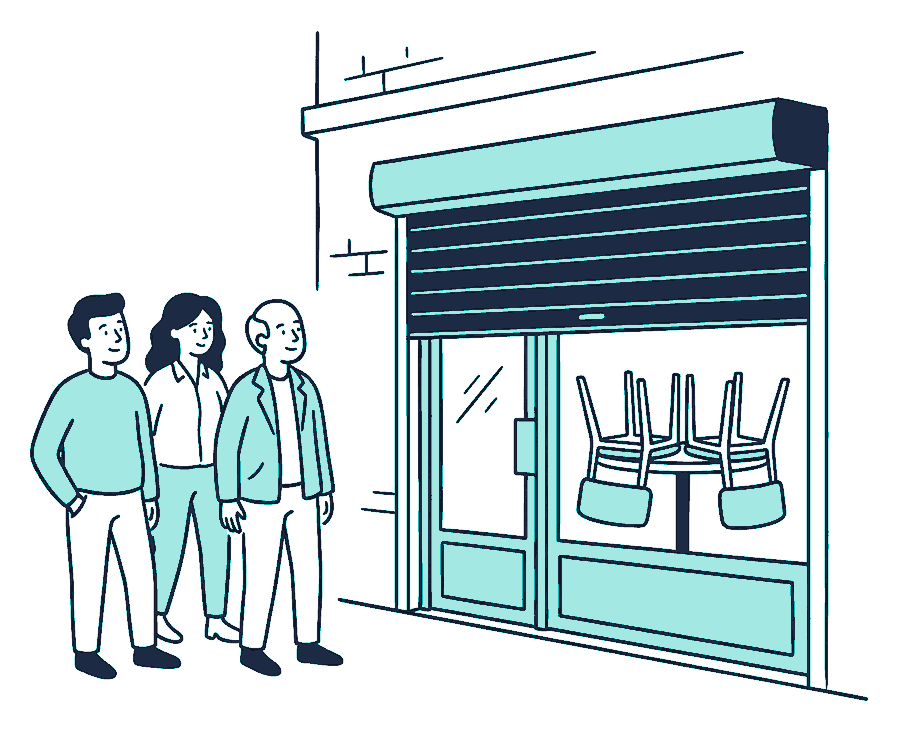
Business interruption insurance covers fixed business expenses such as rent, lease payments, wages and loan repayments when an insured event like fire, flood or major equipment failure stops you trading. Look for an indemnity period of at least 12 months, and treat the cover as lower priority if you work from a laptop at home with no fixed overheads.
Status: Consider if you have fixed business costs
Business interruption insurance covers your fixed business expenses (rent, lease payments, staff wages, loan repayments) if your business is forced to stop operating due to an insured event like fire, flood, or major equipment failure.
Why it matters
If your workshop burns down, your contents insurance replaces the tools, but who pays the rent while you rebuild? Business interruption cover fills that gap. It is most relevant for self-employed people who have premises, significant equipment, or employees.
If you work from a laptop at home with no fixed overheads, this is lower priority.
What to look for
- Indemnity period of at least 12 months. This is how long the policy pays your fixed costs.
- Covered events. Most policies are tied to material damage (fire, flood, earthquake). Some extend to other disruptions.
- Gross profit vs increased cost of working options depending on how your business operates.
What drives the cost
The size of the fixed costs you insure, the indemnity period you select and your industry risk. Hospitality and manufacturing sit at the higher end; a low-risk office-based operation sits at the lower end.
Action step
Add up your monthly fixed business expenses. If that number would cause serious problems over 3 to 6 months of downtime, business interruption cover is worth pricing.
Tax Deductibility Summary
Self-employed New Zealanders can deduct premiums for income protection, public liability, professional indemnity and business interruption cover as business expenses, while life, trauma and TPD premiums are not deductible. Health insurance sits in between and depends on whether the policy is held in the business name, so confirm the treatment for your structure with your accountant.
| Insurance Type | Tax Deductible? | Notes |
|---|---|---|
| Income protection | Yes | Fully deductible as a business expense. Benefit payments are taxable income. |
| Life insurance | No | Premiums for personal life cover are not deductible. |
| Health insurance | Partially | Deductible if the policy is in the business name and covers you as an employee of your own company. Structure matters. |
| Trauma insurance | No | Premiums are not deductible. Benefit payments are tax-free. |
| TPD insurance | No | Premiums are not deductible. Benefit payments are tax-free. |
| Public liability | Yes | Fully deductible as a business expense. |
| Professional indemnity | Yes | Fully deductible as a business expense. |
| Business interruption | Yes | Fully deductible as a business expense. |
Tax rules can change. Always confirm with your accountant how premiums should be treated in your specific structure (sole trader vs company vs trust).
The Minimum Viable Cover: If Budget Is Tight
The minimum viable cover for a self-employed New Zealander is income protection with a 13-week waiting period and a 2-year benefit period, plus public liability if your industry or contracts require it. Add life insurance of $200,000 to $300,000 if you have a mortgage or dependants, then health insurance with specialist and surgical cover only.
The bare minimum
- Income protection with a 13-week waiting period and a 2-year benefit period. The longer waiting period and shorter benefit period bring the premium down significantly. You can upgrade later as your income grows.
- Public liability if your industry or contracts require it. This is often non-negotiable for tradespeople and contractors.
The next step up
- Life insurance if you have a mortgage or dependants. Even $200,000 to $300,000 of cover provides meaningful protection at a modest premium.
- Health insurance with specialist/surgical cover only (skip everyday benefits to save cost). This gets you back to work faster after a health event.
The full picture
- Add trauma cover, TPD, and business interruption as your business matures and your income increases.
The key principle: start with income protection and build from there. Protecting your ability to earn is the foundation everything else sits on.
Your Action Plan
Here is the practical path to getting covered.
Week 1: Request an income protection quote. This is your highest priority and the first conversation to have with an adviser.
Week 2: Calculate your life insurance needs. Use our life insurance calculator and factor in your mortgage, debts, and dependants.
Week 3: Review your contracts for any public liability or professional indemnity requirements. Arrange business covers as needed.
Week 4: Price health insurance options. Start with specialist/surgical if budget is a concern.
Ongoing: Review your cover annually. As your income grows and your circumstances change (new mortgage, new baby, new business premises), your insurance needs will shift.
Frequently Asked Questions
Do I need income protection if I have ACC CoverPlus Extra?
Yes. ACC, including CoverPlus Extra, covers injuries only. It pays nothing for illness. Income protection covers both illness and injury, filling the major gap that ACC leaves. Most self-employed people need both.
Can I claim insurance premiums as a tax deduction?
It depends on the type. Income protection, public liability, professional indemnity, and business interruption premiums are generally tax-deductible. Life insurance, trauma, and TPD premiums are not. Health insurance sits in between and depends on your business structure. Talk to your accountant about how to structure this correctly.
How much income protection can I get as a self-employed person?
Most insurers offer up to 75% of your gross pre-disability income. Agreed value policies lock in the benefit amount when you apply, so a low-income year does not reduce your payout. You will need to provide financial evidence (tax returns or accountant's letter) at application time.
What if I cannot afford all of this right now?
Start with income protection on a longer waiting period (13 weeks instead of 4 weeks). This brings the premium down substantially. Add other covers as your income grows. Something is always better than nothing.
Is there a difference between sole trader insurance and company insurance?
The personal covers (income protection, life, trauma, TPD) work the same regardless of your business structure. The business covers (public liability, professional indemnity, business interruption) may be structured differently depending on whether you operate as a sole trader or a limited company. An adviser can help you set up the right structure.
How often should I review my cover?
At least once a year, and whenever you have a major life or business change. A new mortgage, a new child, a significant increase in income, or a change in business structure are all triggers to review.
Financial advice is provided by Craig Smith Business Services Limited, trading as Smiths Insurance & KiwiSaver, a licensed Financial Advice Provider (FSP712931). QuoteHub is a trading name. The information in this article is general in nature and does not constitute personalised financial advice. Insurance needs vary by individual. We recommend speaking with a qualified adviser before making insurance decisions.
References
- Financial Markets Authority (FMA), Insurance guidance
- ACC New Zealand
- Sorted.org.nz, Insurance guides
- Insurance & Financial Services Ombudsman (IFSO)
- MoneyHub NZ, Insurance resources
- Cancer Society of New Zealand
- Heart Foundation NZ
- ACC New Zealand, What we cover
Read the full insurance guides
Compare your cover with a licensed NZ adviser · free, no obligation.
Explore related pages: Life Insurance, Income Protection, Health Insurance, Trauma Insurance, Claims Support.