Critical Illness Insurance NZ: How Trauma Cover Works in 2026
If you have searched for "critical illness insurance" in New Zealand, you may have noticed that most NZ insurers do not use that term. Instead, they call it trauma insurance or trauma cover. The product is the same: a tax-free lump sum paid when you are diagnosed with a specified serious medical condition. The terminology difference is simply regional. Internationally, the product is known as critical illness insurance or critical illness cover. In New Zealand, trauma cover is the standard industry term.
This guide explains how critical illness insurance works in New Zealand, what conditions are covered, how much it costs, and how to compare policies across the main providers. If you are also considering other types of cover, see our guides on life insurance NZ, income protection, and health insurance NZ. For a broader comparison of all cover types, visit our insurance comparison page.
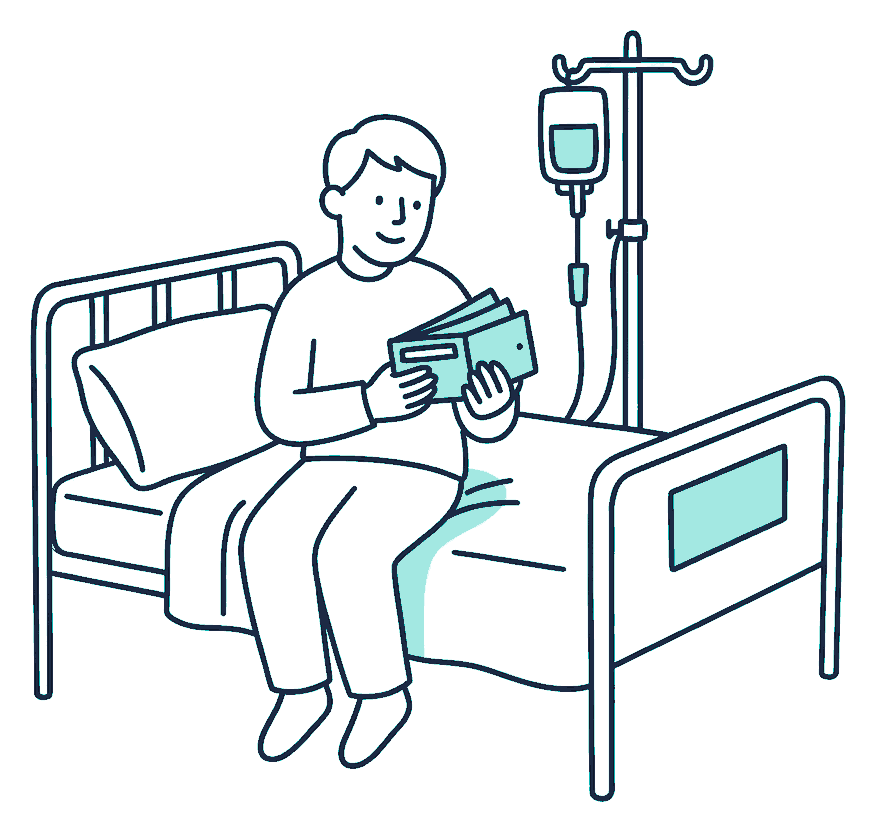
How Critical Illness Insurance Works in NZ
Critical illness insurance in New Zealand, known locally as trauma cover, pays a one-off tax-free lump sum when a medical specialist diagnoses a condition listed in the policy, with most insurers requiring a survival period of 14 to 30 days for conditions other than cancer. The money carries no spending restrictions, so it commonly funds mortgage repayments, treatment costs or time off work.
The claim process follows a straightforward sequence:
- Diagnosis. You are diagnosed with a qualifying condition by a medical specialist.
- Claim submission. You (or your adviser) lodge a claim with the insurer, including medical evidence.
- Insurer validation. The insurer reviews the diagnosis against the policy definitions to confirm it meets the claim threshold.
- Lump sum payment. Once approved, the full sum insured is paid to you as a tax-free lump sum.
For most conditions, the insurer requires a survival period of 14 to 30 days after the event. Cancer is a notable exception, as claims are typically paid upon confirmed diagnosis without a survival period.
What Conditions Are Covered?
Most New Zealand trauma policies cover between 40 and 50 defined conditions, including invasive cancer, heart attack, stroke, coronary artery bypass surgery, major organ transplant, multiple sclerosis, motor neurone disease and kidney failure. Cancer, heart attack and stroke account for the vast majority of claims, and NZ insurance industry claims data attributes roughly 42% of trauma claims paid in recent years to cancer alone.
- Cancer (invasive)
- Heart attack (myocardial infarction)
- Stroke (cerebrovascular accident)
- Coronary artery bypass surgery
- Major organ transplant
- Multiple sclerosis
- Motor neurone disease
- Parkinson's disease
- Kidney failure (end-stage renal failure)
- Loss of limbs
- Major burns
- Blindness
- Deafness
- Paralysis (paraplegia, quadriplegia, hemiplegia)
- Dementia and Alzheimer's disease
- Aortic surgery
- Heart valve surgery
- Benign brain tumour
- Aplastic anaemia
- Loss of speech
Cancer, heart attack, and stroke account for the vast majority of claims. According to NZ insurance industry claims data, cancer alone represents roughly 42% of all trauma claims paid in recent years.
The exact number of conditions varies by insurer, and so do the definitions. Two policies might both list "heart attack," but the clinical criteria required to trigger a payout can differ. This is why comparing policy wording, not just condition counts, matters.
NZ Trauma Insurance Provider Comparison
Trauma cover in New Zealand is available through licensed financial advisers from Partners Life, AIA, Asteron Life, Fidelity Life and Chubb Life. AIA lists 48 conditions and adds a trauma reinstatement benefit allowing a second claim, Asteron Life covers 42 conditions with child trauma cover included, and Partners Life, Fidelity Life and Chubb Life each cover 40 or more conditions.
| Insurer | Conditions Covered | Key Feature |
|---|---|---|
 Partners Life Partners Life |
40+ conditions | Standalone or accelerated options. Strong policy wording with flexible benefit structure. |
 AIA AIA |
48 conditions | Trauma reinstatement benefit allows a second claim after the first. One of the broadest condition lists available. |
 Asteron Life Asteron Life |
42 conditions | Child trauma cover included. Competitive definitions for major conditions. |
 Fidelity Life Fidelity Life |
40+ conditions | Lower premiums due to reduced commission model. Strong value option for budget-conscious buyers. |
 Chubb Life Chubb Life |
40+ conditions | Solid core cover. Growing presence in the NZ market. |
Each insurer has different strengths depending on your circumstances. AIA's trauma reinstatement benefit is valuable if you want the option to claim more than once. Fidelity Life's reduced commission structure often results in lower premiums for the same level of cover, which can make a meaningful difference over a 20 to 30 year policy term. Asteron's built-in child trauma cover appeals to families.
A licensed financial adviser can compare the specific wording and pricing across all providers for your situation.
Standalone vs Accelerated Trauma Cover
Trauma cover in New Zealand is structured either as standalone or accelerated. Standalone trauma is a separate policy with its own sum insured, so a $200,000 trauma claim leaves $500,000 of life cover untouched. Accelerated trauma is linked to life insurance, so the same $200,000 claim reduces that $500,000 of life cover to $300,000, which is why accelerated cover costs less.
Standalone trauma cover
This is a separate policy with its own sum insured. If you claim on your trauma cover, your life insurance remains unaffected. For example, if you hold $500,000 of life cover and $200,000 of standalone trauma cover, a trauma claim pays $200,000 and your $500,000 life cover continues in full.
Accelerated trauma cover
This is linked to your life insurance. A trauma claim reduces your life cover by the amount paid. Using the same example, a $200,000 trauma claim would reduce your life cover from $500,000 to $300,000.
Accelerated cover is cheaper because the insurer is not taking on additional risk. It simply allows you to access part of your life cover early if you are diagnosed with a critical illness. For many people, this is a reasonable trade-off, particularly if the alternative is having no trauma cover at all due to budget constraints.
Standalone cover costs more but keeps both benefits intact. This is generally the better option for those who can afford it, particularly if you have dependants relying on the full life cover amount.
Early Trauma and Partial Payouts
Early trauma benefits pay a percentage of the sum insured for less severe versions of covered conditions, typically 10% to 25%, capped at $25,000 to $50,000 depending on the insurer. Most New Zealand insurers offer the option, because standard trauma cover requires a condition to meet a full severity threshold and improved screening now detects many conditions earlier.
Most NZ insurers offer an early trauma benefit (sometimes called a partial payment option) that pays a percentage of your sum insured for less severe versions of covered conditions. This typically ranges from 10% to 25% of the sum insured, capped at $25,000 to $50,000 depending on the insurer.
Examples of early trauma claims:
- Carcinoma in situ (very early-stage cancer that has not invaded surrounding tissue)
- Early-stage prostate cancer with a low Gleason score
- Coronary angioplasty (less invasive than bypass surgery)
- Ductal carcinoma in situ (DCIS) of the breast
The early trauma benefit is typically an add-on. It is worth including because early detection is becoming more common, and the financial disruption of even an early-stage diagnosis can be significant.
How Much Does Critical Illness Insurance Cost in NZ?
Trauma insurance premiums depend on your age, gender, smoking status, health history, cover amount, and whether you choose standalone or accelerated cover. Age is the strongest single driver: the same sum insured costs more at every birthday, and the rate of increase itself accelerates from your forties onward. The table below ranks the same cover, $200,000 of standalone trauma for a non-smoker, at each age.
| Age | Relative premium level | What is driving it |
|---|---|---|
| 25 | Lowest | Very low incidence of the major covered conditions, and the cheapest point at which to lock in level premiums |
| 30 | Low | Still well below average risk, and cover is usually issued on standard terms |
| 35 | Low to moderate | Incidence begins to register and health history starts to influence underwriting |
| 40 | Moderate | Cancer and cardiac risk climbing, so stepped premiums begin rising noticeably each year |
| 45 | High | Risk rising faster than at any earlier stage, and loadings or exclusions become more common |
| 50 | Highest | The steepest stepped increases, and the narrowest remaining window to switch to level premiums |
Where you actually land depends on the insurer, the policy structure, and your individual health profile. Accelerated cover will be cheaper than standalone. Stepped premiums (which increase with age) start lower but cost more over time compared to level premiums.
Fidelity Life's reduced commission model often results in premiums at the lower end of the market for the same cover. Over a 20 to 30 year policy term, that pricing advantage compounds while maintaining comparable cover quality.
For accurate pricing, get a free insurance review with an adviser who can compare quotes across all providers.
The 90-Day Stand-Down Period
All New Zealand trauma policies include a 90-day stand-down period from the date the policy starts, and a diagnosis of a covered condition inside that 90-day window is not paid. The stand-down prevents cover being taken out after symptoms appear, applies to the initial start date rather than renewals, and may be waived by a new insurer when you switch.
This stand-down exists to prevent people from taking out cover after symptoms have already appeared. It applies to the initial policy start date, not to renewals or premium changes. If you already hold an active trauma policy and switch insurers, the new insurer may waive the stand-down for conditions previously covered, but this depends on the provider and the terms of the transition.
The key point: do not wait until you feel unwell to apply. The best time to take out trauma cover is while you are healthy and can access full cover without exclusions or loading.
Critical Illness Insurance vs Health Insurance vs Income Protection
Trauma cover, health insurance and income protection solve three different problems in New Zealand. Trauma cover pays a tax-free lump sum at diagnosis of a listed condition with no restriction on use, health insurance pays medical bills such as surgery and specialist treatment, and income protection replaces up to 75% of pre-disability income after a waiting period of typically 4 to 13 weeks.
| Feature | Trauma Cover (Critical Illness) | Health Insurance | Income Protection |
|---|---|---|---|
| What it pays | Tax-free lump sum at diagnosis | Medical bills (surgery, specialists, treatment) | Monthly income replacement while unable to work |
| When it pays | At diagnosis of a listed condition | When you receive treatment | After a waiting period (typically 4 to 13 weeks) |
| How funds are used | No restrictions. Your choice. | Directly to medical providers or reimbursed | Replaces up to 75% of pre-disability income |
| Key strength | Flexibility and immediate financial relief | Access to private healthcare and shorter wait times | Ongoing income during extended recovery |
Trauma cover is not a substitute for health insurance, and health insurance is not a substitute for trauma cover. Health insurance pays your medical bills. Trauma cover provides a lump sum to cover everything else: mortgage payments, living expenses, childcare, rehabilitation, travel for treatment, or simply the financial breathing room to focus on recovery without financial stress.
Income protection covers a different scenario entirely, providing ongoing monthly payments if you cannot work due to illness or injury. For a deeper comparison, see our guide on life and income protection insurance.
A well-structured insurance plan for most New Zealanders includes elements of all three, sized to match your specific financial commitments.
When Is Trauma Cover Most Valuable?
Trauma cover is relevant for most working-age New Zealanders and is particularly valuable for mortgage holders, single-income families, self-employed people, small business owners and parents of young children. Self-employed New Zealanders often lack sick leave, employer support or ACC coverage for non-accident illness, so a lump sum at diagnosis provides working capital while the business adjusts.
Mortgage holders. A cancer diagnosis or stroke does not pause your mortgage repayments. A trauma payout can clear or reduce your mortgage, removing significant financial pressure during recovery.
Single-income families. If one partner's income supports the household, a critical illness affecting that person creates immediate financial pressure that income protection alone may not fully address.
Self-employed and small business owners. Self-employed New Zealanders often lack sick leave, employer support, or ACC coverage for non-accident illness. A lump sum at diagnosis provides working capital and personal financial stability while the business adjusts. For more on this, read our guide on self-employed insurance.
Parents with young children. Even a non-working parent's critical illness creates costs: childcare, household support, potential career changes for the other partner. Trauma cover provides the financial flexibility to manage these changes.
Anyone with financial commitments. If a serious diagnosis would create financial difficulty for you or your family, trauma cover addresses that risk directly.
How to Compare Critical Illness Insurance Policies
Comparing trauma cover in New Zealand starts with condition definitions, since two insurers can both list heart attack while requiring different clinical criteria to trigger a payout. Early trauma options, reinstatement after a claim, the standalone or accelerated structure, premium sustainability and provider strength follow. A policy covering 48 conditions is not automatically better than one covering 40 if the definitions are narrower.
Condition definitions. How does each insurer define the major conditions (cancer, heart attack, stroke)? Broader definitions mean a greater likelihood of a successful claim.
Early trauma options. Does the policy offer partial payouts for early-stage conditions? What percentage and cap apply?
Reinstatement and continuation. After a claim, can you reinstate cover for future conditions? AIA's reinstatement benefit is notable here.
Standalone vs accelerated. Which structure fits your budget and your need for ongoing life cover?
Premium sustainability. Compare both the starting premium and projected future costs. A lower starting premium means nothing if the insurer applies aggressive rate increases over time.

Provider strength. Consider the insurer's claims history, financial stability, and reputation for claim handling.
Do not choose based on condition count alone. A policy covering 48 conditions is not necessarily better than one covering 40 if the definitions are narrower.
Frequently Asked Questions
Is critical illness insurance the same as trauma cover in NZ?
Yes. "Critical illness insurance" and "trauma cover" refer to the same product. Critical illness insurance is the international term used in markets like the UK, Australia, and Canada. In New Zealand, the product is called trauma insurance or trauma cover. The coverage, claim process, and payout structure are identical regardless of which term is used.
How much critical illness cover do I need?
A common starting point is enough to cover your mortgage balance plus one to two years of living expenses. For most New Zealanders, this falls in the range of $100,000 to $500,000. The right amount depends on your debts, dependants, and how much financial pressure a serious diagnosis would create. An adviser can help calculate the appropriate level based on your specific situation.
Can I claim on trauma cover more than once?
Under a standard trauma policy, the full sum insured is paid once and the policy ends. However, some insurers offer reinstatement or continuation benefits that allow a second claim for a different condition after a qualifying period. AIA's trauma reinstatement benefit is the most well-known example. If the ability to claim more than once is important to you, make sure this feature is included in your policy.
Does trauma cover pay out for early-stage cancer?
Standard trauma cover typically requires cancer to be invasive before the full sum insured is paid. Early-stage cancers such as carcinoma in situ are usually covered only if you have added an early trauma benefit to your policy. This add-on pays a partial amount, typically 10% to 25% of the sum insured. Given the increasing rate of early detection, adding the early trauma benefit is generally worthwhile.
What happens if I am diagnosed during the 90-day stand-down?
If you are diagnosed with a covered condition within 90 days of your policy start date, the claim will not be paid. The 90-day stand-down is standard across all NZ trauma insurers and exists to prevent claims for conditions that were already developing when the policy was taken out. Some insurers will refund your premiums in this scenario. The stand-down applies only to new policies, not to ongoing renewals.
Is critical illness insurance tax-free in NZ?
Yes. Trauma insurance payouts are paid as a tax-free lump sum. There is no income tax, GST, or any other tax on the payment. This is one of the key advantages of lump sum cover compared to income protection, where benefit payments are typically taxable.
Get Your Critical Illness Cover Reviewed
The right trauma policy depends on your health, financial situation, and what matters most to you in a policy. Rather than guessing, book a free insurance review with a QuoteHub adviser who can compare trauma cover across all NZ providers and recommend the best fit for your circumstances.
The information in this guide is general in nature and does not constitute personal financial advice. Insurance needs vary by individual. We recommend speaking with a licensed financial adviser before making insurance decisions. QuoteHub connects New Zealanders with licensed financial advisers. FSP712931.
References
- Financial Markets Authority (FMA), Insurance guidance
- Cancer Society of New Zealand
- Heart Foundation NZ
- Insurance & Financial Services Ombudsman (IFSO)
- Sorted.org.nz, Insurance guides
- ACC New Zealand, What we cover
- IRD, Income tax rates
- Business.govt.nz, Running a business
Read the full insurance guides
Compare your cover with a licensed NZ adviser · free, no obligation.
Explore related pages: Life Insurance, Income Protection, Health Insurance, Trauma Insurance, How It Works.