Insurance Occupation Classes NZ: How Your Job Affects Your Premiums
When you apply for insurance in New Zealand, your occupation is one of the most influential factors in determining what you pay. It can be just as significant as your age or health status, yet it is one of the least understood parts of the pricing process.
Insurers do not just ask what you do for a living out of curiosity. They use your job title, duties, and working environment to assign you an occupation class. That class directly affects your premiums, particularly for income protection and disability-related cover. Two people of the same age and health can pay vastly different premiums purely because of their occupations.
This guide explains how the occupation class system works in New Zealand, which jobs fall into which classes, which insurance types are most affected, and what you can do if you think you have been classified incorrectly.
What Are Occupation Classes?
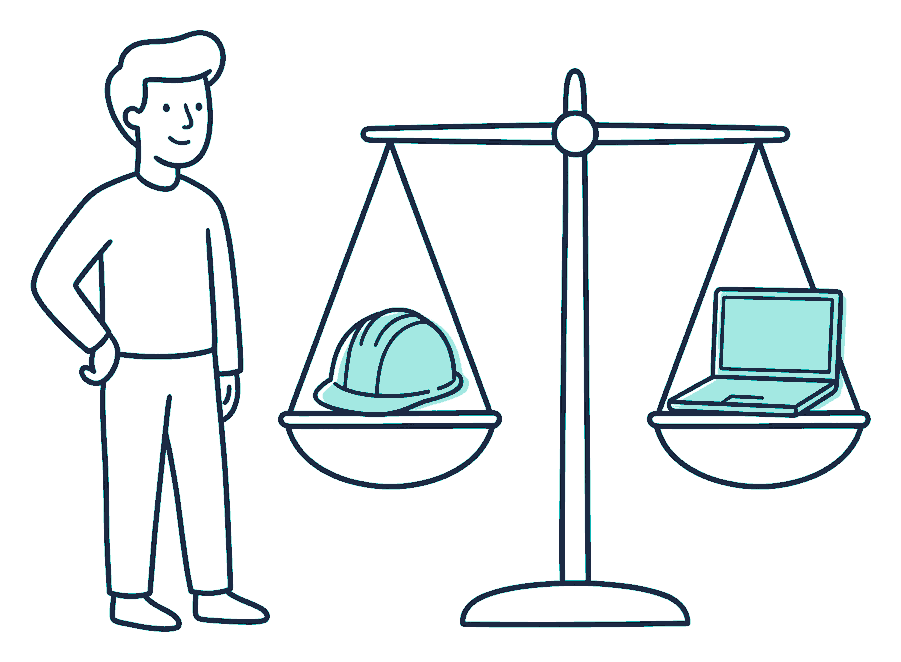
Occupation classes are a rating system New Zealand insurers use to group jobs by risk level, with most providers using four to five classes running from sedentary professional roles to hazardous manual work. Classification considers physical demands, working environment, exposure to hazardous materials, travel requirements, income stability, and decades of historical claims data for each occupation type.
Most New Zealand insurers use a system of four to five classes, though the exact names and number of tiers vary between providers. The general structure moves from sedentary professional roles at the lowest risk end through to hazardous manual occupations at the highest.
The classification is not just about physical danger. Insurers also consider factors such as:
- Physical demands of the role. Heavy lifting, working at heights, repetitive manual tasks.
- Working environment. Office, retail floor, construction site, underground, offshore.
- Exposure to hazardous materials. Chemicals, dust, asbestos, fumes.
- Travel requirements. Regular long-distance driving, fly-in fly-out work, international travel to high-risk areas.
- Income stability. Some occupations have higher income volatility, which affects claim likelihood.
- Historical claims data. Insurers draw on decades of claims experience for each occupation type.
The Five Occupation Classes Explained
The five occupation classes used by New Zealand insurers run from Class 1 professional and sedentary roles such as accountants and software developers, through Class 2 light manual, Class 3 skilled trades, and Class 4 heavy manual, to Class 5 hazardous work such as underground miners. Some insurers use four classes or letter-based systems (AA, A, B, C, D).
Class 1: Professional and Sedentary
These are office-based, white-collar roles with minimal physical demands. People in Class 1 pay the lowest premiums.
Examples: accountants, lawyers, financial advisers, IT professionals, teachers (non-physical education), office administrators, architects, dentists, general practitioners, software developers, marketing managers.
Class 2: Light Manual and Supervisory
These roles involve some physical activity or time spent away from a desk, but the physical demands are moderate. Premiums are slightly higher than Class 1.
Examples: retail managers, pharmacists, real estate agents, sales representatives (office-based), veterinarians, laboratory technicians, hairdressers, chefs (in commercial kitchens), driving instructors, physiotherapists.
Class 3: Skilled Trades and Moderate Manual
This is where qualified tradespeople and skilled manual workers typically sit. The work involves regular physical activity, use of tools or machinery, and often some exposure to workplace hazards. Premiums are noticeably higher than Class 1 and 2.
Examples: electricians, plumbers, carpenters, mechanics, painters, welders, butchers, farmers (owner-operators), truck drivers (local), machine operators, HVAC technicians.
Class 4: Heavy Manual
These roles involve sustained heavy physical work, often in demanding or hazardous environments. The claims risk is significantly higher, and premiums reflect that.
Examples: construction labourers, roofers, concrete workers, forestry workers, truck drivers (long-haul), dock workers, scaffolders, tilers, landscape labourers, abattoir workers.
Class 5: Hazardous and High-Risk
The highest-risk class covers occupations with extreme physical danger, exposure to life-threatening environments, or very high claims frequency. Some insurers do not offer certain products (particularly income protection) for Class 5 occupations, or they apply special terms and exclusions.
Examples: underground miners, commercial divers, deep-sea fishers, steeplejacks, demolition workers, professional sports athletes, armed security personnel, oil rig workers.
How Occupation Class Affects Your Premiums
Occupation class has a substantial effect on premiums in New Zealand, with a heavy manual worker paying roughly three to four times what an office worker pays for the same level of income protection cover. Relative cost rises from 1x at Class 1 to about 1.3x at Class 2, 1.8x at Class 3, 2.5x at Class 4, and 3.5x at Class 5.
Scenario: 35-year-old non-smoker, $80,000 income, 75% benefit, 4-week waiting period, 2-year benefit period.
| Occupation Class | Example Job | Relative Cost | Why the class is priced this way |
|---|---|---|---|
| Class 1 (Professional) | Accountant | 1x (baseline) | Desk-based duties, low injury exposure, and an easy return to modified work |
| Class 2 (Light Manual) | Retail Manager | 1.3x to 1.4x | Standing and light physical work, with slightly longer recovery times |
| Class 3 (Skilled Trades) | Electrician | 1.8x to 1.9x | Tools, ladders and site work, where an injury stops earning outright |
| Class 4 (Heavy Manual) | Construction Labourer | 2.5x to 2.8x | Sustained physical load and few modified-duty options during recovery |
| Class 5 (Hazardous) | Underground Miner | 3.5x to 4.5x | High-severity injury risk and long average claim durations |
These are indicative multiples based on typical NZ insurer rating structures. Actual premiums vary by provider, policy structure, health, and specific duties. The key takeaway is that a heavy manual worker can pay three to four times what an office worker pays for the same level of cover.
Which Insurance Types Are Most Affected?
Income protection is the insurance type most affected by occupation class in New Zealand, with premiums varying 2x to 4x between Class 1 and Class 4. TPD follows at 1.5x to 2.5x because disability definitions are tied to occupation, trauma cover varies 1.2x to 1.8x, and life insurance varies least at 1.0x to 1.3x.
Income protection: highest impact
Income protection is the most occupation-sensitive product. This makes sense: the policy pays out when you cannot work, and your occupation directly determines both the likelihood and duration of that event. A tradie who injures their back faces a much longer period off work than an office worker with the same injury, because they cannot do modified desk duties.
Occupation class is the single biggest premium driver for income protection after age.
Trauma (critical illness) insurance: moderate impact
Trauma cover pays a lump sum on diagnosis of a specified condition (cancer, heart attack, stroke, etc.). Occupation has some influence because certain jobs carry higher exposure to health risks, but the conditions covered are largely non-occupational. The premium difference between classes is smaller than for income protection.
Total and permanent disability (TPD): moderate to high impact
TPD insurance pays if you are permanently unable to work. Since the definition of "unable to work" is tied to your occupation (particularly under own-occupation definitions), the class rating matters. A builder who cannot lift heavy objects is far more likely to meet the TPD threshold than an office worker with the same condition.
Life insurance: lowest impact
Life insurance is the least affected by occupation class. The payout trigger is death, which is less directly correlated with day-to-day occupational risk (though some hazardous occupations do carry higher mortality risk). Most people will see relatively small premium differences across classes for life cover.
| Insurance Type | Occupation Class Impact | Premium Variation (Class 1 vs Class 4) |
|---|---|---|
| Income Protection | Very high | 2x to 4x |
| TPD | High | 1.5x to 2.5x |
| Trauma | Moderate | 1.2x to 1.8x |
| Life Insurance | Low | 1.0x to 1.3x |
How to Check Your Occupation Classification
Your occupation class is recorded on the policy schedule your New Zealand insurer issued when the policy started, listed as a number from 1 to 5, a letter such as AA, A, B, C or D, or a descriptive label like professional or heavy manual. Your insurer or financial adviser can confirm the class and the duties held on file.
If you are unsure what class you are in, here is how to find out:
- Check your policy schedule. Look for terms like "occupation class," "occupation rating," or "risk category." It may be listed as a number (1 to 5), a letter (AA, A, B, C, D), or a descriptive label (professional, white collar, light manual, heavy manual).
- Contact your insurer. Call or email and ask what occupation class your policy is rated at and what duties they have on file for you.
- Ask your financial adviser. If you arranged your cover through an licensed adviser, they can check your classification and compare it across insurers.
- Compare across providers. Different insurers sometimes classify the same job differently. An adviser can identify which provider offers the most favourable classification for your specific role.

What Happens When You Change Jobs
Your occupation class is set at the time of application, so changing jobs in New Zealand can require a reclassification. Moving to a lower-risk role may earn a reduced premium on request, while moving to a higher-risk role triggers your duty of disclosure, and failing to notify the insurer can see a later claim reduced or declined.
Moving to a lower-risk job
If you move from a higher-risk occupation to a lower-risk one (for example, a builder who becomes a building inspector), you may be eligible for a reduced premium. Contact your insurer or adviser to request a reclassification. Most insurers will reassess your class and adjust premiums accordingly, though you may need to provide details of your new role and duties.
Moving to a higher-risk job
If you move to a higher-risk occupation, your insurer needs to know. Most policies include a duty of disclosure that requires you to inform the insurer of material changes, including a change of occupation. If you do not notify them and later make a claim, the insurer may reduce or decline your claim based on non-disclosure.
Some policies include an "occupation upgrade" feature that automatically adjusts your class if you move to a riskier job. Others require manual notification. Check your policy wording or ask your adviser.
Moving between similar roles
If your new role is in the same class as your old one (for example, changing from one office-based professional role to another), no change is typically needed. But if there is any doubt, it is worth notifying your insurer to keep your records accurate.
Common Misclassifications and Rating Errors
Occupation misclassification happens in New Zealand when a broad job title or vague duty description is recorded at application, and it cuts both ways. Being over-classified means paying more than your actual duties warrant, while being under-classified lets the insurer reduce a claim proportionally or decline it entirely for material non-disclosure once duties are verified at claim time.
Paying too much
Some people are classified in a higher-risk class than their actual duties warrant. This often happens when:
- A broad job title is used. "Manager" at a construction company might be classified as heavy manual when the person actually works from an office full-time.
- Duties are not clearly described. If the application form lists "builder" without noting that you are a self-employed project manager who no longer does physical work, you may be rated as Class 3 or 4 instead of Class 1 or 2.
- The insurer defaults to the highest risk. When in doubt, some insurers classify conservatively. An adviser can challenge this with a detailed description of your actual duties.
Paying too little (and the claim risk)
The opposite problem is equally concerning. If you are classified in a lower-risk class than your actual occupation, your premiums will be cheaper, but your claim may be compromised. At claim time, the insurer will verify your occupation and duties. If they find you were doing heavy manual work but were rated as a professional, they can:
- Reduce your claim payout proportionally (paying only what the premium would have covered at the correct class).
- Decline the claim entirely on the grounds of material non-disclosure.
Accurate classification protects you at claim time. It is not worth saving a few hundred dollars in premiums if it means a disputed $200,000 claim.
How to fix a misclassification
If you believe your occupation class is wrong, take these steps:
- Write a detailed description of your actual daily duties, including the percentage split between desk work and physical work.
- Contact your insurer or adviser and request a review.
- If one insurer will not reclassify you, an adviser can check whether another provider would rate you more favourably.
How Different Insurers Classify the Same Job

Occupation classification is not standardised across the New Zealand industry, and each insurer maintains its own occupation tables, so the same job can be rated differently by different providers. A self-employed plumber might be Class 3 with one insurer, Class B with another using letter ratings, and Class 4 with a third that views plumbing more conservatively.
For example, a self-employed plumber might be:
- Class 3 with one insurer
- Class B (equivalent to Class 3) with another
- Class 4 with a third insurer that takes a more conservative view of plumbing work
This inconsistency is one of the strongest reasons to work with a financial adviser who compares multiple insurers. An adviser can identify which provider offers the best classification for your specific occupation and duties, which can translate to meaningful premium savings over the life of a policy.
How an Adviser Can Help
A licensed financial adviser helps with occupation classification in New Zealand by describing your duties accurately, comparing occupation tables across insurers, handling reclassification requests when duties change, and documenting your role so your position is stronger at claim time. The cost of insurance advice is typically nil to the client, because advisers are paid by the insurer.
- Accurate duty description. An adviser knows how to describe your role in a way that is truthful but also ensures you are not over-classified. The difference between "builder" and "building company owner, 80% office-based" can be a full class difference.
- Cross-insurer comparison. Advisers have access to occupation tables across all major NZ insurers and can identify which provider offers the most favourable rating for your job.
- Reclassification requests. If your duties change or you believe you are misclassified, an adviser can handle the reclassification process with the insurer.
- Claim support. At claim time, having an adviser who documented your occupation accurately at application strengthens your position.
The cost of financial advice for insurance in New Zealand is typically nil to the client. Advisers are paid by the insurer when a policy is placed, so there is no direct fee for the advice.
Get a free insurance check with QuoteHub and have a licensed adviser review your occupation classification, compare options across providers, and make sure you are not overpaying.
Tips for Getting the Best Occupation Rating
Regardless of what you do for a living, there are practical steps you can take to ensure you get the most accurate and favourable occupation rating:
- Be specific about your duties. Do not just list your job title. Break down what you actually do day to day, including the percentage of time spent on desk work versus physical work.
- Highlight qualifications. Qualified tradespeople are often rated more favourably than unqualified labourers in the same field. If you hold a trade certificate, include it.
- Note supervisory roles. If you spend most of your time supervising rather than doing physical work, make that clear. Supervisors are often rated one class lower than the workers they oversee.
- Mention safety measures. Some insurers consider workplace safety practices, certifications, and equipment when assessing risk.
- Review your classification regularly. If your role evolves over time (more management, less hands-on work), ask for a reassessment.
- Use an adviser. This bears repeating. An adviser who understands how occupation tables work across insurers is your best tool for getting the right classification.
Talk to a QuoteHub adviser today to find out whether your occupation class is costing you more than it should.
Frequently Asked Questions
What is an occupation class in insurance?
An occupation class is a risk rating that insurers assign to your job. It groups occupations by physical risk, working environment, and historical claims data. The class determines a significant portion of your premium, particularly for income protection and disability cover. Most NZ insurers use four to five classes, from sedentary professional (lowest premiums) to hazardous manual (highest premiums).
Why do tradies pay more for insurance?

Tradies pay more because their work involves higher physical risk, greater exposure to injury, and a higher likelihood of extended time off work. A tradie with a back injury cannot switch to desk duties, which means longer claim durations and higher costs for the insurer. This is reflected in the occupation class rating. A skilled tradie typically sits in Class 3 or 4, paying roughly two to three times what a Class 1 office worker pays for income protection.
Can I change my occupation class?
Yes. If your duties change materially, you can request a reclassification from your insurer. Moving from hands-on trade work to a supervisory or management role, for example, may qualify you for a lower class. You will need to provide a detailed description of your new duties. An adviser can manage this process and ensure the change is applied correctly.
Do all insurers use the same occupation classes?
No. Each insurer maintains its own occupation classification tables. The same job can be rated differently by different providers. This is why comparing across insurers is important, and why working with an adviser who has access to multiple provider tables can result in better rates for the same level of cover.
Does my occupation class affect life insurance premiums?
It can, but the impact is much smaller than for income protection. Life insurance premiums are primarily driven by age, health, and smoking status. Occupation class has a minor influence, typically adding 0% to 30% for higher-risk jobs. For income protection, the same occupation difference can add 100% to 350% to the premium.
What happens if I do not tell my insurer I changed jobs?
If you move to a higher-risk occupation and do not notify your insurer, you risk having a future claim reduced or declined. Insurers verify occupation at claim time, and if there is a mismatch between what is on your policy and what you were actually doing, they may apply a proportional reduction or invoke non-disclosure provisions. Always notify your insurer of a material change in occupation.
Are there jobs that insurers will not cover?
Some very high-risk occupations are uninsurable for certain products, or only insurable with significant exclusions or loadings. This most commonly affects income protection cover. Examples include professional combat sports athletes, underground miners in certain conditions, and some military roles. Life insurance is generally available for all occupations, though premiums and terms may vary. An adviser can tell you what is available for your specific role.
References
Various NZ insurer Product Disclosure Statements and occupation class tables (AIA, Asteron, Chubb, Fidelity Life, nib, Partners Life), 2025/2026.
Financial Markets Authority, Financial Advice Provider Register, 2025.
ACC, CoverPlus and CoverPlus Extra occupation levy rates, 2025/2026.
Stats NZ, New Zealand Income Survey, 2025.
Workplace Health and Safety New Zealand (WorkSafe), Annual Injury Statistics, 2025.
Disclaimer: This article is for informational purposes only and does not constitute financial advice. QuoteHub connects New Zealanders with licensed financial advisers. Financial advice is provided by Craig Smith Business Services Limited, trading as Smiths Insurance & KiwiSaver, a licensed Financial Advice Provider (FSP712931). QuoteHub is a trading name. Insurance needs vary based on your personal circumstances, occupation, and health. Always seek personalised advice from a licensed adviser before making insurance decisions.
Read the full insurance guides
Compare your cover with a licensed NZ adviser · free, no obligation.
Explore related pages: Life Insurance, Income Protection, Health Insurance, Trauma Insurance, How It Works.