Insurance for Rural New Zealanders: Unique Risks and Cover Options
More than 600,000 New Zealanders live in rural areas. From dairy farmers in Southland to orchardists in Hawke's Bay, forestry workers on the West Coast to sheep and beef operators across the high country, rural Kiwis form a significant part of the population and an outsized part of the economy. Yet when it comes to personal insurance, rural New Zealanders face a set of challenges that urban dwellers rarely think about.
Distance from hospitals, physically demanding occupations, variable incomes, natural disaster exposure, and limited access to specialist healthcare all shape the insurance needs of people living outside the main centres. This guide explains those unique risks and walks through the cover options that matter most for rural New Zealand.
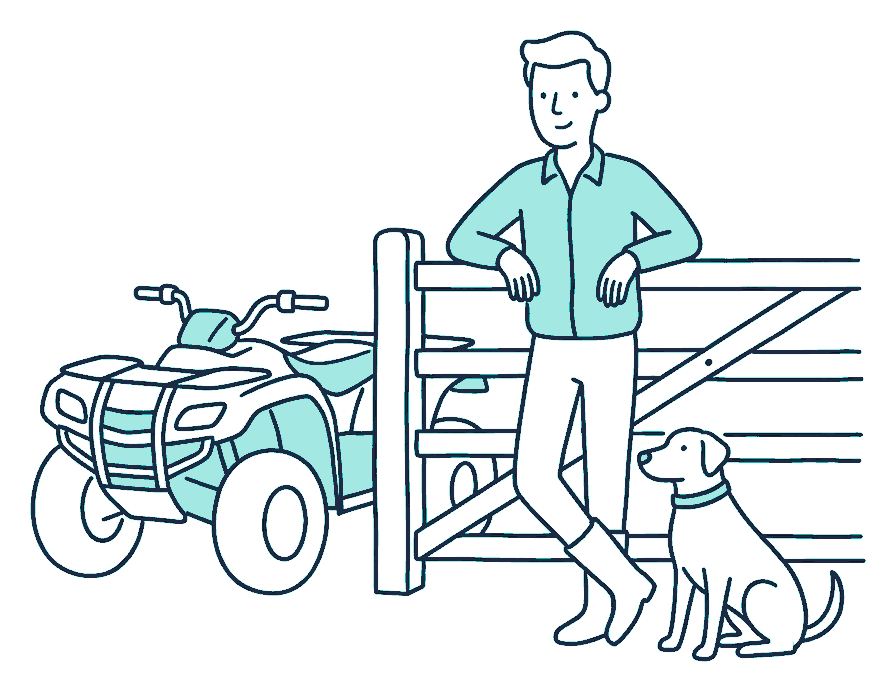
The Unique Risks Rural New Zealanders Face
Rural New Zealanders face five insurance-relevant risks: distance from healthcare, with the nearest hospital often an hour away and two hours or more in parts of the West Coast, Northland and the South Island; physically demanding occupations; isolation and mental health pressure; natural disaster exposure; and variable seasonal income. More than 600,000 New Zealanders live rurally.
Distance from healthcare
For many rural Kiwis, the nearest hospital is an hour or more away. In remote areas of the South Island, the West Coast, or Northland, getting to an emergency department can take two hours or longer. Specialist care is even further away, with most concentrated in the main centres of Auckland, Wellington, Christchurch, Hamilton, and Dunedin.
This distance has real consequences. Treatment delays for heart attacks, strokes, and serious injuries can affect outcomes. Specialist appointments require long drives, time off work, and sometimes overnight accommodation. Follow-up care and rehabilitation become logistically difficult when you live far from the provider.
Physical occupations
Rural work is physical. Farming, forestry, contracting, shearing, fencing, and many other rural occupations involve heavy lifting, working with machinery, handling livestock, and operating in challenging terrain and weather conditions. The injury rate for agriculture and forestry consistently ranks among the highest of any sector in New Zealand.
This means rural workers are more likely to need time off work due to injury. It also means that even a moderate health issue, one that an office worker could work through, can completely sideline someone whose job demands physical fitness.
Isolation and mental health
Rural isolation is a well-documented challenge. Fewer social connections, long working hours (particularly during peak seasons), financial stress from commodity price swings, and the pressure of running a farm or rural business all contribute to higher rates of mental health difficulties in rural communities.
Mental health conditions can trigger income protection claims if they prevent you from working. Equally, rural isolation can delay the point at which someone seeks help, meaning conditions are more advanced by the time treatment begins.
Natural disaster exposure
Rural properties face distinct natural disaster risks. Flooding, drought, storms, slips, and earthquakes can damage property, destroy livestock and crops, and disrupt income for extended periods. While general insurance covers property damage, the flow-on effects to personal income and health are where personal insurance becomes relevant.
A major flood that destroys fencing and kills livestock does not just create a property insurance claim. It creates months of reduced income, extreme stress, and physical demands during the recovery. Personal insurance, particularly income protection, is what bridges that gap.
Variable and seasonal incomes
Most rural occupations do not produce a steady fortnightly pay cheque. Farm income fluctuates with seasons, commodity prices, and weather. Contractors in rural areas often have busy periods and quiet periods. This variability makes it harder to budget for insurance premiums and complicates the process of establishing the correct level of cover.
Why Health Insurance Matters More in Rural Areas
Health insurance matters more in rural New Zealand because access, not affordability, is the binding constraint. Regional health services have fewer specialists and longer waitlists, an elective procedure such as a hip replacement can mean 12 months of reduced capacity on the farm, and some policies pay travel and accommodation benefits that matter when the nearest specialist is three hours away.
Limited public specialist access
New Zealand's public health system is stretched, and rural areas feel this more acutely. District health services in regional areas often have fewer specialists, longer waitlists, and more limited facilities. If you need a knee reconstruction, a cardiac assessment, or cancer treatment, you may be referred to a larger centre and placed on a waitlist that could stretch months.
With private health insurance, you can bypass public waitlists and access specialists more quickly. For rural New Zealanders, this is not just about convenience. Faster treatment can mean less time away from the farm or business, less travel, and better health outcomes.
Travel for treatment
When rural patients need specialist treatment, they frequently need to travel to a main centre. This means fuel costs, accommodation, meals away from home, and time off work, not just for the patient but often for a support person as well.
Some health insurance policies include benefits for travel and accommodation related to treatment. When you live three hours from the nearest specialist, these benefits have genuine practical value.
Elective surgery waitlists
Rural New Zealanders are disproportionately affected by long elective surgery waitlists. A hip replacement, hernia repair, or gallbladder removal that has you waiting 12 months through the public system can mean 12 months of reduced capacity on the farm. Private health insurance can reduce that wait to weeks.
Income Protection for Rural Occupations
Income protection insurance replaces a portion of your income (typically up to 75% of your pre-disability gross earnings) if you cannot work due to illness or injury. For rural New Zealanders, this is often the single most important type of personal insurance.
Why rural workers need income protection
The combination of physical occupations and self-employment makes income protection critical for most rural Kiwis. If a dairy farmer develops a back condition that prevents milking, or a fencing contractor is diagnosed with cancer, ACC will not cover the illness-related time off work. Without income protection, the only options are burning through savings, selling assets, or relying on family.
For a detailed guide on income protection for farming occupations specifically, see our insurance for farmers guide.
Occupation class and premiums
Insurers categorise occupations into risk classes. Office-based workers sit in the lowest risk (and cheapest) class. Physical rural occupations, including farming, forestry, shearing, and contracting, are classified as higher risk, which means higher premiums.
| Occupation | Typical Risk Class | Premium Impact |
|---|---|---|
| Farm manager (office and field) | Class 3 | Moderate loading |
| Dairy farmer (hands-on) | Class 3 to 4 | Higher premiums |
| Sheep and beef farmer | Class 3 to 4 | Higher premiums |
| Forestry worker | Class 4 | Highest premiums |
| Fencing contractor | Class 4 | Highest premiums |
| Rural veterinarian | Class 2 to 3 | Moderate premiums |
| Rural office/admin | Class 1 to 2 | Standard premiums |
Higher premiums do not mean income protection is unaffordable. Adjusting the waiting period (from 4 weeks to 8 or 13 weeks) can reduce premiums significantly. Many rural workers keep a cash buffer to cover the waiting period and use the premium savings to maintain cover to age 65.
Agreed value vs indemnity for variable incomes
If your income fluctuates seasonally, an agreed value policy is generally the better option. With agreed value, your benefit amount is locked in at application time based on your historical income. An indemnity policy assesses your income at the time of claim, which could result in a lower benefit if you claim during a quiet period.
This distinction is especially relevant for self-employed rural workers whose income can vary substantially from year to year.
Life Insurance Considerations for Rural Families
Life insurance pays a lump sum to your family on death, and for rural New Zealand families it does three jobs beyond replacing a breadwinner's income: clearing farm mortgages, equipment finance and seasonal overdrafts so survivors avoid a distressed sale, funding a manager or contractor to keep the operation running, and protecting multi-generational ownership of the property.
Mortgage and debt cover
Many rural properties carry significant debt, whether through farm mortgages, equipment finance, or seasonal overdrafts. Life insurance should be sufficient to clear these debts so that surviving family members are not forced into a distressed sale.
Business continuity
If you are the primary operator of a farm or rural business, your death does not just remove an income. It removes the person who knows how to run the operation. Life insurance can fund the cost of hiring a manager or contractor to keep the business running while the family determines next steps.
Multi-generational considerations
Rural properties are often held across generations. Life insurance can play a role in ensuring that the death of one generation does not force a sale that the next generation is not ready for. This is particularly important where the farm represents the bulk of the family's wealth and there are multiple beneficiaries with different interests.
ACC and Rural Accidents
ACC covers accidental injuries anywhere in New Zealand, including quad bike accidents, falls, livestock injuries and machinery incidents, paying treatment costs and weekly compensation at 80% of pre-injury income. Gaps bite harder rurally: illness is never covered, self-employed CoverPlus compensation is based on the previous year's taxable income, and rehabilitation services are harder to reach remotely.
What ACC covers well

For straightforward accidents, ACC generally works as intended. It covers treatment costs, pays weekly compensation at 80% of pre-injury income, and funds rehabilitation. Rural workers who are injured in a clear accident should receive cover.
Where the gaps appear
The main gaps for rural New Zealanders are the same as for everyone else, but they bite harder:
- Illness is not covered. ACC only covers accidents. Cancer, heart disease, stroke, and degenerative conditions receive no ACC compensation.
- Weekly compensation may be inadequate. For self-employed rural workers on CoverPlus, compensation is based on the previous year's taxable income. A bad year followed by a good earning year means your cover is based on the bad year.
- Return to work is harder. ACC's rehabilitation model assumes access to services that may be limited in rural areas. Physiotherapy, occupational therapy, and vocational support are harder to access when you live remotely.
For a broader overview of ACC limitations, our ACC vs private insurance guide explains the gaps in detail.
Accessing Advisers Remotely
Rural New Zealanders can now get insurance advice without travelling, because licensed financial advisers work by phone and video. You complete a brief online assessment, an adviser reviews your situation and compares policies across multiple insurers, and you discuss options at a time that suits, with policy documents handled electronically, removing the two-hour drive that once put the nearest adviser out of reach.
Digital and phone-based advice
This is changing. Licensed financial advisers now operate remotely via phone and video, making quality insurance advice accessible regardless of where you live. QuoteHub connects rural New Zealanders with licensed advisers who can assess your needs, compare policies across multiple insurers, and arrange cover, all without you needing to leave the farm.
The process is straightforward. You complete a brief online assessment, an adviser reviews your situation, and you discuss options over the phone or video call at a time that suits you. Policy documents are handled electronically. There is no need to drive to town for a meeting.
Live rurally and want to check your insurance?
Start a free insurance check with QuoteHub. Our advisers work remotely and understand the unique needs of rural New Zealanders.
Children in Rural Areas
Children on rural New Zealand properties are more often around machinery, livestock and open water, and live further from emergency medical care than urban children. Health insurance for children is relatively inexpensive and can provide faster access to specialists, cover for private treatment, and travel benefits when a family has to reach a main centre for care.
Health insurance for children is relatively inexpensive and can provide faster access to specialists, cover for private treatment, and benefits for travel when rural families need to access care in larger centres. Given the additional logistical challenges of getting a sick or injured child to specialist care from a rural property, health cover for children can be particularly worthwhile.
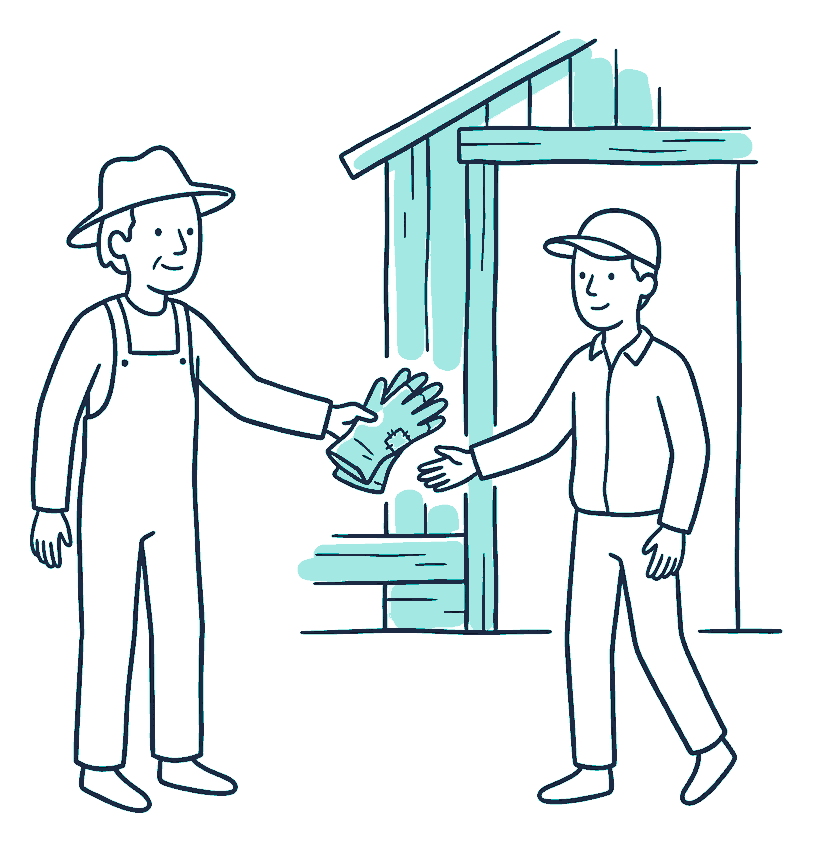
Farm Succession and Insurance
Insurance plays three roles in New Zealand farm succession: key person life and total permanent disability cover funds the transition if a critical operator dies or is permanently disabled, life insurance funds buy-sell agreements so a deceased owner's share can be bought out without a forced sale, and estate equalisation lets non-farming children inherit fairly while the farm passes intact.
Key person risk
On most farms, one or two people are critical to the operation. If a key person dies or becomes permanently disabled, the farm's viability can be immediately threatened. Key person insurance (typically structured as life and/or total permanent disability cover) provides funds to manage the transition.
Buy-sell agreements
Where a farm is owned by multiple parties, whether siblings, business partners, or through a trust structure, buy-sell agreements funded by life insurance ensure that ownership can transfer smoothly if one party dies. Without this arrangement, the deceased's share may need to be bought out from their estate at a time when cash is not available.
Estate equalisation
Many farming families face a common dilemma: one child wants to continue farming, while others have pursued different careers. If the farm is the family's primary asset, leaving it to the farming child means the others miss out. Life insurance on the farming parents can provide a lump sum to equalise the estate, allowing the farm to pass intact to the child who will work it while other children receive a fair inheritance.
Cover Priorities: Rural vs Urban
Cover priorities differ between rural and urban New Zealanders even though the products are identical. Income protection ranks first in both cases, but health insurance sits second for rural households because of distance from specialists and long waitlists, where urban households usually place life insurance second and health insurance third, followed by trauma and TPD cover.
| Priority | Rural New Zealanders | Urban New Zealanders |
|---|---|---|
| 1 | Income protection (physical jobs, self-employment, variable income) | Income protection (still the top priority for most) |
| 2 | Health insurance (distance from specialists, long waitlists) | Life insurance (mortgage protection, family income) |
| 3 | Life insurance (debt, succession, business continuity) | Health insurance (faster access, elective surgery) |
| 4 | Trauma/critical illness (lump sum for serious diagnosis) | Trauma/critical illness |
| 5 | Total permanent disability (TPD) | Total permanent disability (TPD) |
The key difference is health insurance. For urban New Zealanders who live near a major hospital, private health cover is valuable but the consequences of not having it are less severe. For rural New Zealanders who face long travel times and limited local specialist services, health insurance can make a material difference to treatment timing and outcomes.
Income protection remains the top priority in both cases. Without an income, everything else becomes harder.
Not sure where to start with your cover?
Get a free insurance check from a QuoteHub adviser. We will review your current situation and recommend what to prioritise based on your circumstances.
Frequently Asked Questions
Is insurance more expensive if you live rurally?
Where you live does not directly affect personal insurance premiums in most cases. What does affect premiums is your occupation. If your rural occupation involves physical work (farming, forestry, contracting), you will typically pay higher premiums for income protection than someone in an office-based role. Health and life insurance premiums are generally unaffected by location or occupation.
Can I get insurance advice without travelling to a city?
Yes. Licensed financial advisers, including those in the QuoteHub network, work remotely via phone and video. You can get a full insurance assessment, compare options, and arrange cover without leaving your property.
Does ACC cover farm accidents?
Yes. ACC covers accidental injuries sustained on the farm, including quad bike accidents, livestock injuries, falls, and machinery incidents. However, ACC does not cover illness. If you develop a health condition that prevents you from working, ACC will not pay compensation.
What type of income protection policy is best for variable farm income?
An agreed value policy is generally recommended for anyone with variable income. It locks in your benefit amount at application time based on historical earnings, so you are not penalised if you make a claim during a low-income period.
Should rural families prioritise health insurance for children?
It depends on your circumstances, but health insurance for children is relatively affordable and can provide meaningful benefits for rural families. Faster access to specialists, private treatment options, and travel-related benefits are all more valuable when you live far from major hospitals.
How does farm succession planning relate to insurance?
Life insurance can fund buy-sell agreements between farm co-owners, provide estate equalisation so non-farming children receive a fair share, and ensure the farm can continue operating during a transition period. These are complex arrangements best discussed with both a financial adviser and a lawyer.
This guide is for informational purposes only and does not constitute personalised financial advice. Insurance needs vary based on individual circumstances. QuoteHub connects you with licensed financial advisers (FSP712931) who can provide advice tailored to your situation. Cover is subject to insurer terms, conditions, and underwriting. Always read the policy wording before purchasing insurance.
References
- Financial Markets Authority (FMA), Insurance guidance
- ACC New Zealand
- Sorted.org.nz, Insurance guides
- Insurance & Financial Services Ombudsman (IFSO)
- MoneyHub NZ, Insurance resources
- Cancer Society of New Zealand
- Heart Foundation NZ
- Mental Health Foundation NZ
Read the full insurance guides
Compare your cover with a licensed NZ adviser · free, no obligation.
Explore related pages: Life Insurance, Income Protection, Health Insurance, Trauma Insurance, Calculators.