Income Protection for Farmers in NZ: Protecting Your Livelihood
Income protection for farmers in New Zealand pays a monthly benefit of up to 75% of income when illness or injury stops you working, and it is the only cover that answers illness, because ACC pays only for accidents. Insurers place hands-on farmers in occupation class 3 or 4, with farm labourers at class 4 and forestry workers at 4 to 5, where some insurers decline cover.
In short
- ACC replaces 80% of income after an accident but covers no illness, so cancer, heart disease, stroke, degenerative back and joint conditions and depression fall entirely on the farmer (ACC, what we cover).
- Hands-on farming is usually occupation class 3 or 4, and a class 4 occupation typically pays 50 to 100% more than a class 1 sedentary office worker for the same cover.
- Agreed value cover fixes the benefit at application on a two to three year average of accounts, which protects a farmer who claims in a drought year or a weak commodity price cycle.
ACC replaces 80% of a New Zealand farmer's income after an accident, up to a cap, and pays nothing at all for illness (ACC, what we cover). Cancer, heart disease, stroke, degenerative back and joint conditions and depression all sit outside it, and those are the conditions that keep a farmer off the farm longest. Farmers remain among the most underinsured workers in the country, and tens of thousands of rural families carry that risk.
Most farmers understand the risks of the job. Machinery, livestock, long hours, and unpredictable weather are part of everyday life. What many do not fully appreciate is the financial gap that opens when illness or injury prevents them from working, and how poorly ACC covers that gap.
This guide focuses specifically on income protection insurance for New Zealand farmers. It covers why the standard approach does not work for farming, how to structure a policy around seasonal earnings, what occupation class means for your premiums, and practical strategies to keep costs manageable.
Why Farmers Are Uniquely Exposed
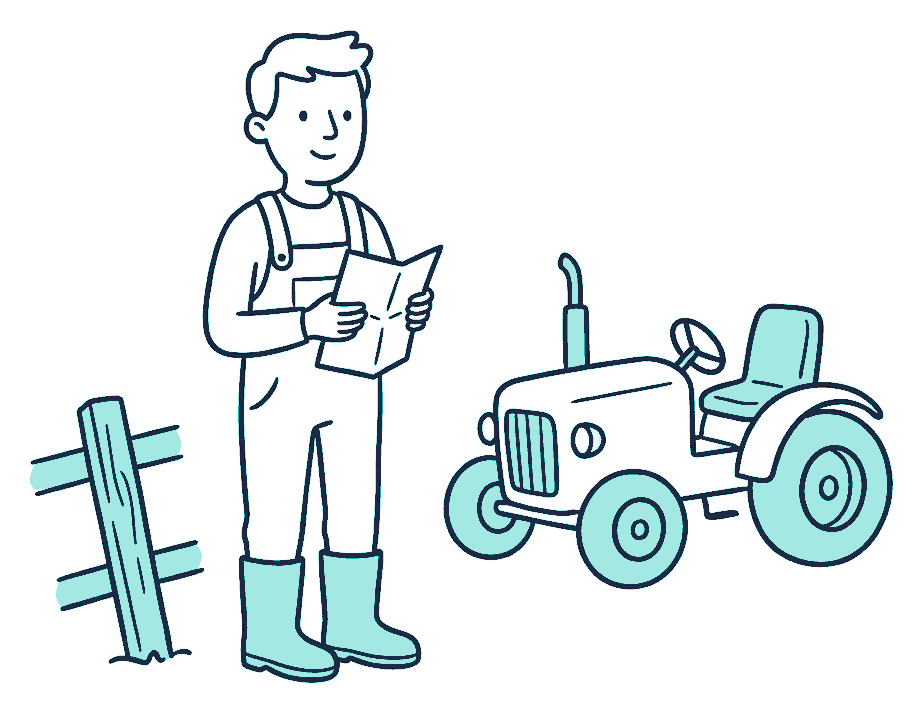
New Zealand farmers are uniquely exposed because four risks stack up at once. Agriculture has consistently among the highest injury rates of any industry, rural isolation delays treatment and lengthens recovery, farming carries among the highest rates of psychological distress of any occupation, and seasonal income swings make standard monthly-salary policies a poor fit without careful structuring.
Physical risk
The injury rate in agriculture is consistently among the highest of any industry in New Zealand. Farmers work with heavy machinery, livestock, chemicals, and in conditions that range from extreme heat to mud and ice. Musculoskeletal injuries from lifting, falls from quad bikes and tractors, and crushing injuries from livestock are common.
Even injuries that might be manageable for an office worker can be career-threatening on a farm. A torn rotator cuff does not stop you from typing, but it can stop you from milking, fencing, or operating machinery for months.
Isolation and delayed treatment
Rural New Zealand means limited access to healthcare. A farmer in the Mackenzie Country or the East Cape may be hours from a hospital. Delayed treatment can turn minor injuries into serious ones, and specialist follow-up often requires repeated trips to the nearest city. This extends recovery times and increases the duration of any income loss.
Mental health
Farming has among the highest rates of psychological distress of any occupation in New Zealand. Isolation, financial pressure, long hours, drought, commodity price swings, and the weight of multi-generational responsibility all contribute. Mental health conditions are a growing cause of income protection claims, and they are not covered by ACC.
Seasonal and variable income
A dairy farmer's income peaks during milking season and drops during the dry months. A sheep and beef farmer's cash flow depends on lamb prices at sale time. Horticulture income is tied to harvest. This variability makes standard income protection policies, designed for workers with steady monthly salaries, a poor fit without careful structuring.
The ACC Gap for Farmers
The ACC gap for New Zealand farmers is illness. ACC covers accidental injury and replaces 80% of income up to a cap, but pays nothing for cancer, heart disease, stroke, degenerative back and joint conditions, mental health conditions such as depression and burnout, or respiratory illness from long-term dust and chemical exposure.
ACC provides solid cover for accidental injuries. If you fall off a tractor, break a leg mustering, or are injured by livestock, ACC will cover treatment costs and replace 80% of your income up to a cap.
What ACC does not cover
The critical gap is illness. ACC does not cover:
- Cancer. A major cause of long claims: 15% of Partners Life's Income Cover claims in the year to 31 March 2025, though on the same insurer's data accident and injury led at 42% (Partners Life 2025 claims brochure, retrieved 19 August 2026). Claim mixes differ by insurer and product.
- Heart disease and stroke. Common in the farming demographic, particularly among men over 40.
- Degenerative conditions. Back and joint degeneration from decades of physical work. While sometimes classified as gradual process injuries, these claims are frequently declined by ACC.
- Mental health conditions. Unless directly caused by a specific workplace accident, depression, anxiety, and burnout are not covered.
- Respiratory conditions. Long-term exposure to dust, chemicals, and animal dander can cause chronic respiratory issues that develop gradually rather than from a single accident.
Why this matters more for farmers
For a farmer, illness does not just mean a trip to the GP. It can mean complete inability to work. You cannot run a dairy operation while undergoing chemotherapy. You cannot muster sheep with a herniated disc. And unlike an office worker who might manage from home on reduced duties, most farming tasks require full physical capacity.
Without income protection, a farmer facing a serious illness has limited options: draw down savings, take on more debt, ask family to work harder, or sell assets. None of these are sustainable for an extended period.
If you want to understand the full picture of what ACC does not cover, it is worth reading our detailed breakdown.
Occupation Class: What It Means for Farmer Premiums
Occupation class places New Zealand farmers in Class 3 or Class 4 for income protection, with farm labourers at Class 4 and forestry workers at Class 4 to 5, where some insurers decline cover. A Class 4 occupation typically pays 50 to 100% more than a Class 1 sedentary office worker, reflecting claims risk rather than an arbitrary loading.
Typical classification for farming roles
Occupation class is the largest single premium lever a farmer has. A farm owner or manager doing mostly office work sits at class 2 to 3, a hands-on dairy or sheep and beef farmer at class 3 to 4, a farm labourer at class 4, and a forestry worker at class 4 to 5, where some insurers decline cover. The classes below are the ranges New Zealand insurers typically apply, not one insurer's published schedule.
| Role | Typical Class | Premium Impact |
|---|---|---|
| Farm owner/manager (mostly office and management) | Class 2 to 3 | Moderate premiums |
| Working dairy farmer (hands-on, machinery, livestock) | Class 3 to 4 | Higher premiums |
| Sheep and beef farmer (hands-on) | Class 3 to 4 | Higher premiums |
| Horticulture/viticulture (seasonal physical work) | Class 3 | Moderate to higher premiums |
| Farm labourer or seasonal worker | Class 4 | Highest premiums |
| Forestry worker | Class 4 to 5 | Highest premiums; some insurers decline |
A Class 4 occupation typically pays 50 to 100% more than a Class 1 (sedentary office worker) for the same level of income protection. This is a reflection of claims risk, not an arbitrary loading. Farmers are more likely to claim, and claims tend to last longer because returning to full physical farm work takes time.
How to manage your occupation class
The good news is that classification is not set in stone, and it varies between insurers.
- Be specific in your application. If you spend 50% of your time on farm management, accounting, and planning, and 50% on physical work, make that clear. Some insurers will classify you more favourably than others based on the management component.
- Use a licensed financial adviser. Different insurers classify farming roles differently. An adviser who works across multiple providers can place you with the one that views your occupation most favourably.
- Update your insurer if your role changes. If you move from hands-on farming to a more supervisory or management-heavy role, your classification may improve and your premiums may decrease.
Income Calculation for Farmers: Agreed Value vs Indemnity
Agreed value locks a New Zealand farmer's insured income at application, based on a two to three year average of historical earnings, and pays that amount whatever the season is doing at claim time. Indemnity assesses earnings in the 12 months before the claim, so a drought year or weak commodity prices can cut the benefit sharply.
Agreed value policies
An agreed value policy locks in your insured income amount at the time of application. The insurer assesses your historical income (typically a two to three year average) and agrees on a benefit amount. If you claim, you receive that amount regardless of what your income happens to be at the time of the claim.
Why this suits farmers: If you make a claim during a low-income period, such as a drought year, a poor commodity price cycle, or the off-season, your benefit is not reduced. The amount was agreed when you took out the policy.
Indemnity policies
An indemnity policy assesses your income at the time of the claim. The insurer looks at your recent earnings (usually the 12 months prior to the claim) and calculates the benefit based on that figure.
Why this is risky for farmers: If your claim coincides with a bad season, your benefit could be significantly lower than expected. A dairy farmer who claims during a season of depressed milk prices may receive far less than they need to cover mortgage payments and living expenses.
The recommendation
For most farmers, an agreed value policy is the better option despite the slightly higher premium. The certainty of knowing what you will receive at claim time is worth the additional cost, especially given how variable farm income can be.
| Policy Type | Premium | Claim Certainty | Best For |
|---|---|---|---|
| Agreed value | Higher (10 to 20% more) | High. Benefit amount is fixed. | Farmers with variable or seasonal income |
| Indemnity | Lower | Lower. Benefit depends on income at claim time. | Farmers with stable, predictable income |
Structuring Cover Around Seasonal Earnings
Structuring income protection around seasonal farm earnings takes three steps in New Zealand. Provide at least three years of financial accounts so the insurer can average good and bad years, with most accepting the best two of three. Capture drawings, shareholder salary, fringe benefits and retained business income. Consider a base benefit with an adjustable top-up component.
Use a multi-year income average
When applying for agreed value cover, provide your adviser with at least three years of financial accounts. This smooths out good and bad years and gives the insurer a more accurate picture of your typical earnings. Most insurers will accept an average of the best two out of three years.
Account for drawings vs profit
Self-employed farmers often take variable drawings from the farm business. The insurer needs to understand the full picture: personal drawings, shareholder salary, fringe benefits, and any income retained in the business. A licensed financial adviser can help structure the application to capture the correct income figure.
Consider the benefit structure
Some policies allow for a base monthly benefit with an additional "top-up" component that can be adjusted. This can be useful for farmers who have a baseline living cost that must be covered, plus variable costs that fluctuate with the season.
Waiting Period: Why Farmers Often Choose Longer
New Zealand farmers often choose 8 or 13 week waiting periods rather than 4 weeks for three reasons. A longer waiting period reduces the premium meaningfully. The exact saving depends on your insurer and profile, and an adviser can quote the difference. ACC starts paying accident claims within the first one to two weeks, and family, relief milkers or contractors can keep the farm running.
Why a longer waiting period can make sense for farmers
Farmers often choose 8 or 13 week waiting periods for several reasons:
- Cost savings are significant. Moving from a 4 week to an 8 or 13 week waiting period reduces the premium meaningfully; only a personalised quote shows the exact difference for your profile.
- ACC covers accident injuries during the wait. If the injury is accidental, ACC starts paying within the first one to two weeks. The income protection waiting period only bites for illness claims.
- Farm support networks. Many farmers can draw on family, relief milkers, or contract workers to keep the farm running for a period. This provides a buffer that salaried workers may not have.
Waiting period premium impact for farmers
The three standard waiting periods are 4, 8 and 13 weeks, and the table ranks them for a single profile: a class 4 occupation, a $5,000 monthly benefit, age 40 and cover to age 65. The ranking is relative rather than a price. No New Zealand insurer publishes a dollar figure for these settings, so the difference for your own profile appears only on a personalised quote.
| Waiting Period | Effect on premium (Class 4, $5,000/month benefit, age 40, to age 65) |
|---|---|
| 4 weeks | Baseline. The most expensive of the three, and the earliest that payments start. |
| 8 weeks | Meaningfully below the 4 week baseline |
| 13 weeks | Lower again, the cheapest of the three |
Because that discount applies every year the policy runs, the difference between a 13 week and a 4 week waiting period compounds substantially over a 25 year policy. The trade-off is that you need enough savings or other income to cover the first 13 weeks of any illness-related claim.
Benefit Period: How Long Should Your Cover Last
Benefit period sets how long an insurer keeps paying, with options from 2 years to age 65 or age 70. Most New Zealand farmers work well into their 60s, so a 2-year term leaves them exposed to the conditions that cause the longest claims, including cancer, heart disease and degenerative conditions. A 5-year period is a reasonable middle ground.
Why benefit period matters for farmers
Farming is a long-term occupation. Most farmers work well into their 60s, and the farm is often their primary retirement asset. A short benefit period of 2 years might seem adequate, but it leaves you exposed to the conditions that cause the longest claims: cancer, heart disease, and degenerative conditions that can keep you off the farm for years.
| Benefit Period | Effect on premium (Class 4, $5,000/month benefit, age 40, 8-week wait) |
|---|---|
| 2 years | Lowest. Cheapest to buy, but payments stop while many serious conditions are still running. |
| 5 years | Moderate. Covers the majority of claims by duration. |
| To age 65 | Highest. The most complete protection against never returning to the farm. |
A 5 year benefit period covers the majority of claims and is a reasonable middle ground if a "to age 65" policy stretches the budget.
Common Claim Scenarios for Farmers
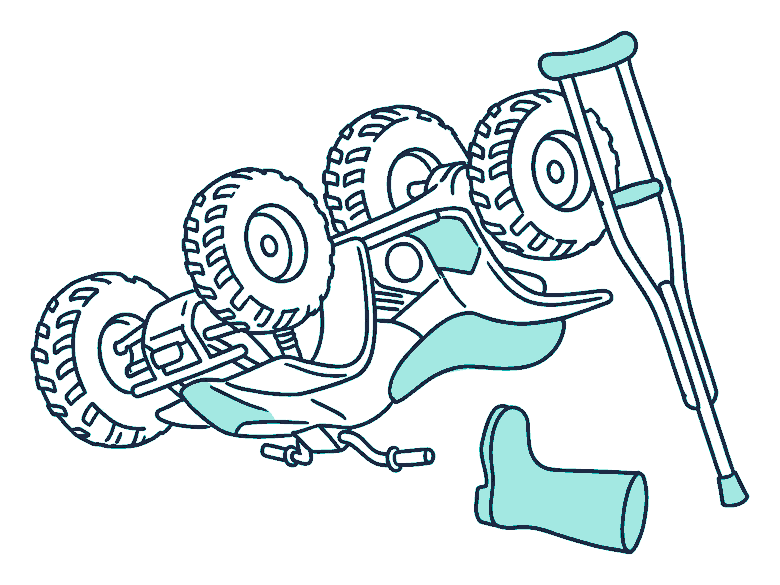
Farmer income protection claims in New Zealand split into illness and accident. Illness claims include a 48 year old sheep farmer with bowel cancer needing 14 months, a 52 year old dairy farmer off 6 months after a heart attack, spinal stenosis requiring 8 months, and depression taking 4 to 8 months. Accident claims include quad bike and livestock injuries.
Illness claims (not covered by ACC):
- Cancer. A 48 year old sheep farmer diagnosed with bowel cancer. Treatment and recovery takes 14 months. Without income protection, the farm would need to fund a manager or rely entirely on family labour.
- Heart attack. A 52 year old dairy farmer suffers a heart attack during calving season. Recovery and rehabilitation takes 6 months, with restrictions on physical work for a further 6 months.
- Back degeneration. A 55 year old farmer with 30 years of physical work develops severe spinal stenosis. Surgery and rehabilitation takes 8 months, and they are unable to return to full duties.
- Depression and burnout. A farmer dealing with drought, debt, and isolation develops severe depression. Treatment takes 4 to 8 months before they are able to return to work.
Accident claims (ACC covers partially, income protection tops up):
- Quad bike accident. Multiple fractures requiring surgery and 4 months of rehabilitation. ACC covers 80% of income; income protection covers the gap.
- Livestock injury. Crushed against a fence by a bull, resulting in broken ribs and internal injuries. Recovery takes 3 months.
In each of these scenarios, the farmer's income stops but the farm's costs do not. Mortgage payments, feed bills, wages for any staff, and family living expenses all continue.
How to Reduce Income Protection Premiums
Six strategies reduce farming income protection premiums in New Zealand. Extending the waiting period from 4 weeks to 8 or 13 weeks is the most effective single change. A 5 year benefit period costs less than cover to age 65. Level premiums can beat stepped over time, accurate occupation descriptions help, good health avoids loadings, and adviser advice is free.
1. Extend the waiting period
As outlined above, moving from 4 weeks to 8 or 13 weeks is the single most effective way to reduce premiums. Build an emergency fund to cover the waiting period and save on premiums every year.
2. Choose a 5 year benefit period
If a "to age 65" benefit period is too expensive, a 5 year period covers most claim scenarios at a significantly lower cost. This is a pragmatic compromise that provides meaningful protection.
3. Consider stepped vs level premiums
Stepped vs level premiums is a decision worth thinking through carefully. Stepped premiums start lower and increase each year as you age. Level premiums are higher initially but remain stable. For a farmer in their 30s, level premiums can be substantially cheaper over the life of the policy.
4. Be accurate about your occupation
As discussed above, the split between physical and management work affects your classification. An accurate description of your role may result in a more favourable class than a generic "farmer" label.
5. Maintain your health
Most insurers offer standard rates to applicants in good health with no significant medical history. Regular health checks, managing blood pressure and cholesterol, and maintaining a healthy weight can all help you avoid medical loadings on your premium.
6. Use an adviser
QuoteHub usually does not charge clients directly for insurance advice and may receive commission from insurers. Our disclosure statement explains our remuneration and provider panel. An adviser can compare policies across the providers on their panel to find the best combination of features and price for your situation. For self-employed farmers, an adviser's help with income calculations is particularly valuable.
Getting Income Protection in Place
If you are a farmer without income protection, or if you have a policy that has not been reviewed in several years, now is the time to act. The process is straightforward:

- Get a free, no-obligation assessment. A licensed adviser will review your situation, including your income, farm structure, and existing cover.
- Compare options. Your adviser will present quotes from multiple insurers, showing how different waiting periods, benefit periods, and policy types affect your premium.
- Apply. The application process includes health and income questions. Having your last two to three years of financial accounts ready speeds things up.
Get a free income protection assessment from QuoteHub and find out exactly what cover would cost for your situation. There is no cost and no obligation.
Frequently Asked Questions
Can I get income protection if I am a seasonal or part-time farmer?
Yes, but the options may be more limited. Insurers need to see a consistent income history to set an agreed value benefit. If farming is your primary occupation, most insurers will offer cover. If it is a secondary income alongside other employment, your adviser can help structure a policy that covers the appropriate portion of your earnings.
Does income protection cover me if commodity prices drop and I earn less?
No. Income protection covers loss of income due to illness or injury that prevents you from working. It does not cover reduced income from market conditions, drought, or other business factors. However, an agreed value policy protects you from having your benefit reduced if your income happens to be low at the time of a claim.
What if I can do some farm work but not all of it?
Most policies include a partial disability or graduated benefit provision. If you can return to work in a limited capacity but are earning less than before, the policy may pay a reduced benefit to make up the difference. Look for policies with strong partial disability clauses, as this is common in farming recovery scenarios.
Is income protection tax deductible for farmers?
Income protection premiums are generally tax deductible for self-employed individuals in New Zealand. However, if the premiums are deductible, the benefit payments you receive during a claim are taxable income. Consult your accountant to confirm the treatment for your specific structure.
How does income protection interact with ACC for farmers?
If your injury is accidental, ACC pays first (80% of income up to the cap). Your income protection policy can top up the ACC payment to bring your total cover to 75% of your full income. If your condition is illness-related, ACC does not apply at all, and income protection is your sole source of replacement income.
At what age should a farmer get income protection?
The earlier you apply, the lower your premiums and the less likely you are to have pre-existing conditions that cause exclusions or loadings. Many farmers consider it when they take on significant farm debt, start a family, or take over the operation from the previous generation. By your mid-30s, having income protection in place is strongly advisable.
If you are ready to find out what income protection would cost for your specific farming operation, request a free quote from QuoteHub. A licensed adviser will assess your situation and provide tailored recommendations at no cost.
QuoteHub connects New Zealanders with licensed financial advisers. Financial advice is provided by Craig Smith Business Services Limited, trading as Smiths Insurance & KiwiSaver, a licensed Financial Advice Provider (FSP712931). QuoteHub is a trading name. Henry Smith is a Financial Adviser (FSP1010699). The information in this article is general in nature and does not constitute personalised financial advice. We recommend speaking with a licensed financial adviser before making insurance decisions.
References
- ACC New Zealand, What we cover
- Financial Markets Authority (FMA), Insurance guidance
- Sorted.org.nz, Income protection
- Insurance & Financial Services Ombudsman (IFSO)
- Stats NZ, Income and earnings
- Cancer Society of New Zealand
- Heart Foundation NZ
- Mental Health Foundation NZ
Read the full insurance guides
Compare your cover with a licensed NZ adviser · free, no obligation.
Explore related pages: Life Insurance, Income Protection, Health Insurance, Trauma Insurance, Claims Support.