Income Protection Waiting and Benefit Periods NZ: How to Choose
An income protection waiting period is how long you must be off work before payments start, and the benefit period is how long they keep coming. New Zealand insurers commonly offer waiting periods of 4, 8, 13 and 26 weeks and benefit periods of 2 years, 5 years, to age 65 or to age 70. Choose the benefit period first, then use the waiting period to manage cost.
In short
- Waiting periods of 4, 8, 13 and 26 weeks are the New Zealand standard, equal to 28, 56, 91 and 182 days off work with no benefit paid.
- Moving from a 4-week to an 8-week wait cuts the premium by roughly 22%, and a 26-week wait by about 56%, on indicative relativities rather than quoted prices.
- A 40-year-old earning $80,000 who is permanently unable to work loses $2,000,000 of income by 65, and a 2-year benefit period covers only $128,000 of it.
Income protection insurance replaces a portion of your income if you cannot work due to illness or injury. But when you set up a policy, two decisions will shape both the cover you receive and the premiums you pay: the waiting period and the benefit period.
Getting these two settings right is more important than most people realise. Choose poorly and you could end up paying more than you need to, or worse, find that your cover runs out before you are back on your feet.
This guide explains what each option means, how they affect your premiums, and how to choose the right combination for your situation.
What Is an Income Protection Waiting Period?
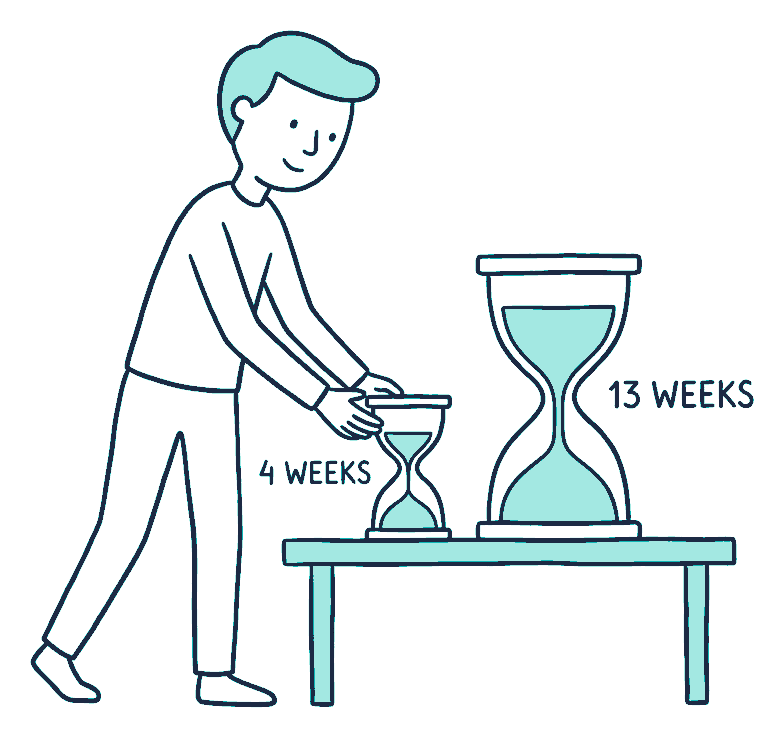
An income protection waiting period is the number of days you must be unable to work before benefit payments begin, and no benefit is paid during that time. Most New Zealand insurers offer 4, 8, 13 and 26-week options, equivalent to 28, 56, 91 and 182 days off work, with living costs covered from savings, sick leave or ACC.
During the waiting period, you receive no benefit payments from your income protection policy. You need to cover your living expenses from other sources, whether that is savings, sick leave, ACC (if the claim is accident-related), or a combination.
Common Waiting Period Options in NZ
Most New Zealand insurers offer four standard income protection waiting period options. A 4-week wait starts payments after 28 days off work and suits people with limited savings or no sick leave. A 13-week wait starts after 91 days and suits those with solid savings or generous sick leave. A 26-week wait, after 182 days, buys the lowest premium. The day counts are the weeks converted, nothing more.
| Waiting Period | When Payments Start | Best Suited To |
|---|---|---|
| 4 weeks | After 28 days off work | Those with limited savings or no sick leave |
| 8 weeks | After 56 days off work | Employees with some sick leave entitlement |
| 13 weeks | After 91 days off work | Those with solid savings or generous sick leave |
| 26 weeks | After 182 days off work | Those wanting the lowest possible premium |
Some insurers also offer 1-week or 2-week waiting periods, though these come with significantly higher premiums. A few offer custom waiting periods as well.
What Is an Income Protection Benefit Period?
An income protection benefit period is the maximum length of time your insurer will keep paying for a single claim, ending when you return to work if that comes first. New Zealand insurers commonly offer 2 years (24 months), 5 years (60 months), to age 65, or to age 70, and the benefit period matters more than the waiting period.
Common Benefit Period Options in NZ
Four benefit periods are standard across New Zealand insurers, and no single published schedule sets them. A 2-year term pays for a maximum of 24 months per claim and is the budget option. A 5-year term pays up to 60 months and covers most recoveries. To age 65 and to age 70 run until you reach that age, and they are the only settings that carry a permanent condition through to retirement.
| Benefit Period | Maximum Payout Duration | Typical Use Case |
|---|---|---|
| 2 years | 24 months per claim | Budget option, covers shorter-term illnesses |
| 5 years | 60 months per claim | Mid-range option, covers most recoveries |
| To age 65 | Until you turn 65 | Comprehensive cover for serious long-term conditions |
| To age 70 | Until you turn 70 | Extended cover past traditional retirement age |
The benefit period is arguably the more important of the two decisions. A short benefit period might save you money each month, but it could leave you without income if you develop a serious long-term condition such as cancer, a neurological disorder, or a chronic illness that keeps you off work for years.
How Waiting Periods Affect Your Premiums
A longer income protection waiting period lowers your premium, because most claims in New Zealand are resolved within the first few months and you are effectively self-insuring that initial period. Moving from a 4-week to an 8-week wait cuts the premium by roughly 22%, a 13-week wait by about 41%, and a 26-week wait by about 56%.
Here is how the four options compare for a 35-year-old non-smoker earning $80,000, with a benefit period to age 65. Against a 4-week baseline, an 8-week wait is about 22% cheaper, a 13-week wait about 41% cheaper and a 26-week wait about 56% cheaper. These are indicative QuoteHub relativities, not quoted prices, and the dollar amounts are left out because they move with insurer, occupation and health.
| Waiting Period | Relative premium level | Savings vs 4-Week Wait |
|---|---|---|
| 4 weeks | Highest | Baseline |
| 8 weeks | Moderate | ~22% less |
| 13 weeks | Low | ~41% less |
| 26 weeks | Lowest | ~56% less |
These relativities are indicative only and will vary by insurer, occupation, age, health, and other factors. Get a personalised comparison for your own pricing.
The jump from a 4-week to an 8-week waiting period typically delivers the best value. You save a meaningful amount on premiums while only needing to cover an extra four weeks from your own resources.
How Benefit Periods Affect Your Premiums
Longer income protection benefit periods cost more because the insurer's potential liability is greater, but the gaps are smaller than most New Zealanders expect. Against a to-age-65 benefit period, a 2-year benefit period costs roughly 48% less, a 5-year period about 24% less, and extending cover to age 70 costs about 14% more.
Using the same 35-year-old example with an 8-week waiting period, the to-age-65 setting is the baseline. A 2-year benefit period costs roughly 48% less, a 5-year period about 24% less, and extending cover to age 70 costs about 14% more. The spread is narrower than most New Zealanders expect. These are indicative QuoteHub relativities rather than quoted premiums.
| Benefit Period | Relative premium level | Premium vs To Age 65 |
|---|---|---|
| 2 years | Lowest | ~48% less |
| 5 years | Low | ~24% less |
| To age 65 | Moderate | Baseline |
| To age 70 | Highest | ~14% more |
Indicative relativities only. Actual premiums depend on your individual circumstances.
The gap between a 2-year and a to-age-65 benefit period is significant in terms of cover but relatively modest in terms of monthly cost. For most people the step up in premium is well worth the security it provides, because the long claims are the ones that do the real financial damage.
How to Choose the Right Waiting Period
Your ideal income protection waiting period depends on how long you could sustain household expenses without your regular income, weighing emergency savings, sick leave entitlement, a partner's income and any other cover already in place. For most New Zealanders an 8-week or 13-week waiting period balances affordability and protection, while self-employed people with no sick leave usually need 4 weeks.
1. Your Emergency Savings
If you have three months of living expenses set aside, a 13-week waiting period makes financial sense. If you have minimal savings, a shorter waiting period provides a safety net sooner.
2. Your Sick Leave Entitlement
Employees with accrued sick leave can use that to bridge the waiting period. If your employer offers 8 to 12 weeks of paid sick leave, you may be comfortable choosing a 13-week wait. Check your employment agreement for the specifics.
3. Your Partner's Income
If your household has two incomes and could manage on one for a period, a longer waiting period becomes more viable. Single-income households generally benefit from a shorter waiting period.
4. Other Insurance or Benefits
If you have a mortgage repayment insurance policy or other cover that kicks in early, you may not need a short waiting period on your income protection as well.
General Guidance
- 4-week wait: Self-employed with no sick leave and limited savings
- 8-week wait: Employees with standard sick leave, or those wanting a good balance of cost and cover
- 13-week wait: Those with solid savings, generous sick leave, or a second household income
- 26-week wait: Budget-conscious buyers who want catastrophic cover only
For most New Zealanders, an 8-week or 13-week waiting period offers a sensible balance between affordability and protection.
How to Choose the Right Benefit Period
Your income protection benefit period decision comes down to which risk you are protecting against, and to age 65 is the most common recommendation from licensed financial advisers in New Zealand. A 40-year-old earning $80,000 who is permanently unable to work loses $2,000,000 of income by age 65, and a 2-year benefit period would cover only $128,000 of it.
Why To Age 65 Is Recommended for Most People
A to-age-65 benefit period is the most common recommendation from licensed financial advisers for good reason. It protects against the worst-case scenario: a condition that permanently prevents you from returning to your occupation.
Consider this: if a 40-year-old earning $80,000 is permanently unable to work, the income lost between age 40 and 65 totals $2,000,000. A 2-year benefit period would cover just $128,000 of that gap (75% of income for 24 months). A to-age-65 benefit period covers the full duration.
When a Shorter Benefit Period Might Be Appropriate
A 2-year or 5-year benefit period could suit you if:
- You are close to retirement and only need cover for a few more working years
- Budget is a genuine constraint and some cover is better than none
- You have significant investment income or assets that would sustain you long-term
- You are supplementing other cover (such as an employer group scheme with a limited benefit period)
If you choose a shorter benefit period purely to save money, make sure you understand what you are giving up. Most income protection claims last less than two years, but the ones that extend beyond that are the claims where the financial impact is most devastating.
The Interaction Between ACC and Income Protection
ACC in New Zealand covers injuries caused by accidents and typically pays 80% of your income from day one, up to a cap, with no waiting period, so your income protection waiting period matters less for accident claims. ACC pays nothing for illness, which means income protection is the only safety net for cancer, heart attack or mental health conditions.

This means your income protection waiting period is less of a concern for accident-related claims. However, income protection insurance primarily covers illness, which ACC does not cover at all. If you develop cancer, have a heart attack, or suffer a mental health condition that prevents you from working, ACC provides nothing. Your income protection policy is the only safety net.
Some policies offer an "ACC top-up" feature, where the insurer pays the difference between your ACC entitlement and your insured benefit amount during accident-related claims. This can be a useful feature if your income exceeds the ACC earnings cap.
For a deeper look at what ACC does and does not cover, see our guide on ACC vs private insurance.
Employee vs Self-Employed Considerations
Employment status shapes the right waiting and benefit period combination in New Zealand. Employees often have 5 to 20 or more days of accrued sick leave, may hold employer group cover limited to a 2-year benefit period, and can usually take a longer waiting period. Self-employed contractors have no sick leave, so 4 or 8 weeks is often essential.
Employees
- Often have paid sick leave (5 to 20+ days accrued)
- May have employer-provided group income protection cover (check the terms carefully)
- Can typically choose a longer waiting period to reduce premiums
- Should check if their employer cover has a limited benefit period (many group schemes only cover 2 years)
Self-Employed and Contractors
- Usually have no sick leave or employer-provided cover
- Income stops immediately when they stop working
- A shorter waiting period (4 or 8 weeks) is often essential
- Business overheads do not stop when they do, making cover more urgent
- Should consider a to-age-65 benefit period for comprehensive protection
If you are a tradie or contractor, our guide on income protection for tradies covers the specific considerations for your situation.
Common Mistakes When Choosing Waiting and Benefit Periods
New Zealanders make four recurring mistakes when setting income protection waiting and benefit periods. Choosing a 26-week wait without six months of expenses saved creates hardship before payments start. Shortening the benefit period to save money removes protection against long-term inability to earn. The other two are never reviewing the settings, and ignoring how a policy defines the benefit period.
Choosing a Long Waiting Period Without Adequate Savings
A 26-week waiting period is the cheapest option, but if you cannot actually cover six months of expenses, you could face serious financial hardship before your benefit starts paying.
Choosing a Short Benefit Period to Save Money
This is the most costly mistake people make. A 2-year benefit period is significantly cheaper, but it leaves you exposed to the very scenario income protection is designed for: a long-term inability to earn. If budget is tight, it is generally better to extend the waiting period and keep the benefit period long, rather than the other way around.
Not Reviewing Your Cover as Circumstances Change
Your ideal waiting and benefit period combination may shift over time. As you build savings, pay down your mortgage, or change jobs, it is worth reviewing whether your settings still make sense. A regular insurance review can help identify opportunities to optimise your cover.
Ignoring the Fine Print on Benefit Period Definitions
Some policies define the benefit period differently. Check whether the benefit period resets after you return to work and then have a new claim, and understand the difference between "own occupation" and "any occupation" definitions as they relate to ongoing benefit payments.
Putting It All Together: A Practical Framework
Setting your income protection cover works best in a fixed order. Start with the benefit period and choose the longest you can afford, with to age 65 ideal for most working New Zealanders. Then use the waiting period as the lever to manage premium, extending from 4 weeks to 8 or 13 weeks, and check you can bridge that gap.
Start with the benefit period. Choose the longest benefit period you can afford. To age 65 is ideal for most working New Zealanders.
Then adjust the waiting period. Use the waiting period as the lever to manage your premium. If the premium for a to-age-65 benefit period with a 4-week wait is too high, extend the wait to 8 or 13 weeks.

Check your bridge. Make sure you have a realistic plan to cover expenses during the waiting period, whether through savings, sick leave, a partner's income, or a combination.
Compare across insurers. Premiums for the same waiting and benefit period combination can vary significantly between insurers. A proper comparison ensures you are not overpaying.
Seeing how different waiting and benefit period combinations affect your premium is the fastest way to find the right balance. You can compare income protection cover across NZ insurers in about 60 seconds.
Frequently Asked Questions
What is the most common income protection waiting period in NZ?
The 8-week (56-day) waiting period is the most popular choice among New Zealanders. It strikes a balance between keeping premiums manageable and providing a reasonable start date for benefit payments. Most employees with standard sick leave entitlements find that 8 weeks gives them enough of a bridge to cover the gap.
Can I change my waiting period or benefit period after the policy starts?
Yes, most insurers allow you to adjust your waiting period and benefit period during the life of your policy. Shortening the waiting period or extending the benefit period may require updated health information, but lengthening the waiting period or shortening the benefit period is typically straightforward. Contact your insurer or adviser to discuss changes.
Does my income protection waiting period apply if I have an ACC claim?
If your inability to work is caused by an accident, ACC typically pays from day one rather than after your income protection waiting period. Your income protection policy generally covers illness and conditions that ACC does not cover. Some policies also provide a top-up benefit for accident claims where ACC payments are less than your insured amount.
Is a 2-year benefit period ever a good idea?
A 2-year benefit period can be appropriate in specific situations, such as when you are close to retirement, have substantial assets to fall back on, or when budget constraints mean the choice is between a 2-year benefit period or no income protection at all. Some cover is always better than none. However, for most working-age New Zealanders, a longer benefit period is strongly recommended.
How long does income protection pay out for most claims?
The majority of income protection claims are resolved within 12 months, with many claimants returning to work within 6 months. However, a meaningful percentage of claims extend beyond 2 years, particularly those involving cancer, mental health conditions, musculoskeletal disorders, and neurological conditions. These longer claims are where a to-age-65 benefit period provides the most value.
What happens if I am off work, return, and then have to stop working again?
Most policies include a "linked claims" provision. If you return to work and then have to stop again due to the same condition within a specified period (often 6 to 12 months), the second absence is treated as a continuation of the original claim. You do not need to serve the waiting period again, but the benefit period continues from where it left off rather than resetting.
If you are not sure which combination is right for you, a QuoteHub adviser can build a free, no-obligation comparison tailored to your situation across NZ's leading insurers. Get your free comparison.
This article is general information only and does not constitute financial advice. Financial advice is provided by Craig Smith Business Services Limited, trading as Smiths Insurance & KiwiSaver, a licensed Financial Advice Provider (FSP712931). QuoteHub is a trading name. Always consider your individual circumstances and seek personalised advice before making insurance decisions.
References
- ACC New Zealand, What we cover
- Financial Markets Authority (FMA), Insurance guidance
- Sorted.org.nz, Income protection
- Insurance & Financial Services Ombudsman (IFSO)
- Stats NZ, Income and earnings
- Cancer Society of New Zealand
- Heart Foundation NZ
- Mental Health Foundation NZ
Read the full insurance guides
Compare your cover with a licensed NZ adviser · free, no obligation.
Explore related pages: Life Insurance, Income Protection, Health Insurance, Trauma Insurance, Guides.