Disability Insurance NZ: TPD, Income Protection, and ACC Explained
If you search for "disability insurance NZ" expecting to find a single product you can buy, you will come up empty. Unlike the United States or the United Kingdom, New Zealand does not have a standalone policy called disability insurance. Instead, disability protection in this country is built from three separate components: ACC, income protection insurance, and total permanent disability (TPD) insurance.
Each one covers a different scenario. ACC handles accident-related injuries. Income protection replaces your earnings when illness or injury stops you from working temporarily. TPD pays a lump sum if you are permanently unable to work again. Get one wrong, or miss one entirely, and you could have a serious gap in your cover.
This guide explains how all three pieces fit together, what each one actually pays, and how to build complete disability protection that matches your situation.
Why There Is No Single "Disability Insurance" Product in NZ
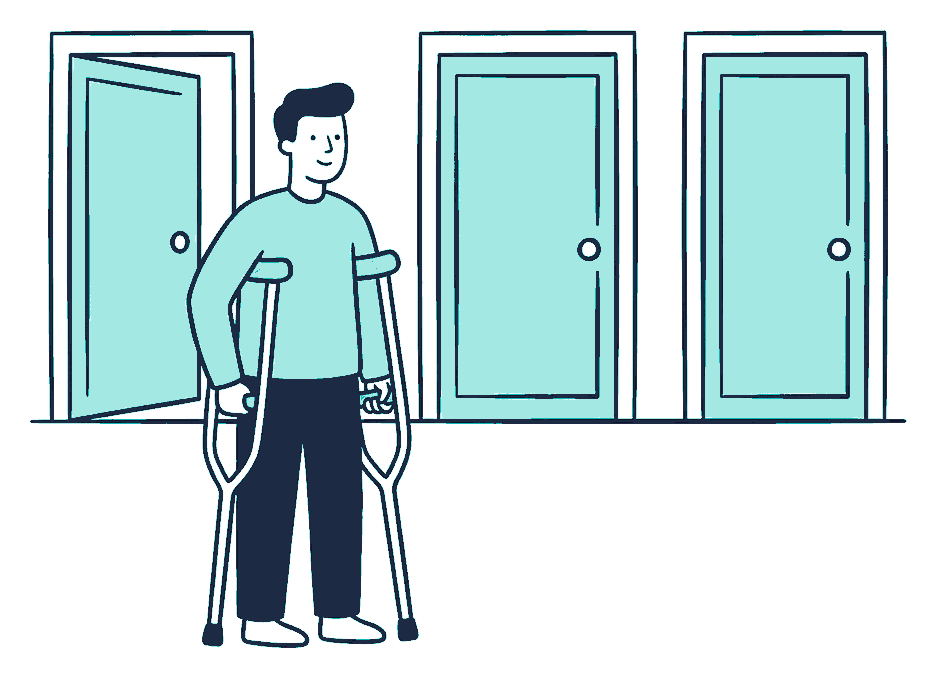
New Zealand's insurance market evolved differently from most other countries, primarily because of ACC. The Accident Compensation Corporation has provided universal no-fault accident cover since 1974, which means private insurers never needed to develop accident-focused disability products in the same way they did overseas.
The result is a split system. ACC covers the accident side. Private insurers cover the illness and permanent disability side. Neither one covers everything on its own.
This creates confusion. Many Kiwis assume ACC will cover them if they become disabled, regardless of the cause. That assumption is wrong. If your disability is caused by illness rather than an accident, ACC will not pay you anything. According to industry data, illness-related claims account for the majority of long-term work absences in New Zealand, which means most people who become unable to work are falling into the gap ACC does not cover.
The Three Components of Disability Protection
Disability protection in New Zealand is built from three separate components: ACC, income protection insurance and TPD insurance. ACC is automatic and levy-funded, paying 80% of pre-injury income for accidents only. Income protection is privately bought and pays a monthly benefit of up to 75% of income for illness or injury. TPD pays a tax-free lump sum for permanent inability to work.
1. ACC (Accident Compensation Corporation)
ACC is not insurance you buy. Every New Zealand resident and visitor is automatically covered. It is funded through levies on employers, employees, and motor vehicle owners.
What ACC covers:
- Physical injuries caused by accidents (workplace, sporting, motor vehicle, home)
- Work-related gradual process injuries (e.g. noise-induced hearing loss)
- Treatment injuries caused by registered health professionals
- Mental injuries directly linked to a covered physical injury or sexual violence
What ACC pays:
- Weekly compensation at 80% of your pre-injury income, up to a cap (currently around $139,000 of earnings per year)
- Medical treatment costs, rehabilitation, home help, and travel to appointments
- Lump sum compensation for permanent impairment
What ACC does not cover:
- Illness or disease of any kind (cancer, heart disease, stroke, diabetes, MS)
- Degenerative and age-related conditions (arthritis, disc degeneration)
- Mental health conditions not linked to a physical injury or sexual violence
- Any disability where there is no qualifying accident
For a detailed breakdown, see our guide on what ACC does not cover.
2. Income Protection Insurance
Income protection is a private insurance product that replaces a portion of your income if you are unable to work due to illness or injury. It is the primary tool for covering the gap ACC leaves for illness-related disability.
What income protection covers:
- Inability to work due to illness (cancer, heart conditions, mental health, chronic conditions)
- Inability to work due to injury (including injuries that ACC also covers, depending on the policy)
- Both short-term and long-term absences from work
What income protection pays:
- A monthly benefit, typically up to 75% of your pre-disability income
- Payments continue for a set benefit period (commonly 2 years, 5 years, or to age 65)
- Payments begin after a waiting period you choose (typically 4, 8, or 13 weeks)
Key features:
- You choose the waiting period, benefit amount, and benefit period
- Premiums are tax-deductible for self-employed people and sole traders
- Most policies are "agreed value" (benefit locked in at application) or "indemnity" (benefit based on income at time of claim)
Income protection is the workhorse of disability cover in NZ. If you can only afford one private insurance product alongside ACC, this is generally the one an adviser will recommend first. Learn more in our income protection comparison guide.
3. TPD (Total Permanent Disability) Insurance
TPD insurance pays a one-off, tax-free lump sum if you become totally and permanently unable to work. It is designed for the worst-case scenario: a disability so severe that you will never return to any form of employment.
What TPD covers:
- Permanent inability to work due to illness or injury
- Conditions such as severe brain injury, total loss of sight, loss of multiple limbs, advanced neurological disease, and other catastrophic outcomes
What TPD pays:
- A single lump sum (commonly between $100,000 and $1,000,000+)
- The payment is tax-free
- You choose the sum insured when you take out the policy
Key features:
- Often bundled with life insurance or available as a standalone policy
- The definition of "disability" varies between policies (own occupation vs any occupation)
- Claims require medical evidence that the disability is permanent
- There is typically a waiting period of 3 to 6 months before a claim can be assessed
For a deeper look at how TPD works, including the critical own vs any occupation distinction, see our TPD insurance guide.
Comparison: ACC vs Income Protection vs TPD
ACC, income protection and TPD differ on what triggers payment, how much they pay and for how long in New Zealand. ACC pays weekly compensation at 80% of income after a 7-day wait, for accidents only. Income protection pays a taxable monthly benefit of up to 75% of income after a 4 to 13 week wait. TPD pays a tax-free lump sum.
| Feature | ACC | Income Protection | TPD Insurance |
|---|---|---|---|
| Covers accidents | Yes | Yes (some policies) | Yes |
| Covers illness | No | Yes | Yes |
| Payment type | Weekly (80% of income) | Monthly (up to 75% of income) | Lump sum |
| Payment duration | Until recovery or age 65 | Chosen benefit period (2 years to age 65) | One-off payment |
| Waiting period | 7 days (for weekly comp) | 4 to 13 weeks (you choose) | 3 to 6 months |
| Cost to you | Funded via levies (automatic) | Monthly premiums | Monthly premiums |
| Tax on payments | Weekly comp is taxable | Monthly benefit is taxable | Lump sum is tax-free |
| Covers permanent disability | Lump sum for permanent impairment only | Pays until benefit period ends | Yes (primary purpose) |
| Who provides it | Government (ACC) | Private insurers | Private insurers |
The table makes the gaps clear. ACC handles accidents but nothing else. Income protection handles the ongoing income replacement for both illness and injury. TPD handles the catastrophic, permanent scenario with a capital payment.
How TPD Definitions Affect Your Cover
Two TPD definitions are used in New Zealand, and the difference decides whether a claim is paid or declined. Own occupation pays if you are permanently unable to perform the duties of your specific job, so a builder unable to do construction work qualifies. Any occupation pays only if no job suited to your education, training or experience remains possible.
Own Occupation
Under an own-occupation definition, you qualify if you are permanently unable to perform the duties of your specific job. If you are a builder who can no longer do physical construction work, you would qualify even if you could theoretically work in an office role.
Any Occupation
Under an any-occupation definition, you qualify only if you are permanently unable to work in any job that is reasonably suited to your education, training, or experience. The same builder might be declined if the insurer determines they could work in construction management or project coordination.
Which one should you choose?
Own-occupation cover is more expensive but far easier to claim on. It is particularly important for people in physically demanding or highly specialised roles: tradespeople, surgeons, pilots, professional athletes, and similar occupations. If you work in a role where your specific physical or technical skills are central to your earning capacity, own-occupation cover is worth the additional premium.
Any-occupation cover is more affordable and may be suitable for people in roles where their skills transfer broadly across industries.
When Each Component Pays: Real-World Scenarios
Which component pays depends entirely on cause in New Zealand. A builder who falls from scaffolding receives ACC treatment and weekly compensation at 80% of income. A teacher diagnosed with multiple sclerosis receives nothing from ACC, and relies on income protection after the waiting period, plus a TPD lump sum if the inability to work is assessed as permanent.
Scenario 1: A builder falls from scaffolding and breaks both legs. ACC covers the medical treatment, rehabilitation, and weekly compensation at 80% of income until recovery. If the builder recovers fully, no private insurance is needed for this event.
Scenario 2: A teacher is diagnosed with multiple sclerosis and gradually becomes unable to work.

ACC pays nothing because there is no accident. Income protection kicks in after the waiting period and pays a monthly benefit for the chosen benefit period. If the teacher is eventually assessed as permanently unable to work, a TPD policy would also pay the lump sum.
Scenario 3: A self-employed plumber suffers a severe stroke and is left permanently unable to work in any capacity. ACC pays nothing (illness, not accident). Income protection pays monthly benefits for the benefit period. TPD pays a lump sum. The plumber would receive both the ongoing income replacement and the capital payment.
Scenario 4: An office worker develops severe depression and cannot work for eight months. ACC pays nothing (mental health not linked to physical injury). Income protection pays monthly benefits after the waiting period. TPD does not pay because the condition is not permanent. This scenario highlights why income protection is the most commonly claimed disability-related product.
Building Complete Disability Protection
Complete disability protection in New Zealand starts with ACC plus income protection, which fills the largest gap by covering inability to earn through illness, with a benefit period commonly set at 2 years, 5 years or to age 65. TPD is added where a mortgage, dependants or debts would outlast that benefit period, and trauma cover adds a lump sum on diagnosis.
The baseline: ACC + income protection
Every working New Zealander already has ACC. Adding income protection insurance fills the single largest gap in your disability cover: the inability to earn an income due to illness. For most people, this combination provides solid foundational protection.
Priority considerations for income protection:
- Choose a waiting period that matches your emergency savings (if you have 3 months of savings, a 13-week wait period keeps premiums lower)
- Choose a benefit period that reflects your needs (to age 65 is the most comprehensive; 2 or 5 years is more affordable)
- Consider agreed value if your income fluctuates or is difficult to prove at claim time
Adding TPD for catastrophic protection
If you have a mortgage, dependants, or debts that would not be cleared by your income protection benefit alone, TPD insurance adds a crucial layer. The lump sum can pay off the mortgage, fund home modifications, and provide a capital base that your family can draw on.
TPD is especially important for:
- People with large mortgages
- Primary income earners with young families
- Tradespeople and those in physically demanding occupations
- Anyone whose occupation is highly specialised
Adding trauma cover for serious diagnoses
While not strictly "disability insurance," trauma (critical illness) cover pays a lump sum on diagnosis of specified conditions like cancer, heart attack, or stroke, regardless of whether you are permanently disabled. It can complement income protection and TPD by providing an immediate capital payment while you focus on treatment and recovery.
Who Needs What: A Quick Guide
Priorities shift with circumstances in New Zealand. ACC applies automatically to everyone. Income protection is a high priority for single renters and for couples with a mortgage, and essential for families with young children and self-employed tradespeople. TPD is a high priority for those same families and tradespeople, medium for couples with a mortgage, and lower approaching retirement without debt.
| Situation | ACC | Income Protection | TPD | Trauma |
|---|---|---|---|---|
| Single, no dependants, renting | Automatic | High priority | Lower priority | Optional |
| Couple, no kids, mortgage | Automatic | High priority | Medium priority | Optional |
| Family, young kids, mortgage | Automatic | Essential | High priority | Recommended |
| Self-employed tradesperson | Automatic | Essential | High priority | Recommended |
| Approaching retirement, no debt | Automatic | Lower priority | Lower priority | Optional |
Cost Considerations
The cost of disability-related cover in NZ varies significantly depending on your age, occupation, health, smoking status, and the level of cover you choose.
What drives the premium on each product (2026):
- Income protection: the most expensive of the three for the same person, because it can pay out month after month for years rather than once. Your income level, waiting period and benefit period move the price most, followed by occupation class.
- TPD insurance: the cheapest of the three at a typical cover level of $250,000 to $500,000, because qualifying claims are rare. Age and occupation are the main drivers, and an own-occupation definition costs more than any-occupation.
- Trauma cover: sits between the other two at a typical cover level of $100,000 to $200,000. Age, smoking status and the breadth of the covered condition list drive the price.
Premiums are highly individual, and the only way to get an accurate figure is to request quotes based on your specific details.
Ways to manage cost:
- Increase the waiting period on income protection (13 weeks instead of 4 weeks can reduce premiums significantly)
- Choose a shorter benefit period (5 years instead of to age 65)
- Opt for indemnity value instead of agreed value
- Bundle policies with the same insurer for potential multi-policy discounts
- Review your cover annually to make sure you are not over-insured or under-insured
The ACC Gap: Why Illness-Related Disability Is the Real Risk
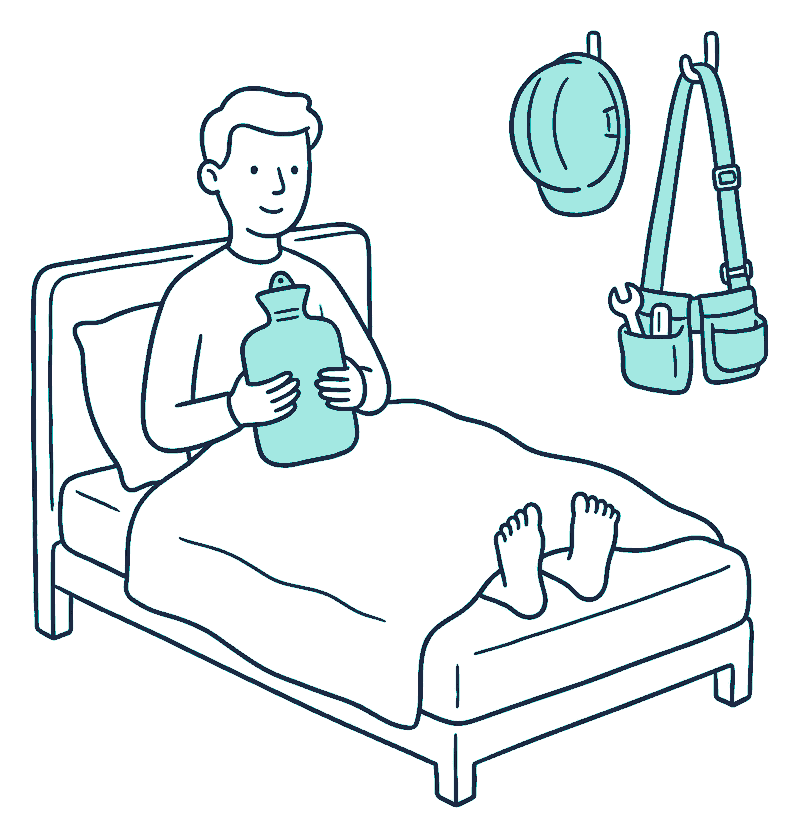
ACC covers around 2.3 million claims a year in New Zealand, yet none of them are for illness, and most long-term inability to work is caused by illness rather than accident. Cancer, cardiovascular disease, musculoskeletal conditions and mental health disorders are the leading causes of extended work absence, leaving savings, government benefits or income protection as the only income sources.
Cancer, cardiovascular disease, musculoskeletal conditions, and mental health disorders are the leading causes of extended work absences in New Zealand. None of these are covered by ACC. If you become unable to work due to any of these conditions, your only sources of income are:
- Your personal savings
- Government benefits (which are well below the average wage)
- Income protection insurance
Without income protection, many families find themselves burning through savings within months and facing serious financial pressure at exactly the time they should be focused on recovery.
For a detailed look at this gap, read our guide on ACC vs private insurance.
Talk to an Adviser
Disability protection in NZ is not a single product you can buy off the shelf. It is a combination of ACC, income protection, and potentially TPD and trauma cover, each filling a different gap. Getting the right mix requires understanding your personal situation, your occupation, your debts, and your family's needs.
A licensed financial adviser can assess your full picture and recommend a combination of cover that fits your budget and protects what matters most. QuoteHub connects you with licensed advisers who can compare options across multiple insurers.
Get a free disability cover assessment with QuoteHub
Frequently Asked Questions
Does New Zealand have disability insurance?
Not as a single product. Disability protection in NZ is built from three components: ACC (which covers accident-related injuries automatically), income protection insurance (which covers inability to work due to illness or injury), and TPD insurance (which pays a lump sum for permanent disability). You need to understand what each one covers and combine them to build complete protection.
What does ACC pay if I become disabled?
If your disability is caused by an accident, ACC pays weekly compensation at 80% of your pre-injury earnings (up to a cap of approximately $139,000 in annual earnings). ACC also covers medical treatment, rehabilitation, and may pay a lump sum for permanent impairment. However, if your disability is caused by illness, ACC pays nothing.
How much does income protection insurance cost in NZ?
Premiums vary widely depending on your age, income, occupation, health status, waiting period, and benefit period. A 35-year-old non-smoker in an office role sits at the low end of the range, while someone in a high-risk occupation could pay significantly more for identical cover. Lengthening the waiting period and shortening the benefit period are the two levers that cut the premium most. The best approach is to get personalised quotes through an adviser.
What is the difference between income protection and TPD?

Income protection pays a monthly benefit (up to 75% of your income) when you cannot work due to illness or injury, for a set benefit period. TPD pays a one-off lump sum if you become permanently and totally unable to work. They serve different purposes: income protection replaces your regular earnings, while TPD provides capital to pay off debts, modify your home, or fund long-term care.
Can I have both income protection and TPD insurance?
Yes, and many people do. The two products complement each other. Income protection replaces your monthly income during the period you cannot work, while TPD provides a lump sum for the permanent scenario. If you become permanently disabled, you could receive both the monthly income protection payments (for the benefit period) and the TPD lump sum.
Is TPD insurance worth it if I already have income protection?
It depends on your situation. Income protection replaces income but has a fixed benefit period. If you become permanently disabled at age 40 and your income protection benefit period ends at age 45, you still have 20+ years of living costs ahead of you. A TPD lump sum can bridge that gap, pay off your mortgage, and fund home modifications. For people with large debts or dependants, having both is often recommended.
Do I need disability cover if I am self-employed?
Self-employed people arguably need it more than anyone. You do not have employer-funded sick leave, and your business income stops the moment you stop working. Income protection is considered essential for self-employed Kiwis, and the premiums are tax-deductible. ACC still covers you for accidents, but the illness gap is even more critical when there is no employer safety net.
Get Your Free Disability Cover Check
Not sure whether your current insurance setup covers you properly for disability? QuoteHub's free cover assessment compares your existing protection against your actual needs and highlights any gaps.
Check your disability cover now
Financial advice is provided by Craig Smith Business Services Limited, trading as Smiths Insurance & KiwiSaver, a licensed Financial Advice Provider (FSP712931). QuoteHub is a trading name. Henry Smith is a Financial Adviser (FSP1010699). The information in this article is general in nature and does not constitute personalised financial advice. We recommend speaking with a licensed financial adviser before making insurance decisions.
References
- Financial Markets Authority (FMA), Insurance guidance
- ACC New Zealand
- Sorted.org.nz, Insurance guides
- Insurance & Financial Services Ombudsman (IFSO)
- MoneyHub NZ, Insurance resources
- Diabetes New Zealand
- Cancer Society of New Zealand
- Heart Foundation NZ
Read the full insurance guides
Compare your cover with a licensed NZ adviser · free, no obligation.
Explore related pages: Life Insurance, Income Protection, Health Insurance, Trauma Insurance, Technology.