Non-Pharmac Drug Cover in NZ: What It Pays, What Treatment Costs
A standard Southern Cross Wellbeing or UltraCare plan covers chemotherapy for cancer up to $60,000 each claims year, and inside that limit only $10,000 may go on chemotherapy drugs that are Medsafe-indicated but not funded by Pharmac (Southern Cross, Cancer Cover Plus, retrieved 19 August 2026). nib publishes indicative costs for sixteen non-PHARMAC drug treatments. Fourteen of the sixteen are above $10,000 and the largest is $416,000 (nib NZ, non-PHARMAC cover, retrieved 19 August 2026).
That gap is the single most consequential number in New Zealand health insurance, and it is buried in the footnotes of product pages. This article puts the two sides of it on the same chart.
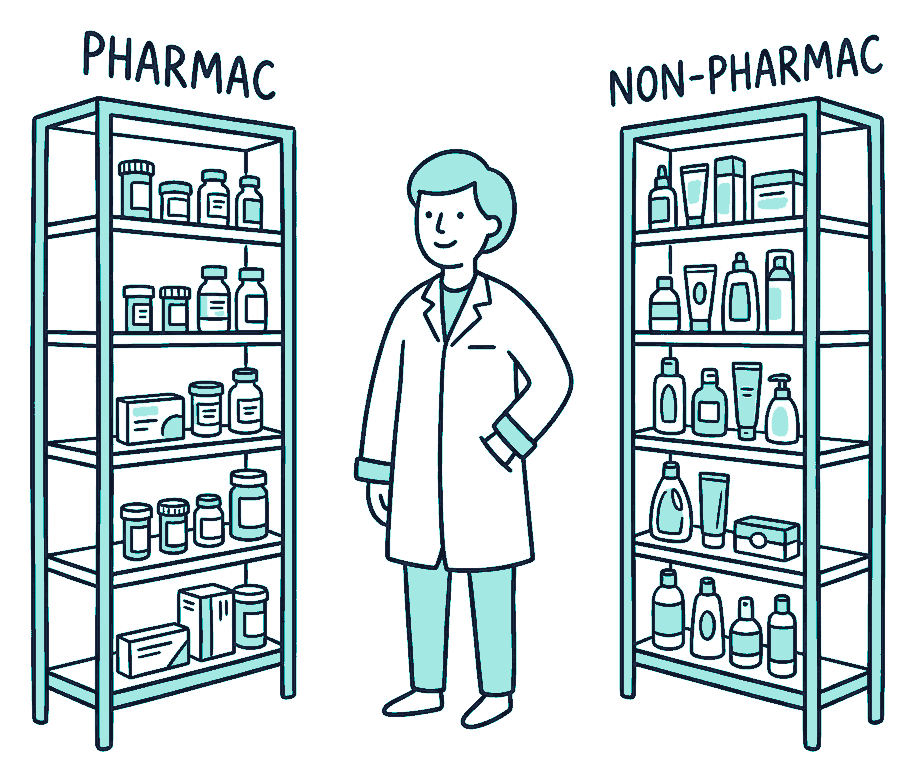
What Is Non-Pharmac Drug Cover?
Medsafe decides whether a medicine is safe and effective enough to be used in New Zealand. Pharmac decides, from a fixed budget, which of those medicines the public system will pay for. A drug can clear the first test and fail the second, and when it does, the patient pays.
Pharmac describes itself as the only agency in the world that both decides what medicines to fund and manages a fixed budget for them. It had a budget of nearly $1.7 billion for community medicines in 2024/25 and funds over 1,300 different chemicals across more than 3,300 presentations (Pharmac, how Pharmac works, retrieved 19 August 2026). Anything outside that schedule is what the insurance market calls non-Pharmac, or non-PHARMAC, cover.
Non-Pharmac drug cover is the benefit inside a health insurance policy that pays for those unfunded medicines. On some plans it is a small sub-limit sitting inside the cancer benefit. On others it is a separate option you buy and choose a level for. The difference between those two designs is worth six figures.
How Big Is the Funding Gap in New Zealand?
Large, and measured. An IQVIA study commissioned by Medicines New Zealand compared publicly funded access to modern medicines across twenty OECD countries over the decade to 2020. New Zealand ranked last of the twenty. By 2020 it had publicly funded only 8% of the modern medicines launched across the group, 34 out of 441, against 120 in Australia, 183 in Finland and 251 in Great Britain (IQVIA for Medicines New Zealand, A Decade of Modern Medicines, November 2021, retrieved 19 August 2026).
Two further findings from the same report matter for anyone weighing this cover. Only 131 of those 441 medicines were even registered in New Zealand, and of the ones that were registered, only 26% went on to be publicly funded, against an OECD-20 average of 62%. Where funding did arrive, the average wait from registration to public funding exceeded two years, roughly double the twenty-country average (IQVIA for Medicines New Zealand, retrieved 19 August 2026). No modern arthritis or diabetes medicine was publicly funded in New Zealand across the whole decade.
The picture has moved since. A $604 million increase to the combined pharmaceutical budget was announced in June 2024, and by March 2025 Pharmac reported it had funded 50 medicines for different health conditions with a further eight under consideration (Pharmac, Pharmac to fund more cancer medicines, published 12 March 2025, retrieved 18 August 2026). That is real progress against a large starting deficit, and it does not remove the case for the cover.
What Does Unfunded Treatment Actually Cost?
nib publishes indicative costs for a course of non-PHARMAC funded drug treatment across sixteen conditions. It is the only insurer-published cost list of its kind in the New Zealand market that we could find, and it is the right thing to hold the benefit limits up against.

Indicative cost of non-PHARMAC drug treatment without non-PHARMAC drug cover, published by nib NZ (retrieved 19 August 2026). nib states the costings are based on an average person of 75kg with an average BMI, come from Pharmac submissions, eviQ and Drugs.com, and were compiled in August 2021. Figures are either annual estimates or the average indicative cost of a round of treatment. Published illustration only, not a quote, and not a statement of what any policy would pay.
| Condition | Indicative cost of non-PHARMAC treatment |
|---|---|
| Renal cancer | $416,000 |
| Lymphoma | $212,000 |
| Leukaemia | $168,000 |
| Lung cancer | $167,000 |
| Bladder cancer | $137,000 |
| Cervical cancer | $100,000 |
| Skin cancer | $93,000 |
| Breast cancer | $86,000 |
| Rheumatoid arthritis | $77,000 |
| Multiple myeloma | $76,000 |
| Colorectal cancer | $75,000 |
| Asthma | $59,000 |
| Prostate cancer | $51,000 |
| Crohn's disease or inflammatory bowel disease | $43,000 |
| Ovarian cancer | $10,000 |
| Pancreatic cancer | $10,000 |
Read the list against the $10,000 sub-limit in the opening paragraph. Fourteen of the sixteen treatments cost more than it, and the two that do not sit exactly on it. Thirteen of the sixteen cost more than $50,000, which is the entry level of the largest add-on option on the market. One exceeds $300,000, which is the highest limit either of the two biggest health insurers publishes.
Two caveats belong here rather than in a footnote. These are nib's own indicative figures, compiled in 2021, so drug prices and Pharmac's funding decisions have both moved since; some of these treatments may now be funded. And nib says plainly that these are not a representation of what would be paid on any claim. They are the right order of magnitude for a decision, not a bill.
What Do the Insurers Actually Pay?
The benefit limits vary by a factor of fifty across the market, and the design differs as much as the number. Some plans bury a small sub-limit inside a cancer benefit; others sell a separate option with a level you choose.
Maximum published non-Pharmac drug cover per person, per policy or claims year, taken from each insurer's own website (retrieved 19 August 2026). These are not like-for-like: some are sub-limits inside a wider cancer benefit and some are whole-of-benefit ceilings.
| Plan or option | Published maximum for non-Pharmac drugs | Source |
|---|---|---|
| Southern Cross RegularCare and KiwiCare | $8,000, inside a $48,000 chemotherapy benefit paid at 80% | Southern Cross |
| Southern Cross Wellbeing One, Wellbeing Two and UltraCare | $10,000, inside a $60,000 chemotherapy benefit | Southern Cross |
| nib non-PHARMAC cancer treatment benefit | $20,000 | nib NZ |
| nib non-PHARMAC Plus, four levels | $50,000, $100,000, $200,000 or $300,000 | nib NZ |
| Southern Cross Cancer Cover Plus, Chemotherapy 100 | $100,000 chemotherapy benefit, no sub-limit on non-Pharmac drugs | Southern Cross |
| Southern Cross Cancer Cover Plus, Chemotherapy 300 | $300,000 chemotherapy benefit, no sub-limit on non-Pharmac drugs | Southern Cross |
| AIA Private Health and Cancer Care | $500,000 cancer benefit including Pharmac and non-Pharmac Medsafe-indicated chemotherapy and immunotherapy drugs | AIA NZ |
The most important line in that table is the one that says "no sub-limit". Upgrading a Southern Cross chemotherapy benefit through Cancer Cover Plus does not merely raise the ceiling from $60,000 to $100,000 or $300,000; it removes the separate cap on the unfunded drugs inside it (Southern Cross, retrieved 19 August 2026). On the standard plan the drugs are capped at $10,000 no matter how much chemotherapy headroom is left.
Now the uncomfortable part. Southern Cross states that Cancer Cover Plus is only available where all members on a policy are under 60 years of age (Southern Cross, retrieved 19 August 2026). Cancer incidence rises steeply with age, so the upgrade that removes the sub-limit is withdrawn at roughly the point in life where it becomes most likely to be claimed. If you are on a Southern Cross plan and approaching 60, this is a decision with a deadline on it, and almost nothing in the market tells you that.
Two other insurers publish higher figures again, but not on their own websites. A comparison by Policywise, a New Zealand adviser business paid commission on what it arranges, lists Partners Life Private Medical Cover and nib's Ultimate Health Max at up to $600,000 a year, and Accuro SmartCare+ at up to $500,000 (Policywise, non-Pharmac drugs in NZ, retrieved 19 August 2026). We could not verify those three from the insurers' own consumer pages, so treat them as second-hand until you see the policy document.
What Does Non-Pharmac Cover Cost to Add?
No New Zealand health insurer publishes the price of its non-Pharmac option on its consumer website. We checked Southern Cross, nib and AIA directly and none states a dollar figure for the add-on itself, only for the benefit it buys. The only rate card we located for the option is marked for adviser use only, so we have not reproduced it here.
That is a genuine gap in the market rather than an oversight on our part, and it is worth saying out loud, because it means nobody shopping online can weigh this decision on price. What we can tell you is the shape of it. The option is priced per person by age, gender and smoking status, and by the cover level chosen, in the same way the underlying plan is. It rises steeply with age, as everything in health insurance does; see health insurance cost by age for the pattern on the base plan.
If you want the actual number for your own age and plan, a licensed adviser can produce the illustration in a few minutes. It costs nothing to ask, and it is the only way to see the figure.
Is Non-Pharmac Cover Worth Buying?
The honest answer is that it depends on which side of the sub-limit your plan currently sits, and that most people do not know.
If your plan caps unfunded drugs at $8,000 or $10,000, the cover is close to symbolic against the cost list above. Fourteen of nib's sixteen published treatment costs exceed it, several by a factor of ten or more. A $10,000 sub-limit will meet an ovarian or pancreatic cancer course on those figures and will contribute a rounding error towards a renal cancer course.
If your plan carries a $50,000 or higher option, the arithmetic changes completely: fifteen of the sixteen treatments fall under $300,000, and fourteen fall under $200,000. The upper levels of the published options cover all but one of the list.
Three things should also be said against the product, because they are true.

Some of these medicines get funded. Pharmac funded 50 medicines following the 2024 budget increase (Pharmac, published 12 March 2025, retrieved 18 August 2026), and each one that moves onto the schedule reduces what the option has to do.
The cover is conditional. nib's non-PHARMAC Plus pays for Medsafe-approved, non-PHARMAC funded drugs prescribed in line with Medsafe's guidelines, recommended by a specialist, and related to an approved claim under the hospital plan (nib NZ, retrieved 19 August 2026). A drug prescribed outside Medsafe's indication is outside the benefit, and that is a common way these claims fail.
And a health insurance benefit is not the only route. Trauma or cancer cover pays a lump sum on diagnosis that can be spent on anything, including a drug the medical policy will not pay for. The two products solve overlapping problems in different ways, and for some households the lump sum is the better answer.
How Much Does the Health Insurance Market Pay Out Overall?
For context on the size of the pool this benefit sits in: the Financial Services Council reported $2.545 billion in health claims and 1.35 million health insurance policies in New Zealand in the year to September 2025 (FSC State of the Sector, reported by Insurance Business NZ, published 27 February 2026, retrieved 18 August 2026). Southern Cross alone paid $1.706 billion across 3.8 million claims in the year to 30 June 2025, returning 94% of the premiums it collected to members (Southern Cross Health Society FY25 results, published 30 September 2025, retrieved 19 August 2026).
Against those totals, an unfunded drug course in the hundreds of thousands is not a rounding error for the household that needs it. It is the difference between treatment and no treatment.
Honest Limits of This Analysis
The cost list is nib's own, compiled in August 2021, and drug prices and funding decisions have both changed since. Some of the conditions listed may now have a funded treatment path, which would make the published figure an overstatement of the real exposure.
The benefit limits are not directly comparable to each other. A $10,000 sub-limit inside a $60,000 chemotherapy benefit is a different instrument from a $300,000 standalone option, and both are different again from a $500,000 cancer benefit that happens to include drugs. Comparing the headline numbers alone will mislead you.
We could not verify the Partners Life, Accuro and nib Ultimate Health Max figures from the insurers' own consumer pages, and we have said so beside them rather than presenting them as equivalent.
And no price for the option is published anywhere we could find, so this page cannot tell you what it costs. That is a limit of the market's disclosure, and we would rather state it than fill the gap with an estimate.
Frequently Asked Questions
What does Pharmac not fund?
Pharmac funds medicines from a fixed budget and cannot fund everything Medsafe has approved as safe and effective. As at 2020, New Zealand had publicly funded 34 of the 441 modern medicines launched across twenty OECD countries, the lowest of the twenty (IQVIA for Medicines New Zealand, November 2021, retrieved 19 August 2026). Anything not on the Pharmaceutical Schedule is unfunded and paid for privately.
How much does non-Pharmac cancer treatment cost in NZ?
nib publishes indicative costs from $10,000 for an ovarian or pancreatic cancer course to $416,000 for a renal cancer course, with lymphoma at $212,000 and leukaemia at $168,000 (nib NZ, costings compiled August 2021, retrieved 19 August 2026). These are indicative figures for a course of treatment, not quotes, and not a statement of what a policy would pay.
Does Southern Cross cover non-Pharmac drugs?
Yes, but with a sub-limit on the standard plans. Wellbeing One, Wellbeing Two and UltraCare cover chemotherapy up to $60,000 each claims year, of which $10,000 may go on Medsafe-indicated drugs Pharmac does not fund. RegularCare and KiwiCare cover 80% of costs up to $48,000, of which $8,000 is for non-Pharmac drugs. Cancer Cover Plus raises the chemotherapy benefit to $100,000 or $300,000 with no sub-limit on non-Pharmac drugs, and is only available where all members on the policy are under 60 (Southern Cross, retrieved 19 August 2026).
How much non-Pharmac cover can I buy?

The highest limits either of the two largest health insurers publishes on its own consumer site are $300,000 a year, available either as the top level of nib's non-PHARMAC Plus option or through Southern Cross Cancer Cover Plus Chemotherapy 300 (nib NZ and Southern Cross, retrieved 19 August 2026). AIA's Private Health and Cancer Care plans list a $500,000 cancer benefit that includes non-Pharmac Medsafe-indicated chemotherapy and immunotherapy drugs (AIA NZ, retrieved 19 August 2026).
Can I add non-Pharmac cover to an existing policy?
nib says non-PHARMAC Plus can be added to an eligible hospital plan for any member on the policy at any time (nib NZ, retrieved 19 August 2026). Southern Cross's Cancer Cover Plus carries the under-60 eligibility condition described above. In both cases underwriting and waiting periods may apply to the new benefit, so adding cover after a diagnosis is not a route.
Talk to a Licensed Adviser
Financial advice is provided by Craig Smith Business Services Limited, trading as Smiths Insurance & KiwiSaver, a licensed Financial Advice Provider (FSP712931). QuoteHub is a trading name. The two questions worth answering are what your current plan's non-Pharmac limit actually is, and what the higher level would cost you at your age. Neither is published anywhere you can look it up. Start a review and an adviser will read your policy document and produce the illustration. The insurers we can arrange cover with are listed on our disclosure page.
References
- Southern Cross, Cancer Cover Plus: $60,000 chemotherapy benefit including $10,000 for non-Pharmac drugs on Wellbeing and UltraCare; $48,000 at 80% including $8,000 on RegularCare and KiwiCare; Chemotherapy 100 and Chemotherapy 300 upgrades with no non-Pharmac sub-limit; the under-60 eligibility condition. Retrieved 19 August 2026.
- nib NZ, cover for non-PHARMAC funded medicines: sixteen indicative treatment costs, compiled August 2021 from Pharmac submissions, eviQ and Drugs.com; non-PHARMAC Plus levels of $50,000, $100,000, $200,000 and $300,000. Retrieved 19 August 2026.
- nib NZ, compare plans: non-PHARMAC cancer treatment benefit of up to $20,000, and the conditions attached to non-PHARMAC Plus. Retrieved 19 August 2026.
- AIA New Zealand, health insurance: $500,000 cancer benefit including Pharmac and non-Pharmac Medsafe-indicated chemotherapy and immunotherapy drugs. Retrieved 19 August 2026.
- IQVIA, A Decade of Modern Medicines, commissioned by Medicines New Zealand: New Zealand last of twenty OECD countries, 34 of 441 modern medicines funded by 2020. Published November 2021.
- Pharmac, how Pharmac works: fixed budget of nearly $1.7 billion for community medicines in 2024/25, over 1,300 chemicals funded. Retrieved 19 August 2026.
- Pharmac, Pharmac to fund more cancer medicines: the $604 million budget increase announced June 2024 and the 50 medicines funded. Published 12 March 2025.
- Policywise, non-Pharmac drugs in NZ: third-party comparison of insurer limits, including the Partners Life, Accuro and nib Ultimate Health Max figures we could not verify from the insurers directly. Retrieved 19 August 2026.
- FSC State of the Sector, reported by Insurance Business NZ: $2.545 billion in health claims and 1.35 million health policies in the year to September 2025. Published 27 February 2026.
- Southern Cross Health Society, FY25 results: $1.706 billion paid across 3.8 million claims, 94% of premiums returned. Published 30 September 2025.
This article is general information only and does not constitute personalised financial advice. Benefit limits are as published by each insurer on the date shown and change without notice; always read your own policy document. Treatment costs are indicative published figures, not quotes. Financial advice is provided by Craig Smith Business Services Limited, trading as Smiths Insurance & KiwiSaver, a licensed Financial Advice Provider (FSP712931). QuoteHub is a trading name. For advice tailored to your situation, speak with one of our licensed financial advisers.
Read the full insurance guides
Compare your cover with a licensed NZ adviser · free, no obligation.
Explore related pages: Life Insurance, Income Protection, Health Insurance, Trauma Insurance, Referral.