Income Protection vs TPD Insurance in NZ: Which Do You Need?
Income protection pays a monthly benefit, usually up to 75% of pre-disability income, for as long as illness or injury stops someone working, and payments stop once they recover or the benefit period ends. TPD (total permanent disability) insurance pays a single tax-free lump sum, once, when illness or injury permanently ends someone's ability to work, tested against an own-occupation or any-occupation definition in the policy. The two are not alternatives: income protection answers the common, often temporary case and TPD answers the rarer, permanent one, so QuoteHub's licensed advisers usually stack the two rather than pick one.
In short
- Income protection replaces up to 75% of pre-disability income monthly after a waiting period, commonly 4 to 26 weeks; TPD pays one lump sum once disability is confirmed permanent (Fidelity Life, LifeProtect Income Cover wording).
- Fidelity Life's income protection tests whether someone can still work "their own occupation" for more than 10 hours a week, while AIA's any-occupation TPD test only fails a claim once a job exists that pays more than 25% of prior earnings, a harder bar (Fidelity Life; AIA Living TPD wording).
- ACC pays up to 80% of pre-accident earnings, capped at $2,466.20 gross a week from 1 July 2026, and Partners Life's income cover offsets its own payment against that ACC amount (ACC; Partners Life).
- New Zealanders paid $539 million in income protection premiums in the year to 31 March 2026, against $672 million for trauma cover (FSC, Spotlight on Life Insurance, read 8 September 2026).
One replaces a wage for as long as someone cannot work; the other pays a single sum once it is clear the person will never work again. This guide compares how each pays, where their occupation tests diverge, how ACC fits in, and how QuoteHub's licensed advisers typically stack the two.
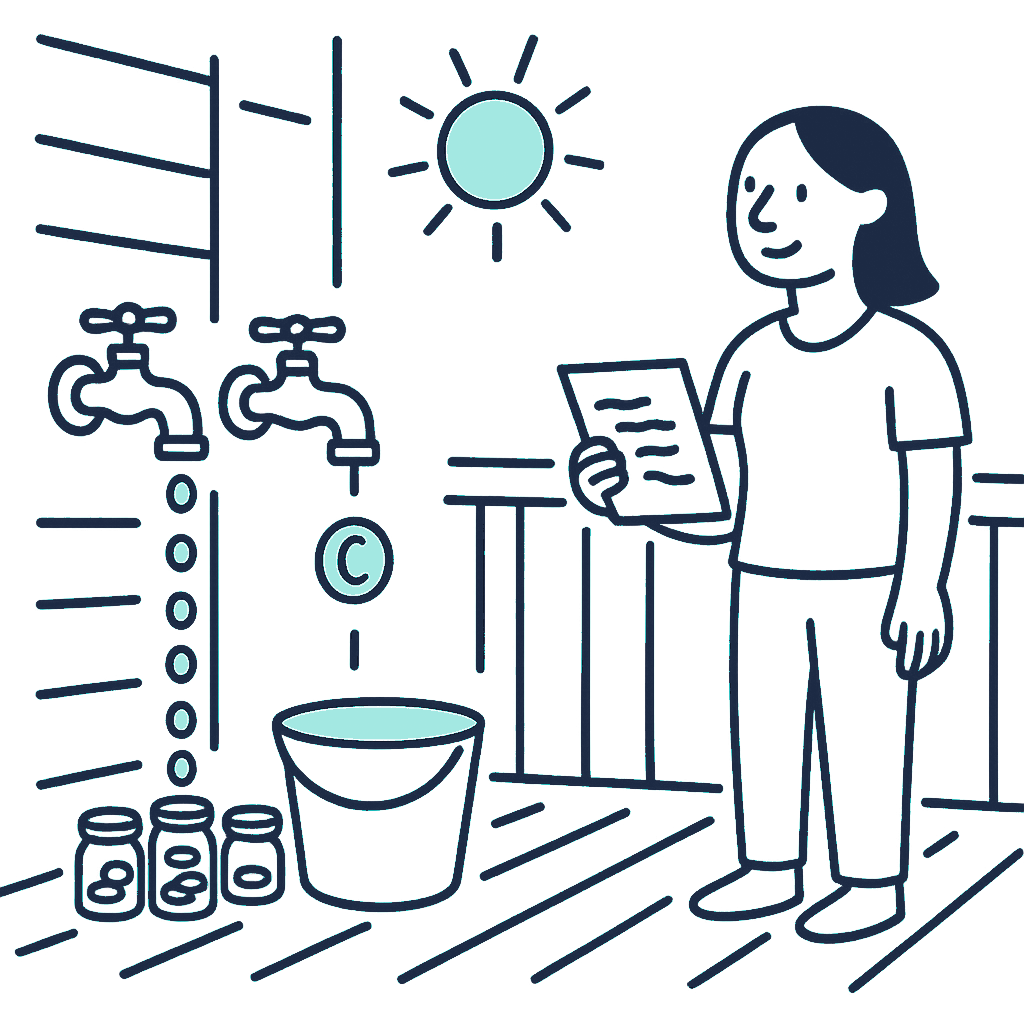
What's the difference between income protection and TPD insurance in NZ?
Income protection pays a recurring monthly amount for as long as someone cannot work; TPD pays a single lump sum once the inability to work is assessed as permanent. Their waiting periods and payment periods also diverge, shown below.
| Income protection | TPD insurance | |
|---|---|---|
| Payment type | Recurring monthly benefit, typically up to 75% of pre-disability income | Single lump sum, tax-free |
| Trigger | Unable to work, reassessed while the claim continues | Permanently unable to work, under an own or any occupation test |
| How long it pays | Until recovery, return to work, or the benefit period ends | One payment; the cover this claim relates to then ends |
| Waiting period | 4, 8, 13 or 26 weeks are common | No fixed wait; permanence must first be established |
| Payment period | 12 months, 2 years, 5 years, or to the end of the cover term at Partners Life (Partners Life, Monthly Disability Cover overview) | Single payment; no ongoing benefit period |
Neither product is bought by default in New Zealand: both exist only if someone, or an employer scheme, arranged them. A TPD payout typically arrives more slowly than an income protection claim's first payment, because permanence takes time to prove. See TPD insurance in NZ and do I need income protection insurance for each product alone.
Own occupation vs any occupation: how each policy tests disability
Own occupation versus any occupation decides most TPD claims, but works differently on an income protection claim, where the test usually stays anchored to a person's own job. Under Fidelity Life's LifeProtect Income Cover, someone is "totally disabled" if they cannot perform at least one important income-producing duty, or cannot engage in "their own occupation" for more than 10 hours a week (Fidelity Life, LifeProtect Income Cover wording).
TPD's definition is priced separately. AIA's any-occupation test only fails a claim once someone could earn more than 25% of prior earnings in a job "for which he or she may be reasonably suited by education, training or experience", after disability lasting three consecutive months (AIA Living TPD wording). Chubb Life confirms "an extra premium payable for 'own' occupation", using the same 25% threshold for any occupation (Chubb Life brochure); Fidelity Life's TPD wording uses only own occupation (Fidelity Life, Permanent Disability Cover wording).
The practical effect: someone who loses their specific trade but could plausibly earn above a quarter of their old income elsewhere can still be paid on an income protection claim, since that test stays on their own job. The same person can be declined on an any-occupation TPD claim, which is why the two are often held together.
How does ACC fit around income protection and TPD?
ACC covers accidental injury only, pays nothing for illness, and where it does pay, it reduces rather than adds to a private income protection benefit. ACC's weekly compensation is up to 80% of pre-accident earnings, from a full-time minimum of $766.40 gross a week (1 April 2026) to a maximum of $2,466.20 gross a week (1 July 2026) (ACC, 1 April 2026 changes; ACC, 1 July 2026 changes). Partners Life's income cover applies offsets so that "certain other disability payments you receive, such as ACC, can reduce the monthly benefit paid" (Partners Life).
For TPD, ACC's equivalent is Permanent Injury Compensation, a one-off amount assessed once an injury "is considered permanent and stable" (ACC). It is small next to a TPD sum insured: at 10% whole-person impairment the lump sum is $4,575.78 for 2026/27 (ACC's current table). Both ACC products stop at illness: cancer, stroke and most gradual-onset conditions get nothing from ACC (ACC, injuries we don't cover), exactly where income protection and TPD earn their premium.
What does income protection cost compared to TPD in NZ?
TPD is markedly cheaper than income protection at typical sums insured, because a TPD lump sum is a smaller, once-only promise while income protection is an open-ended monthly commitment. Indicative standard rates from insurers' published rate cards, including AIA's, as at 8 September 2026, show a 35-year-old non-smoking man in occupation class 1 paying about $15 to $20 a month for $250,000 of standalone TPD; the fuller age range for both sexes is below.
| Age | TPD, $250,000, male non-smoker | TPD, $250,000, female non-smoker |
|---|---|---|
| 25 | $15 to $20 | $15 to $20 |
| 35 | $15 to $20 | $15 to $20 |
| 45 | $30 to $35 | $40 to $45 |
| 55 | $120 to $130 | $140 to $150 |
Source: indicative standard rates, occupation class 1, from insurers' published rate cards, including AIA's, as at 8 September 2026, collated in QuoteHub's Premium Index. At 45, published rates for the same cover ranged from about $25 to $40 a month across insurers for a man, a spread of roughly 40% on identical cover.
QuoteHub's Premium Index excluded income protection from this quarter's snapshot after a benefit-identification error in the rate pull, so no indicative income protection premium from the Index appears here. AA Life advertises income protection from about $15 to $20 a week, roughly $70 to $80 a month, for a $5,000 monthly benefit on a 40-year-old non-smoking female professional office worker, with a 90-day wait and a 2-year benefit period, underwritten by Asteron Life (retrieved 17 September 2026). That is a single advertised example on a different profile to the TPD table above, not a like-for-like comparison, so treat any gap between the two as order-of-magnitude only.
How income protection and TPD stack together
Income protection and TPD are usually separate contracts with separate triggers, so a household can claim on both without one reducing the other. Partners Life's Income Cover carries a "Total and Permanent Disability Option" that pays "a lump sum of up to 24 months' cover after 12 continuous months totally disabled", on top of which "the monthly benefit continues" (Partners Life, Monthly Disability Cover overview).
Where the two are bought separately, a TPD lump sum generally does not reduce an income protection benefit either. Fidelity Life's income cover only offsets "other income" from another policy "covering the same risk", and its definition explicitly excludes "a lump sum payment (unless it is a commutation of a periodic benefit)" (Fidelity Life, LifeProtect Income Cover wording). AIA, Partners Life, Fidelity Life, Chubb Life and Asteron Life all write both products as separate benefits inside one adviser-distributed suite (AIA; Partners Life; Fidelity Life; Chubb Life; Asteron Life).
TPD itself also stacks with, or against, life insurance rather than income protection: standalone TPD leaves life cover untouched, while accelerated TPD is deducted from the life sum insured on a claim. See TPD insurance in NZ for that structure in full.
Who needs income protection, TPD, or both?
Most working New Zealanders with dependants, a mortgage or no employer sick leave need income protection first, because temporary and partial disability is far more common than permanent disability; TPD is the second priority once that base is covered. A self-employed tradesperson with no sick leave typically wants income protection with a short waiting period and a benefit period to 65, then TPD sized to clear debt and fund home or vehicle modifications. A stay-at-home parent cannot buy income protection at all, since there is no earned income to insure, which makes TPD (or trauma cover) the more relevant product for that person. See income protection waiting and benefit periods for how to set the income protection side of that structure.
Frequently Asked Questions
Can I claim income protection and TPD at the same time in NZ?
Yes, usually: they are separate contracts with separate triggers, so income protection can keep being paid while an insurer assesses a TPD claim, and a TPD lump sum does not typically reduce it.
Which costs more, income protection or TPD?
Income protection usually costs more overall: it is an open-ended monthly promise, not a single payment. $250,000 of TPD for a 35-year-old non-smoking man runs about $15 to $20 a month on insurers' indicative standard rate cards, including AIA's, as at 8 September 2026 (QuoteHub's Premium Index), while AA Life advertises income protection from about $15 to $20 a week, roughly $70 to $80 a month, for a $5,000 monthly benefit on a different profile. The two are not directly comparable, but the gap shows why income protection is priced as an ongoing benefit rather than a one-off sum.
Does a TPD lump sum reduce my income protection payments?
Generally no, where the two are separate policies: Fidelity Life's income cover defines offsettable "other income" to exclude lump sum payments unless converted from a periodic benefit, so a TPD payout sits outside what reduces the benefit.
Is a TPD payout taxed in New Zealand?
Not normally, though Inland Revenue has issued no TPD-specific ruling. Under IRD's QB 18/04, lump sums that are not income are generally "unlikely to be income" and "will not be taxable". Confirm your own position with an accountant.
Talk to a Licensed Adviser
How much income protection and TPD to hold, and in what order to buy them, depends on your income, debt, occupation class and what your employer already provides. A licensed adviser can model both against your numbers and quote a combined structure rather than two policies bought in isolation. Talk to a licensed adviser or compare the income protection hub and trauma and TPD cover to start.
References
- AIA, AIA Living TPD policy wording
- Chubb Life, Assurance Extra Complete Disablement Cover brochure
- Fidelity Life, LifeProtect Permanent Disability Cover policy wording
- Fidelity Life, LifeProtect Income Cover policy wording
- Partners Life, Monthly Disability Cover overview
- ACC, Financial support for permanent injury
- ACC, changes to client payments from 1 April 2026
- ACC, changes to client payments from 1 July 2026
- ACC, injuries we don't cover
- Financial Services Council, Spotlight on Life Insurance
- Inland Revenue, QB 18/04: tax treatment of personal sickness and accident insurance
- AA Life, income protection insurance
Disclaimer: This article is for informational purposes only and does not constitute personalised financial advice. Insurance needs vary based on individual circumstances. We recommend consulting a licensed financial adviser before making any insurance decisions. Financial advice is provided by Craig Smith Business Services Limited, trading as Smiths Insurance & KiwiSaver, a licensed Financial Advice Provider (FSP712931). QuoteHub is a trading name. Henry Smith is a Financial Adviser (FSP1010699).
Read the full insurance guides
Compare your cover with a licensed NZ adviser · free, no obligation.
Explore related pages: Life Insurance, Income Protection, Health Insurance, Trauma Insurance, For Brokers.