Wisdom Teeth Removal Cost NZ: What You Pay
Wisdom teeth removal is the most searched procedure cost in New Zealand dentistry, and the most commonly misunderstood on the insurance side. The honest starting position is that New Zealand health insurance does not cover routine dental treatment. There is one narrow exception that applies specifically to impacted teeth, and it is set out below.
This guide covers the published price range, what drives it, the public funding that exists for under-18s and low-income adults, and the exact policy wording that decides whether an insurer pays.
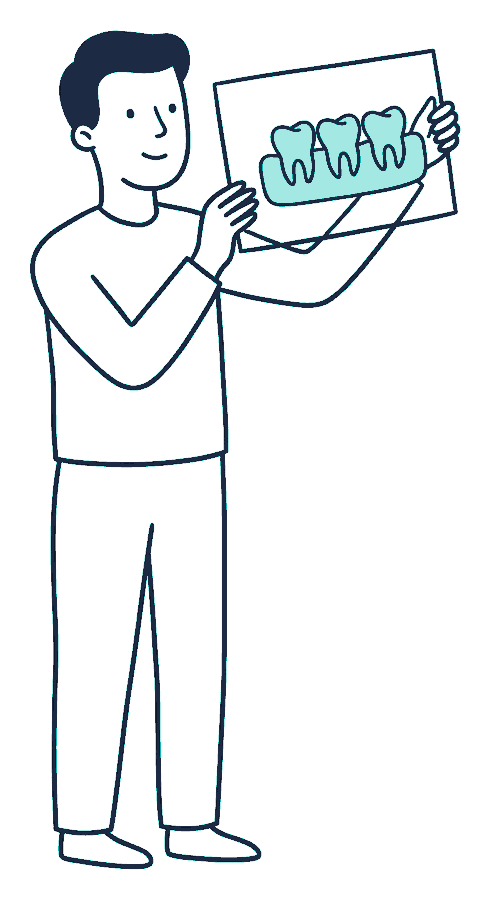
How much does wisdom teeth removal cost in New Zealand?
Wisdom tooth removal in New Zealand generally costs between $200 for a straightforward extraction and over $550 per tooth for a more complex surgical removal, according to Switch Dental's cost guide published in March 2026. Its itemised breakdown puts a simple non-surgical extraction at $200 to $350 per tooth and a complex surgical extraction at $400 to $800 or more per tooth.
The extraction fee is only part of the invoice. Consultation, imaging, sedation and aftercare are billed separately, and sedation is often the largest single add-on.
| Component | Published estimate |
|---|---|
| Initial consultation | $80 to $150 |
| Diagnostic imaging (X-ray or scan) | $100 to $400 or more |
| Simple, non-surgical extraction | $200 to $350 per tooth |
| Complex, surgical extraction | $400 to $800 or more per tooth |
| IV sedation | $400 to $800 or more |
| Post-operative care, medication and follow-up | $30 to $100 or more |
Source: Switch Dental, "Wisdom Tooth Removal Costs in NZ", published 13 March 2026.
Removing several teeth at once is generally cheaper per tooth than removing them one at a time, because the consultation, sedation and other overheads are paid once rather than repeatedly.
Why dental prices keep rising in New Zealand
Dental fees in New Zealand rose 3.7 percent through 2025 and are forecast to rise a further 3.6 percent in 2026, based on the New Zealand Dental Association's Fees and Dental Workforce Survey 2025 as reported by Consumer NZ. A routine visit made up of an exam, X-ray, 15-minute clean and a two-surface composite filling was estimated at $559 in 2026, a 6 percent increase in a single year.
The survey identifies workforce shortage as a driver alongside inflation, equipment, rent and wages. It found that recruiting a new dentist takes 24 weeks on average, with 25 percent of recruitments taking longer than 40 weeks, and that hiring a dental hygienist in the provinces takes 49 weeks on average.
For reference points on the same survey, an exam with a bitewing X-ray averages $129, a panoramic radiograph averages $111, and a 15-minute hygienist appointment averages about $102.
Who gets free or subsidised dental care in New Zealand
Dental care is publicly funded in New Zealand up to a person's 18th birthday and largely self-funded after that. Health New Zealand states that eligible rangatahi from school Year 9 can get free dental care every year until their 18th birthday, that this applies whether or not they are at school, and that once you are over 18 you have to pay for most of your dental care privately.
Two forms of adult help exist and both are means-tested rather than universal.
- Work and Income grants. You can apply for up to $1,000 in any 52-week period towards immediate and essential dental treatment, which explicitly includes extractions. It does not have to be paid back, and Work and Income says it may still be able to help above $1,000, in which case some of it may be repayable.
- Community Services Card holders. Health New Zealand notes that people on low incomes who hold a Community Services Card may be able to get emergency dental care such as pain relief or extractions, often through a hospital service.
Neither route covers elective removal of asymptomatic wisdom teeth. Both are aimed at immediate and essential treatment.
What health insurance covers for wisdom teeth in NZ
New Zealand health insurance generally excludes dental treatment, and the exclusion is written by procedure rather than by practitioner. The Southern Cross Wellbeing One and Wellbeing Two policy document, effective from 1 April 2026, states: "We don't cover any costs related to, or incurred as a consequence of, extraction of teeth, which includes the complete extraction or partial removal of any part of a tooth, tooth root or tooth remnant", and separately excludes healthcare services performed by a dentist, periodontist, endodontist or orthodontist.
That means being treated by an oral and maxillofacial surgeon rather than a general dentist does not by itself make an extraction claimable, even though oral and maxillofacial surgery appears in the same policy's list of specialist scopes.
The exception worth knowing. The same policy document sets out a tooth extraction benefit under surgical procedures. It covers extraction where removal is required before eligible surgical treatment, chemotherapy or radiotherapy, on referral from the treating specialist. It then adds: "After 3 years of continuous cover on this plan, this benefit provides cover for the complete extraction or partial removal of unerupted or impacted teeth."
Impacted or unerupted wisdom teeth are exactly the case that clause describes. On that policy, three years of continuous cover converts a general dental exclusion into surgical cover for the impacted teeth specifically, subject to the usual excess, prior approval and pre-existing condition rules. Teeth that are already known to be a problem when you take out the policy will normally be treated as a pre-existing condition.

The dental modules are small. Where Southern Cross members do have dental cover, it comes through optional modules with modest annual caps. The Keeping Well Module covers dental services to a combined maximum of $200 each claims year. The Vision and Dental Module covers 75 percent of actual charges to a maximum of $750 each claims year. Neither is designed to fund a surgical extraction, and the two modules cannot be held together.
Other insurers write these clauses differently, so treat the above as one worked example rather than the market position. Our guide to dental insurance in New Zealand covers the wider structures available.
The adviser's view
If you are healthy, in your twenties, and know that impacted wisdom teeth are likely, the three-year continuous cover clause is the feature to look for and the reason not to let a policy lapse and restart. Continuity is what unlocks it, and a gap resets the clock.
If your wisdom teeth are already symptomatic, taking out cover now is unlikely to help with them. Disclose them, expect them to be recorded as a pre-existing condition, and treat the Work and Income grant or a dental payment plan as the realistic funding route for that specific problem while the policy does its intended job on everything else.
Frequently asked questions
Does health insurance cover wisdom teeth removal in NZ?
Generally no. Routine dental extraction is excluded by New Zealand health insurance policies. Southern Cross's Wellbeing policy document excludes extraction of teeth outright, with an exception for extraction required before eligible surgical treatment, chemotherapy or radiotherapy, and an extension after three years of continuous cover to the complete extraction or partial removal of unerupted or impacted teeth.
How much does it cost to remove four wisdom teeth?
There is no single published figure. Using the per-tooth ranges published by Switch Dental, four surgical extractions at $400 to $800 each would carry the extraction fees alone, before consultation, imaging, sedation and aftercare. Removing them in one appointment is generally cheaper per tooth than separate visits.
Is wisdom teeth removal free for under-18s in New Zealand?
Dental care is publicly funded until a person's 18th birthday, and Health New Zealand states that eligible rangatahi from school Year 9 receive free dental care every year until then. Some treatments, such as orthodontics, are not included. After 18, most dental care is paid for privately.
Can Work and Income help with the cost?
Yes, within limits. Work and Income can pay up to $1,000 in any 52-week period towards immediate and essential dental treatment, which includes extractions, and that grant does not have to be repaid. Your dentist completes a Dental Treatment Information form as part of the application.
Financial advice is provided by Craig Smith Business Services Limited, trading as Smiths Insurance & KiwiSaver, a licensed Financial Advice Provider (FSP712931). QuoteHub is a trading name. Henry Smith is a Financial Adviser (FSP1010699). This article is general information, not personalised financial advice. Dental exclusions, modules and stand-down periods differ between insurers, so read your own policy document or talk to a licensed adviser. See also our guides to health insurance and private surgery costs in New Zealand.
References
- Switch Dental: Wisdom Tooth Removal Costs in NZ (13 March 2026)
- Consumer NZ: Dentist treatment costs: What you can expect to pay in New Zealand (reporting the NZDA Fees and Dental Workforce Survey 2025)
- Health New Zealand: Dental care (accessed 14 August 2026)
- Work and Income: Dental treatment (accessed 14 August 2026)
- Southern Cross: Wellbeing One and Wellbeing Two policy document (effective 1 April 2026)
Read the full insurance guides
Compare your cover with a licensed NZ adviser · free, no obligation.
Explore related pages: Life Insurance, Income Protection, Health Insurance, Trauma Insurance, Calculators.