What does house insurance cover in New Zealand, and what doesn't it?
House insurance usually pays for sudden and accidental damage to your house and what is fixed to it. Wear, slow leaks, faults and your belongings sit outside it. Source
QuoteHub is a Tower partner. Smiths Insurance & KiwiSaver may receive a commission if you buy. General information, not advice.
Read the full answer
Most New Zealand house policies pay for sudden and accidental physical loss or damage to your house, meaning the building and the things permanently fixed to it. Tower's wording defines loss as sudden and accidental physical loss or damage that happens during the period of insurance in New Zealand. Everything else in the policy is a limit, an extra or an exclusion on top of that test.
This page reads Tower's current house wording. It is part of QuoteHub's house insurance guide.
The test: sudden and accidental
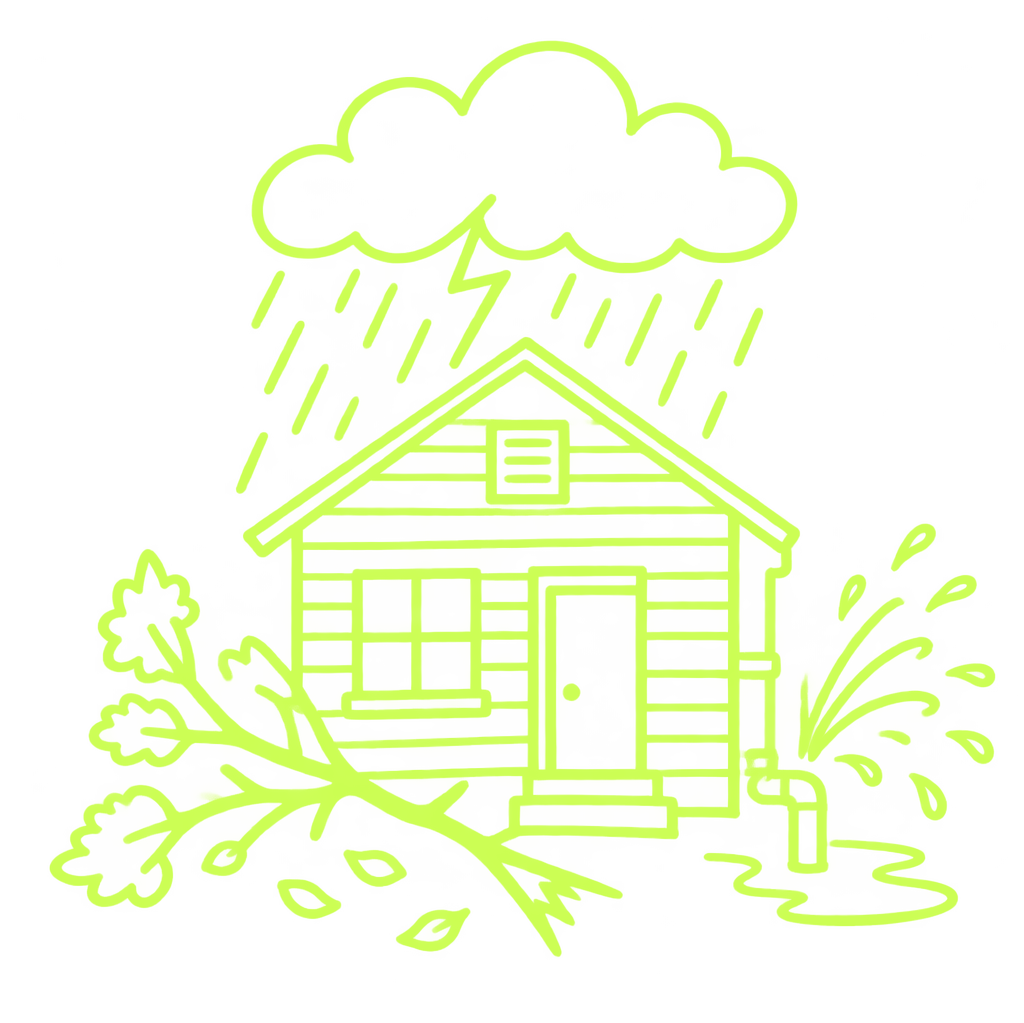
Most claims turn on whether the damage happened suddenly and by accident. A tree through the roof, a fire or a pipe that bursts usually passes. Rot, rust and a slow drip do not. The Insurance Council of New Zealand (ICNZ) says "sudden" means minutes or hours rather than days or weeks.
Read moreShow less
| What happens | How Tower's wording treats it |
|---|---|
| A fire damages the kitchen | Usually covered as sudden and accidental loss (Tower wording) |
| A tree falls on the garage | Usually covered, because the damage is sudden and the garage is a domestic outbuilding (Tower wording) |
| A pipe in the wall seeps for months | Excluded as gradual damage, apart from a small hidden-water benefit (Tower wording) |
| Old roofing wears out | Excluded as wear and tear, but resulting damage inside can still be covered (Tower wording) |
| An earthquake cracks the foundations | Natural Hazards Commission first, then your insurer (NHC) |
| The sofa is ruined by smoke | Not a house claim, because belongings are contents (Tower) |
What counts as "the house"
Tower's wording covers the domestic buildings you own at the address on your certificate. That includes fixtures and fittings permanently attached, plumbed or wired in, fitted floor coverings, gates, sealed paths, fences, permanent decks, sealed access driveways, fixed tanks, services to the public mains and outbuildings such as garages, carports and sheds (Tower wording).
Read moreShow less
Solar systems, fixed pools and spas, tennis courts and garden retaining walls above the included total are covered only if they are specified on your certificate (Tower wording). QuoteHub's guide to building insurance goes item by item, and home and contents insurance explains where the second policy starts.
The extras that come with a house policy
On top of the main cover, Tower's wordings add automatic benefits. Most have a limit that rises with the level you choose, and a benefit is normally paid within the sum insured unless it says otherwise. Temporary accommodation, keys and locks, minor alterations, landscaping and liability are all paid in addition to it (Tower wording).
Read moreShow less
| Benefit, most paid for each event | Standard | Plus | Premium |
|---|---|---|---|
| Temporary accommodation | $15,000 | $25,000 | $30,000 |
| Hidden gradual water damage | $1,000 | $2,000 | $3,000 |
| House under minor alteration | $10,000 | $20,000 | $50,000 |
| Landscaping after fire or vehicle impact | $1,000 | $2,000 | $5,000 |
| Keys and locks lost or stolen, no excess | $500 | $1,000 | $2,000 |
The hidden water benefit is narrow. It covers hidden supply or disposal pipes, hoses and tanks inside the walls, floors or roof, and does not pay to find the leak or for a leaking shower base (Tower wording).
All three levels also include liability protection if an accident at your house damages someone else's property, to a total of $20,000,000 in the period of insurance. If a fire makes the house uneconomic to repair and it would cost more to replace than the sum insured, Tower pays up to a further 20% of the sum insured, though not for fire that follows a natural hazard.
Temporary accommodation has its own conditions. It applies when the house is uninhabitable because of a covered loss, or when a government or council order stops you getting into it, and it includes kennel or cattery fees for pets (Tower wording). The house insurance guide sets out when it stops and when it doesn't apply.
Natural disasters: two layers
Earthquake, landslide, volcanic and hydrothermal activity and tsunami damage to the house is covered in two layers. The Natural Hazards Commission (NHC, formerly EQC) pays first, generally up to $300,000 plus GST. Tower then pays the cost above that limit, up to your sum insured, and you must claim from NHC first (Tower wording).
Read moreShow less
Flood works differently, because for storm and flood NHC covers parts of your land rather than the house. That is why the wording of your own policy matters. The full split is in natural disaster insurance in NZ, and the figure that caps everything is covered in the sum insured guide.
What house insurance does not cover
Tower's house wording leaves out things that are not the house, damage that builds up gradually, damage done by people in the house and some changes in how the house is used. The list groups the exclusions that matter in practice (Tower wording).
Read moreShow less
Things that are not the house
- drapes and blinds, floor coverings that are not fixed, and temporary structures
- unsealed driveways and paths, stock fences and portable pools
- trees, shrubs and plants, and the land, earth or fill
- your belongings, which need contents cover
Damage that builds up or has a cause in the building
- wear and tear, and gradual deterioration such as rust, rot, mould and corrosion
- faults and defects, including structural defects and water entering through defective design or workmanship
- damage by insects, pests, rodents and vermin (possums are carved out)
- mechanical or electrical breakdown, unless the equipment burnt out because of an accidental external force
- settling, cracking, soil movement and subsidence
Things you or someone in the house did
- deliberate damage and criminal or reckless acts
- pets chewing, scratching or fouling the house
- damage from making or using controlled drugs
- cleaning or repairing with unsuitable methods or materials
Situations that change your cover
- loss from renovations or structural additions beyond the minor-alteration benefit
- a house that becomes a dedicated tenanted property you do not use yourself
- business activity beyond rental income from occasional letting or a home office
Wear and tear is excluded, but the wording says resulting loss, meaning secondary damage that follows directly, is covered. So a worn-out roof isn't paid for, but the ceiling it ruins after a storm may be. Roof leaks and gradual damage goes through that line in detail.
Rules that can switch cover off
Four conditions in Tower's wording can narrow or switch off cover: a stand-down period on a new policy, an empty house, other insurance and a change of use.
Read moreShow less
- New policy. A storm, flood, wildfire, tsunami, volcanic activity or landslide within 72 hours of the start date is excluded, as is a cyclone named before the start date. This does not apply if the policy followed straight on from another that covered these risks, or was taken out when you bought the house (Tower wording).
- Empty house. After more than 90 consecutive days unoccupied, cover narrows to natural hazards, fire not started deliberately, and storm or flood, with an extra excess of $1,000. A house you have told Tower is a holiday home is treated differently (Tower wording). See vacant house insurance.
- Other insurance. The wording does not cover loss you are also covered for under another insurer's policy (Tower wording).
- Letting the house. If you rent it out or run a business from it, tell your insurer straight away, because Tower says it has separate landlord and business policies for those uses. See landlord versus house insurance.
How much a claim pays
Tower's wording sets the most it pays per event at the least of three amounts: the actual cost to repair, the cost to replace the actual floor area, and the sum insured (Tower wording).
Read moreShow less
After a partial loss the sum insured reduces by the repair cost until the repairs are finished. So an under-set sum insured can leave a covered claim short. Your excess comes off each claim unless the benefit says it is excess-free, and insurance excess explained covers how excesses work.
Getting a quote from Tower online
Have the address, build year, construction, floor area and sum insured to hand. QuoteHub's link opens Tower's online quote, where Tower prices the cover and issues the policy. Other insurers sell house cover too, and their wordings differ.
Questions people ask
What is not covered by home insurance?
Under Tower's wording the main gaps are wear and tear, gradual damage, faults, pests, deliberate damage, your belongings and the land (Tower wording). The list above has the rest.
Does house insurance cover contents?
No. A house policy covers the building and what is permanently fixed to it. Furniture, clothes and electronics need contents insurance, which Tower sells as a separate policy (Tower).
Does house insurance cover a leaking roof?
It depends on the cause. Sudden storm damage to the roof can be covered, but a roof that leaks because it has worn out is excluded as wear and tear or gradual damage (Tower wording). The roof leaks guide explains the difference.
Does house insurance cover earthquake and flood?
Does house insurance cover renovations?
Only in a small way. Tower's minor-alteration benefit covers non-structural work that does not need a building consent, and it excludes work involving load-bearing walls, piles or foundations, or the roof or cladding (Tower wording). Tower sells separate contract works cover for renovation projects (Tower).
Sources
(8)
Reviewed by Smiths Insurance & KiwiSaver, licensed Financial Advice Provider (FSP712931) · Reviewed quarterly, when the underlying data is restated. General information, not advice on your situation. Buying through Tower's online quote is direct, without advice. QuoteHub is a Tower partner and Smiths Insurance & KiwiSaver may receive a commission from Tower.
Get a Tower quote online
Tower’s own quote opens in a new tab. House, contents, landlord, car and boat cover can be quoted together in one go.
Tower Easy Save: save $400*. *$400 is made up of individual policy discounts, each available separately. New, eligible policies only with promo code EASYSAVE. Excl. contract works. Ends 30 Jan 2027. Ts&Cs apply. Tower’s Easy Save terms, checked 6 October 2026.
QuoteHub is a Tower partner. Smiths Insurance & KiwiSaver may receive a commission if you buy. General information, not advice.
Explore related pages: Life Insurance, Income Protection, Health Insurance, Trauma Insurance, Technology.